
用于聚甲基丙烯酸甲酯微流控装置的微波辅助溶剂键合
Microwave-Assisted Solvent Bonding for Polymethyl Methacrylate Microfluidic Device.
作者信息
Tsao Chia-Wen, Chang Chang-Yen, Chien Po-Yen
机构信息
Department of Mechanical Engineering, National Central University, Taoyuan City 320, Taiwan.
出版信息
Micromachines (Basel). 2022 Jul 17;13(7):1131. doi: 10.3390/mi13071131.
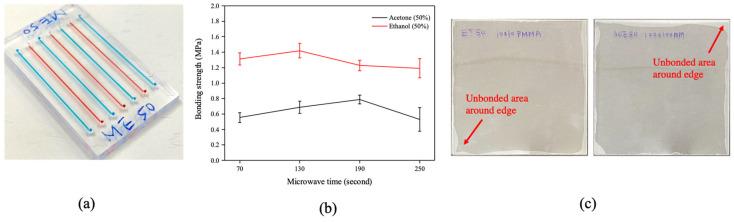
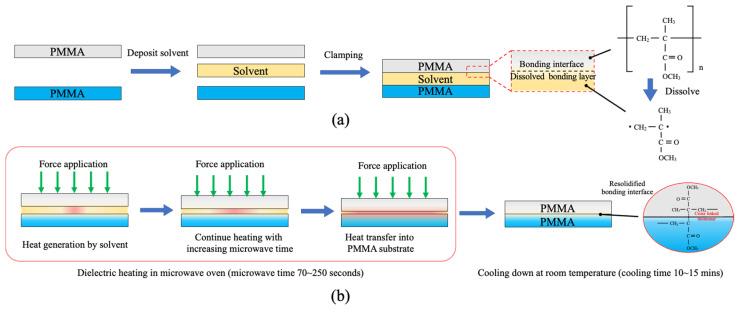
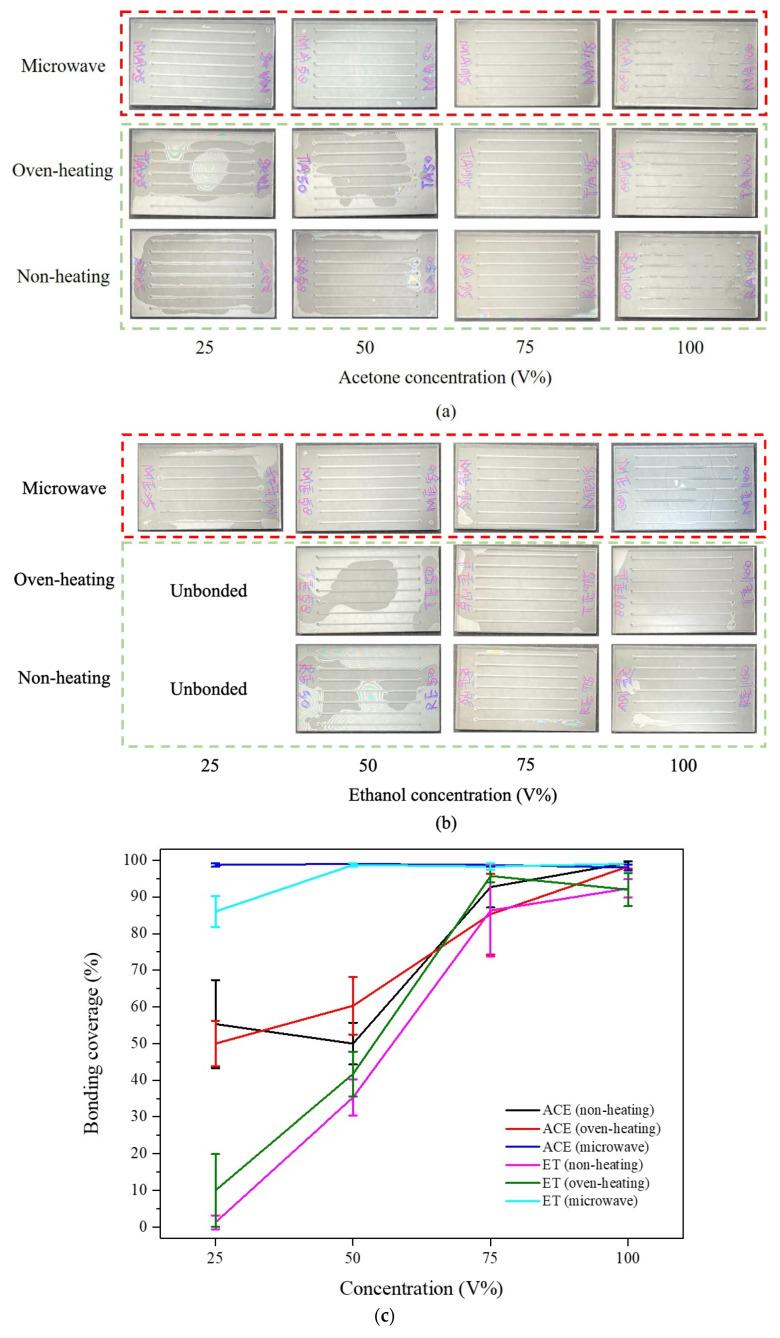
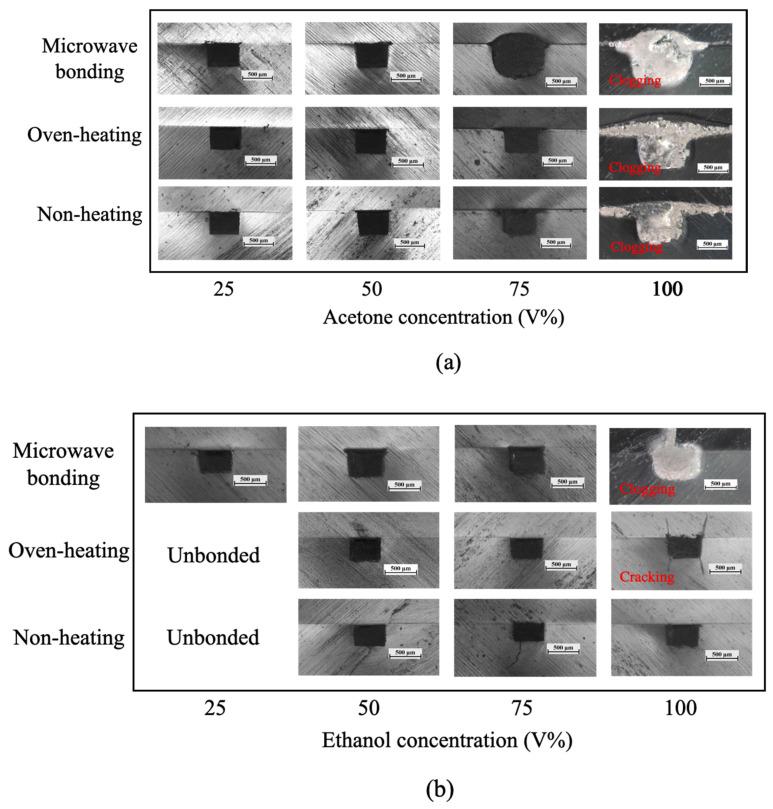
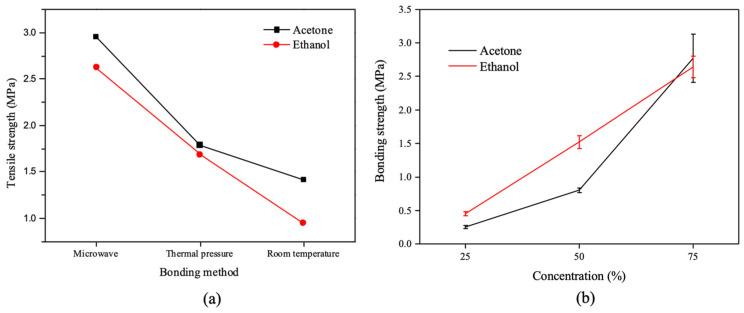
This paper demonstrated a microwave-assisted solvent bonding method that uses organic solvent to seal the thermoplastic substrates with microwave assistance. This direct bonding is a simple and straightforward process that starts with solvent application followed by microwave irradiation without the need for expensive facilities or complex procedures. The organic solvent applied at the bonding interface is used in dissolving and dielectric heating of the thermoplastic surfaces to seal the thermoplastic substrates under microwave assistance. We evaluated acetone and ethanol to seal the polymethyl methacrylate (PMMA) microfluidic device. The bonding performance, such as bonding coverage, geometry stability, and bonding strength (tensile) were observed and compared with the oven-heating and non-heating control experiments under the same force applications. Results showed that the microwave-assisted solvent bonding method presents a high bonding yield (maximum > 99%) and bonding strength (maximum ~2.77 MPa) without microchannel distortion, which can be used for various microfluidic applications.
本文展示了一种微波辅助溶剂键合方法,该方法利用有机溶剂在微波辅助下密封热塑性基材。这种直接键合是一个简单直接的过程,从施加溶剂开始,然后进行微波辐照,无需昂贵的设备或复杂的程序。施加在键合界面的有机溶剂用于热塑性表面的溶解和介电加热,以在微波辅助下密封热塑性基材。我们评估了丙酮和乙醇用于密封聚甲基丙烯酸甲酯(PMMA)微流控装置。在相同的力作用下,观察并比较了键合性能,如键合覆盖率、几何稳定性和键合强度(拉伸),并与烘箱加热和非加热对照实验进行了比较。结果表明,微波辅助溶剂键合方法具有高键合产率(最高>99%)和键合强度(最高约2.77MPa),且无微通道变形,可用于各种微流控应用。


 Zotero 插件