
PARP 抑制剂在卵巢上皮性癌中的作用机制、疗效及临床意义的分子机制:系统评价。
The Molecular Mechanisms of Actions, Effects, and Clinical Implications of PARP Inhibitors in Epithelial Ovarian Cancers: A Systematic Review.
机构信息
Department of Obstetrics and Gynecology, Taipei Tzu-Chi Hospital, The Buddhist Tzu-Chi Medical Foundation, Taipei 231, Taiwan.
Department of Obstetrics and Gynecology, Shin Kong Wu Ho-Su Memorial Hospital, Taipei 111, Taiwan.
出版信息
Int J Mol Sci. 2022 Jul 23;23(15):8125. doi: 10.3390/ijms23158125.
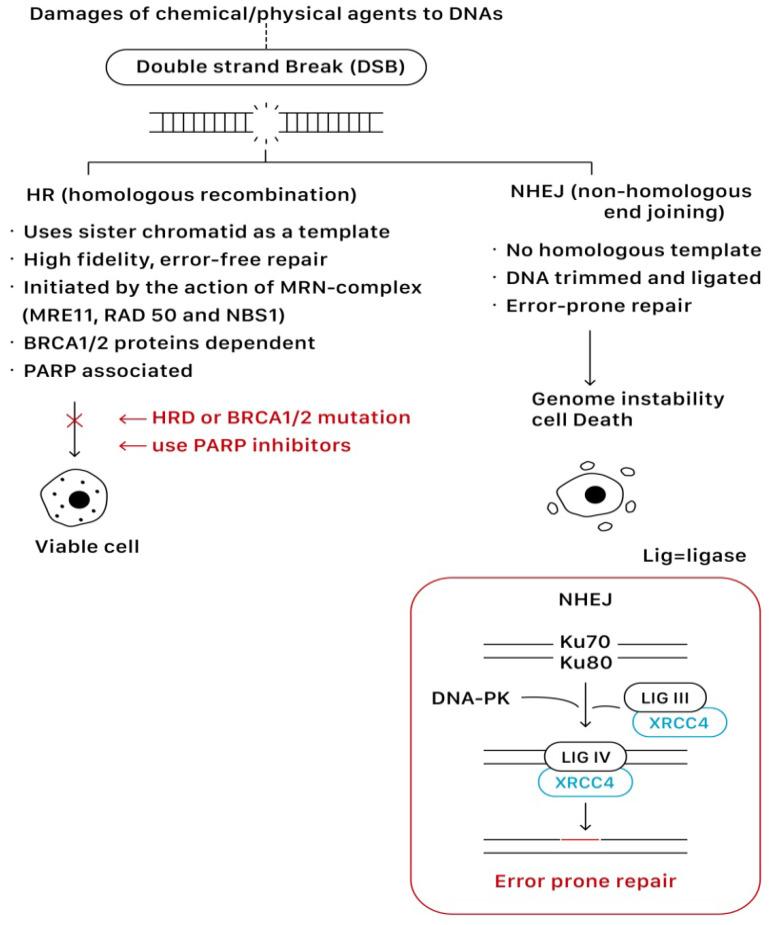
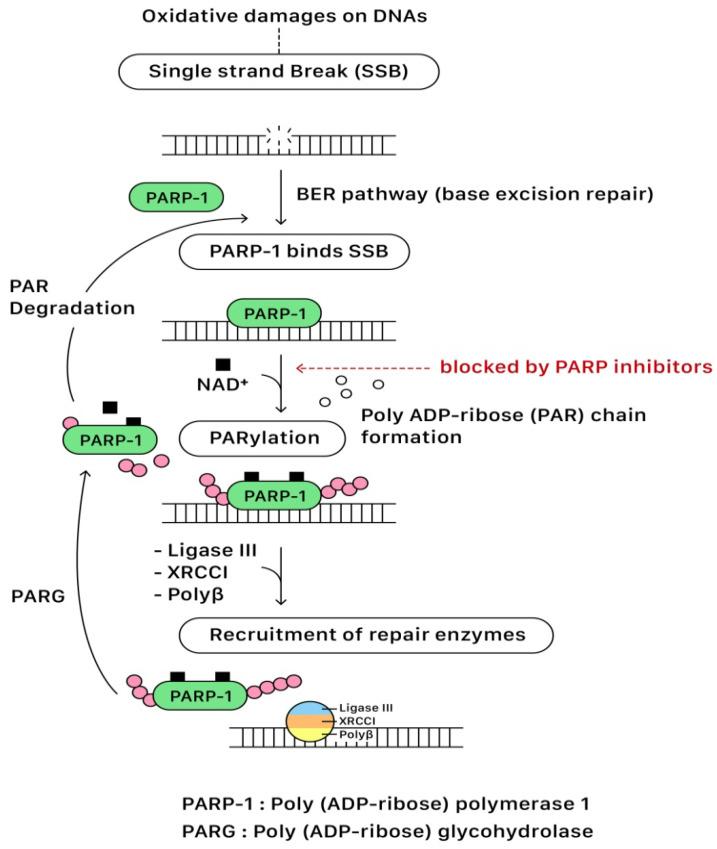
Ovarian cancer is the most lethal gynecologic malignancy in the United States. Some patients affected by ovarian cancers often present genome instability with one or more of the defects in DNA repair pathways, particularly in homologous recombination (HR), which is strictly linked to mutations in breast cancer susceptibility gene 1 (BRCA 1) or breast cancer susceptibility gene 2 (BRCA 2). The treatment of ovarian cancer remains a challenge, and the majority of patients with advanced-stage ovarian cancers experience relapse and require additional treatment despite initial therapy, including optimal cytoreductive surgery (CRS) and platinum-based chemotherapy. Targeted therapy at DNA repair genes has become a unique strategy to combat homologous recombination-deficient (HRD) cancers in recent years. Poly (ADP-ribose) polymerase (PARP), a family of proteins, plays an important role in DNA damage repair, genome stability, and apoptosis of cancer cells, especially in HRD cancers. PARP inhibitors (PARPi) have been reported to be highly effective and low-toxicity drugs that will tremendously benefit patients with HRD (i.e., BRCA 1/2 mutated) epithelial ovarian cancer (EOC) by blocking the DNA repair pathways and inducing apoptosis of cancer cells. PARP inhibitors compete with NAD at the catalytic domain (CAT) of PARP to block PARP catalytic activity and the formation of PAR polymers. These effects compromise the cellular ability to overcome DNA SSB damage. The process of HR, an essential error-free pathway to repair DNA DSBs during cell replication, will be blocked in the condition of BRCA 1/2 mutations. The PARP-associated HR pathway can also be partially interrupted by using PARP inhibitors. Grossly, PARP inhibitors have demonstrated some therapeutic benefits in many randomized phase II and III trials when combined with the standard CRS for advanced EOCs. However, similar to other chemotherapy agents, PARP inhibitors have different clinical indications and toxicity profiles and also face drug resistance, which has become a major challenge. In high-grade epithelial ovarian cancers, the cancer cells under hypoxia- or drug-induced stress have the capacity to become polyploidy giant cancer cells (PGCCs), which can survive the attack of chemotherapeutic agents and start endoreplication. These stem-like, self-renewing PGCCs generate mutations to alter the expression/function of kinases, p53, and stem cell markers, and diploid daughter cells can exhibit drug resistance and facilitate tumor growth and metastasis. In this review, we discuss the underlying molecular mechanisms of PARP inhibitors and the results from the clinical studies that investigated the effects of the FDA-approved PARP inhibitors olaparib, rucaparib, and niraparib. We also review the current research progress on PARP inhibitors, their safety, and their combined usage with antiangiogenic agents. Nevertheless, many unknown aspects of PARP inhibitors, including detailed mechanisms of actions, along with the effectiveness and safety of the treatment of EOCs, warrant further investigation.
卵巢癌是美国最致命的妇科恶性肿瘤。一些受卵巢癌影响的患者通常表现出基因组不稳定,存在一种或多种 DNA 修复途径的缺陷,特别是在同源重组 (HR) 中,这与乳腺癌易感基因 1 (BRCA 1) 或乳腺癌易感基因 2 (BRCA 2) 的突变密切相关。卵巢癌的治疗仍然是一个挑战,尽管进行了初始治疗,包括最佳的细胞减灭术 (CRS) 和铂类化疗,但大多数晚期卵巢癌患者仍会复发并需要额外的治疗。近年来,针对 DNA 修复基因的靶向治疗已成为治疗同源重组缺陷 (HRD) 癌症的独特策略。聚 (ADP-核糖) 聚合酶 (PARP) 是一类在 DNA 损伤修复、基因组稳定性和癌细胞凋亡中起重要作用的蛋白质,特别是在 HRD 癌症中。聚腺苷二磷酸核糖聚合酶抑制剂 (PARPi) 已被报道为高效低毒的药物,通过阻断 DNA 修复途径并诱导癌细胞凋亡,将极大地使 HRD (即 BRCA 1/2 突变) 上皮性卵巢癌 (EOC) 患者受益。PARPi 与 PARP 催化结构域 (CAT) 中的 NAD 竞争,阻断 PARP 催化活性和 PAR 聚合物的形成。这些作用会损害细胞克服 DNA SSB 损伤的能力。在 BRCA 1/2 突变的情况下,同源重组 (HR) 是细胞复制过程中修复 DNA DSB 的必要无差错途径,该途径将被阻断。PARP 相关的 HR 途径也可以通过使用 PARPi 部分中断。大体上,PARPi 与标准 CRS 联合用于晚期 EOCs 时,在许多随机 II 期和 III 期试验中已显示出一些治疗益处。然而,与其他化疗药物一样,PARPi 具有不同的临床适应证和毒性特征,并且也面临着耐药性问题,这已成为一个主要挑战。在高级别上皮性卵巢癌中,在缺氧或药物诱导的应激下的癌细胞有能力成为多倍体巨癌细胞 (PGCCs),这些细胞可以在化疗药物的攻击下存活下来,并开始内复制。这些具有干细胞样特性、自我更新的 PGCCs 会产生突变,改变激酶、p53 和干细胞标志物的表达/功能,而二倍体子细胞可能表现出耐药性,并促进肿瘤生长和转移。在这篇综述中,我们讨论了 PARPi 的潜在分子机制以及 FDA 批准的 PARPi 奥拉帕利、鲁卡帕利和尼拉帕利的临床研究结果。我们还回顾了 PARPi 的当前研究进展、安全性以及它们与抗血管生成药物的联合应用。然而,PARPi 的许多未知方面,包括详细的作用机制以及 EOC 治疗的有效性和安全性,都需要进一步研究。

 Zotero 插件