
吴茱萸碱作为吴茱萸果实的活性化合物,通过 PI3K/AKT/NF-B 信号通路抑制前列腺癌细胞的增殖和迁移。
Evodiamine as the Active Compound of Evodiae fructus to Inhibit Proliferation and Migration of Prostate Cancer through PI3K/AKT/NF-B Signaling Pathway.
机构信息
Shenzhen Hospital of Guangzhou University of Chinese Medicine, Shenzhen, 518034 Guangdong, China.
Formula-Pattern Research Center, School of Traditional Chinese Medicine, Jinan University, Guangzhou, 510632 Guangdong, China.
出版信息
Dis Markers. 2022 Jul 18;2022:4399334. doi: 10.1155/2022/4399334. eCollection 2022.
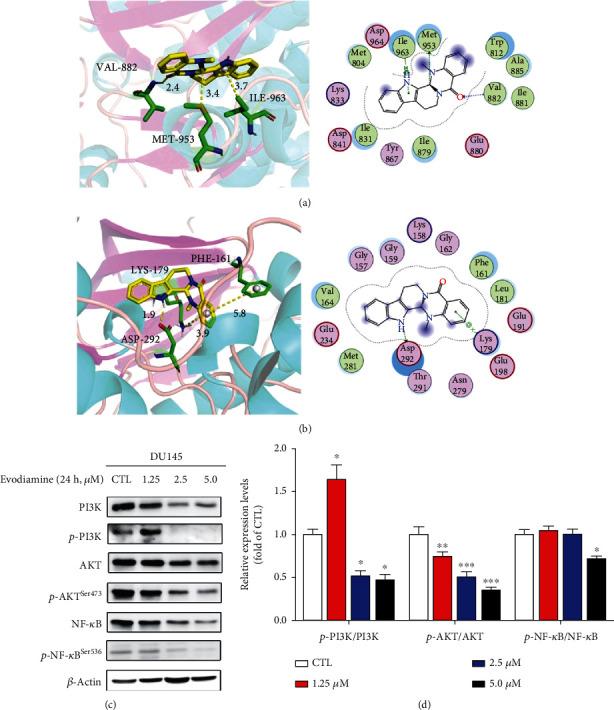
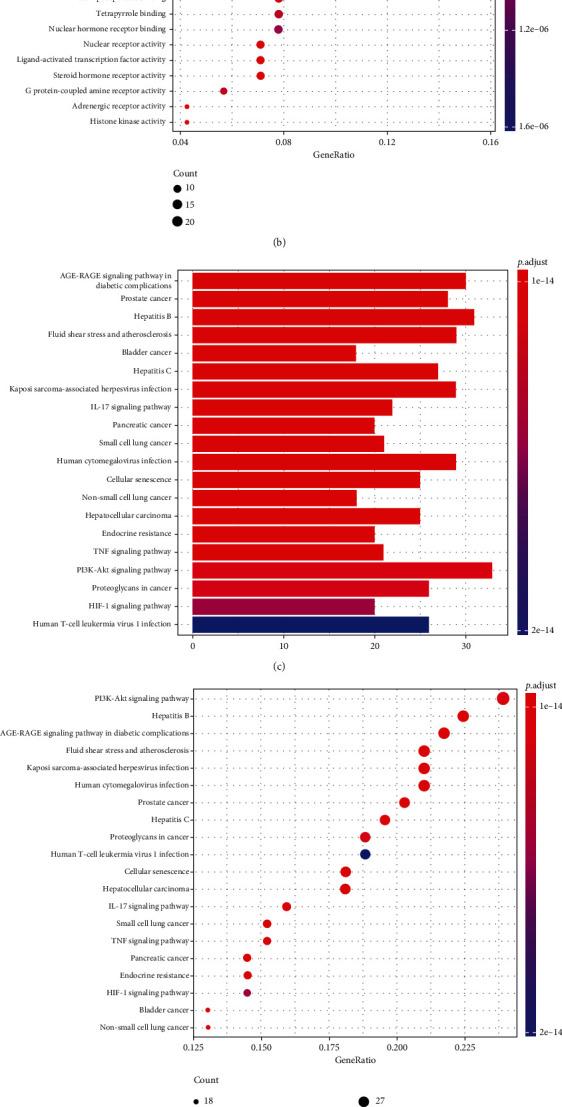
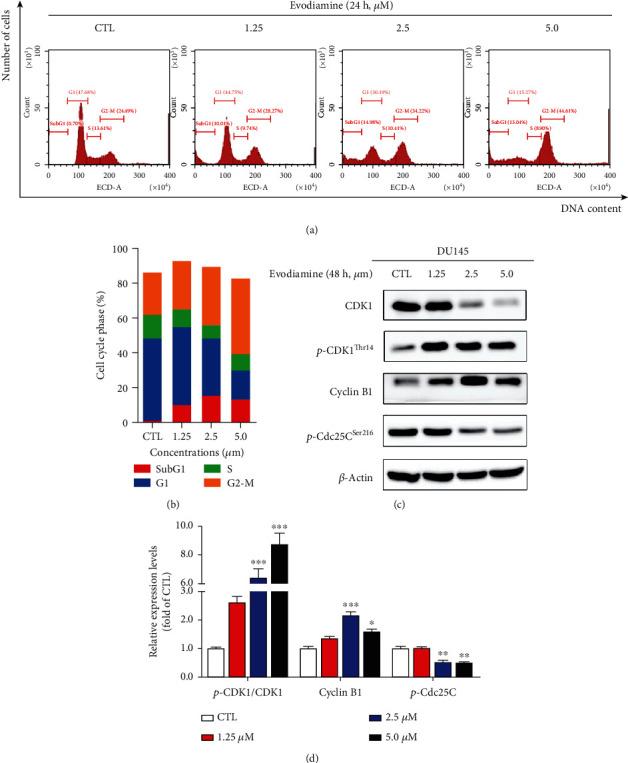
Evodiae fructus (EF) is a traditional Chinese medicine which is widely used for the treatment of obesity, inflammation, cardiovascular disease, and diseases of the central nervous system. Recent studies have demonstrated the anticancer property of EF, but the active compounds of EF against prostate cancer and its underlying mechanism remain unknown. In this study, a network pharmacology-based approach was used to explore the multiple ingredients and targets of EF. Through protein-protein interaction (PPI), Gene Ontology (GO) enrichment, and Kyoto Encyclopedia of Genes and Genomes (KEGG) pathway enrichment analyses, the potential targets and corresponding ingredients of EF against prostate cancer cells were obtained. CCK8 and colony formation assays were performed to evaluate the antiproliferative effect of the active compounds on DU145 cells. Cell cycle analysis, Annexin V-FITC/PI staining assay, and Hoechst 33258 staining assay were used to explore the way of evodiamine-induced cell death. The capacities of cell migration after evodiamine treatment were evaluated by wound-healing assay. PharmMapper database was used to predict the potential targets of evodiamine against cancer cell migration. Western blot assay was performed to investigate the signaling pathway through which evodiamine inhibits cell proliferation and migration. The binding of evodiamine to PI3K and AKT was verified by molecular docking. As a consequence, 24 active compounds and 141 corresponding targets were obtained through a network pharmacology-based approach. The results of PPI analysis, GO enrichment, and KEGG pathway enrichment indicated that molecules in the PI3K/AKT/NF-B signaling pathway were the potential targets of EF against prostate cancer, and evodiamine was the potential active compound. study demonstrated that evodiamine displays antiproliferative effect on DU145 cells obviously. Evodiamine induces G/M cell cycle arrest by Cdc25c/CDK1/cyclin B1 signaling. Additionally, evodiamine also promotes mitochondrial apoptosis and inhibits cell migration through PI3K/AKT/NF-B signaling in DU145 cells. In conclusion, evodiamine is the active compound of EF to inhibit proliferation and migration of prostate cancer through PI3K/AKT/NF-B signaling pathway, indicating that evodiamine may serve as a potential lead drug for prostate cancer treatment.
吴茱萸果(EF)是一种中药,广泛用于治疗肥胖、炎症、心血管疾病和中枢神经系统疾病。最近的研究表明 EF 具有抗癌特性,但 EF 对抗前列腺癌的活性化合物及其潜在机制仍不清楚。在这项研究中,采用网络药理学方法探讨 EF 的多种成分和靶点。通过蛋白质-蛋白质相互作用(PPI)、基因本体(GO)富集和京都基因与基因组百科全书(KEGG)途径富集分析,获得 EF 对前列腺癌细胞的潜在靶点和相应成分。CCK8 和集落形成实验评估活性化合物对 DU145 细胞的增殖抑制作用。细胞周期分析、Annexin V-FITC/PI 染色实验和 Hoechst 33258 染色实验探讨了吴茱萸碱诱导细胞死亡的方式。划痕愈合实验评估吴茱萸碱处理后细胞迁移的能力。PharmMapper 数据库用于预测吴茱萸碱抑制癌细胞迁移的潜在靶点。Western blot 实验研究吴茱萸碱抑制细胞增殖和迁移的信号通路。分子对接验证吴茱萸碱与 PI3K 和 AKT 的结合。结果通过网络药理学方法获得 24 种活性化合物和 141 个相应靶点。PPI 分析、GO 富集和 KEGG 途径富集的结果表明,PI3K/AKT/NF-B 信号通路中的分子是 EF 对抗前列腺癌的潜在靶点,吴茱萸碱是潜在的活性化合物。本研究表明吴茱萸碱对 DU145 细胞具有明显的增殖抑制作用。吴茱萸碱通过 Cdc25c/CDK1/cyclin B1 信号诱导 G/M 细胞周期阻滞。此外,吴茱萸碱还通过 PI3K/AKT/NF-B 信号促进 DU145 细胞线粒体凋亡和抑制细胞迁移。总之,吴茱萸碱是 EF 通过 PI3K/AKT/NF-B 信号通路抑制前列腺癌细胞增殖和迁移的活性化合物,表明吴茱萸碱可能成为治疗前列腺癌的潜在先导药物。




 Zotero 插件