
新型降脂药物降低心血管风险:超越他汀类药物。
New, Novel Lipid-Lowering Agents for Reducing Cardiovascular Risk: Beyond Statins.
机构信息
Department of Internal Medicine, Seoul National University Bundang Hospital, Seongnam, Korea.
Department of Internal Medicine, College of Medicine, The Catholic University of Korea, Seoul, Korea.
出版信息
Diabetes Metab J. 2022 Jul;46(4):517-532. doi: 10.4093/dmj.2022.0198. Epub 2022 Jul 27.
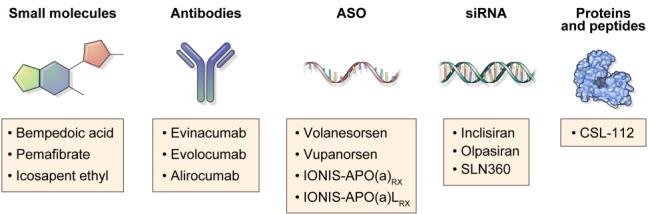
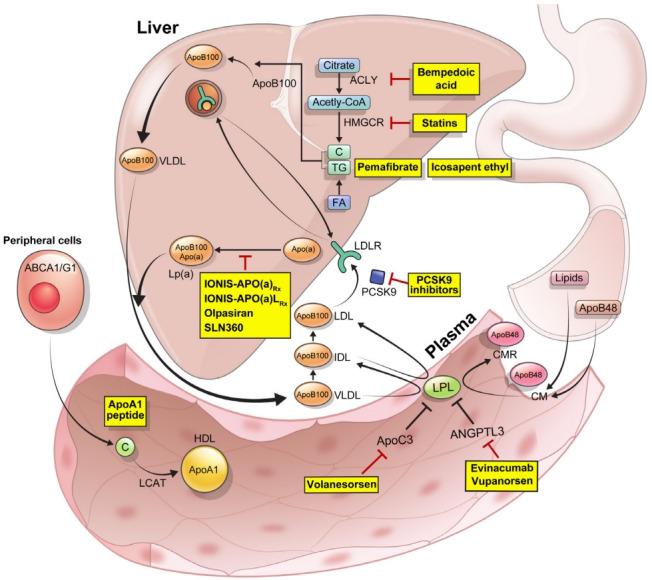
Statins are the cornerstone of the prevention and treatment of atherosclerotic cardiovascular disease (ASCVD). However, even under optimal statin therapy, a significant residual ASCVD risk remains. Therefore, there has been an unmet clinical need for novel lipid-lowering agents that can target low-density lipoprotein cholesterol (LDL-C) and other atherogenic particles. During the past decade, several drugs have been developed for the treatment of dyslipidemia. Inclisiran, a small interfering RNA that targets proprotein convertase subtilisin/kexin type 9 (PCSK9), shows comparable effects to that of PCSK9 monoclonal antibodies. Bempedoic acid, an ATP citrate lyase inhibitor, is a valuable treatment option for the patients with statin intolerance. Pemafibrate, the first selective peroxisome proliferator-activated receptor alpha modulator, showed a favorable benefit-risk balance in phase 2 trial, but the large clinical phase 3 trial (PROMINENT) was recently stopped for futility based on a late interim analysis. High dose icosapent ethyl, a modified eicosapentaenoic acid preparation, shows cardiovascular benefits. Evinacumab, an angiopoietin-like 3 (ANGPTL3) monoclonal antibody, reduces plasma LDL-C levels in patients with refractory hypercholesterolemia. Novel antisense oligonucleotides targeting apolipoprotein C3 (apoC3), ANGPTL3, and lipoprotein(a) have significantly attenuated the levels of their target molecules with beneficial effects on associated dyslipidemias. Apolipoprotein A1 (apoA1) is considered as a potential treatment to exploit the athero-protective effects of high-density lipoprotein cholesterol (HDL-C), but solid clinical evidence is necessary. In this review, we discuss the mode of action and clinical outcomes of these novel lipid-lowering agents beyond statins.
他汀类药物是防治动脉粥样硬化性心血管疾病(ASCVD)的基石。然而,即使在最佳他汀类药物治疗下,仍存在显著的 ASCVD 残余风险。因此,人们一直需要新型降脂药物来靶向降低低密度脂蛋白胆固醇(LDL-C)和其他致动脉粥样硬化颗粒。在过去的十年中,已经开发了几种用于治疗血脂异常的药物。靶向前蛋白转化酶枯草溶菌素/克那霉 9(PCSK9)的小干扰 RNA 依洛尤单抗(inclisiran)与 PCSK9 单克隆抗体具有相当的效果。ATP 柠檬酸裂解酶抑制剂贝美前列素(bempedoic acid)是一种有价值的不耐受他汀类药物患者的治疗选择。作为首个选择性过氧化物酶体增殖物激活受体α调节剂, pemafibrate 在 2 期临床试验中显示出有利的获益风险平衡,但最近基于晚期中期分析,大型 3 期临床试验(PROMINENT)因无效而停止。高剂量的二十碳五烯酸乙酯(icosapent ethyl),一种改良的二十碳五烯酸制剂,显示出心血管获益。血管生成素样蛋白 3(ANGPTL3)单克隆抗体依维莫司(evinacumab)可降低难治性高胆固醇血症患者的血浆 LDL-C 水平。针对载脂蛋白 C3(apoC3)、ANGPTL3 和脂蛋白(a)的新型反义寡核苷酸显著降低了靶分子的水平,并对相关血脂异常产生有益影响。载脂蛋白 A1(apoA1)被认为是一种有潜力的治疗方法,可以利用高密度脂蛋白胆固醇(HDL-C)的抗动脉粥样硬化作用,但需要有确凿的临床证据。在这篇综述中,我们讨论了这些新型降脂药物除了他汀类药物之外的作用机制和临床结局。
 Zotero 插件