
通过对标准PCR引物进行简单修饰实现用于DNA诊断检测的核酸不对称茎环介导等温扩增。
Asymmetric stem-loop-mediated isothermal amplification of nucleic acids for DNA diagnostic assays by simple modification of canonical PCR primers.
作者信息
Mao Rui, Wu Xinyao, Miao Qing, Cai Ting
机构信息
Key Laboratory of Diagnosis and Treatment of Digestive System Tumors of Zhejiang Province, Hwa Mei Hospital, University of Chinese Academy of Sciences, Ningbo, China.
Ningbo Institute of Life and Health Industry, University of Chinese Academy of Sciences, Ningbo, China.
出版信息
Front Bioeng Biotechnol. 2022 Jul 22;10:931770. doi: 10.3389/fbioe.2022.931770. eCollection 2022.
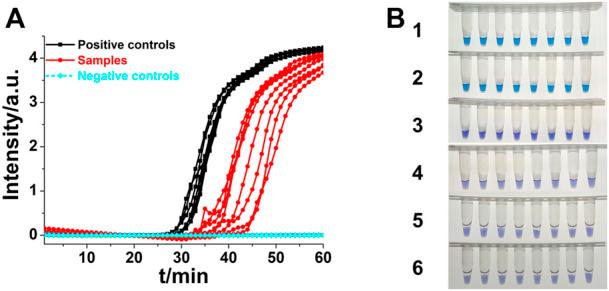
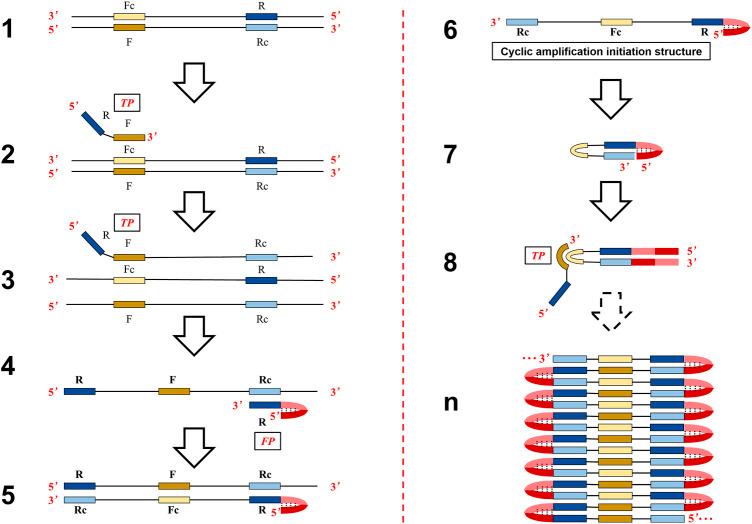
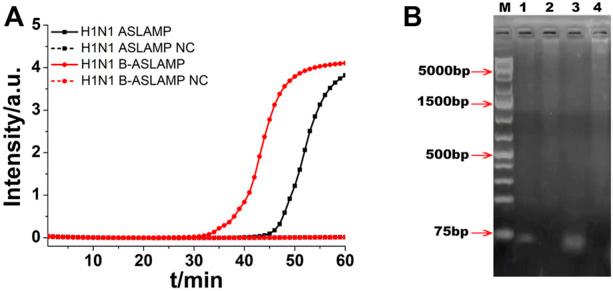
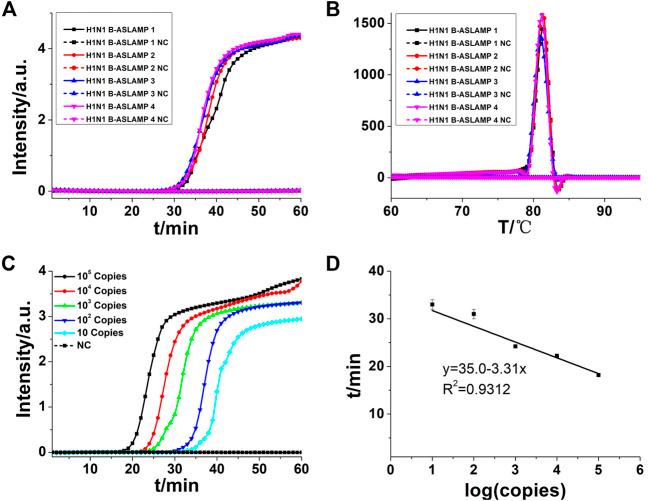
Nucleic acid-based assays have been adopted as mainstream tools for clinical diagnostics, food safety, and environment monitoring with the merits of accuracy, rapidity, and sensitivity. Loop-mediated isothermal amplification (LAMP) is a well-established method to rapidly identify nucleic acids and has gained recognition and been developed for clinical applications in resource-limited areas. However, the needs for specifically designed primer sets and non-specific amplification hinder the development of LAMP-based nucleic acid tests. Here, a promoted method, termed asymmetric stem-loop-mediated isothermal amplification (ASLAMP) by simple modification of canonical PCR primers, was developed to attempt to overcome those drawbacks. The two primers in the ASLAMP reaction can be easily obtained by adding a stem-loop sequence part to one PCR primer at 5'-ends to get the folding primer (FP), then adding the same primer to the counter canonical PCR primer at 5'-ends to get the turn-back primer (TP). The ASLAMP method was demonstrated in detecting the H1N1 gene fragment with merits of simple primer design, short target sequence, and high amplification efficiency. In addition, the ASLAMP method showed similar efficacy compared with LAMP targeting at the same H1N1 gene sequence. Furthermore, detection monitored by real-time fluorescence and endpoint colorimetric approaches were taken as examples for evaluation of the practical application of the ASLAMP method, both offered 100% sensitivity and specificity. In conclusion, the novel ASLAMP method with simplicity of primer design, low requirement of equipment, efficiency, and rapidity has exhibited its great prospect for establishment of DNA isothermal amplification in point of care application.
基于核酸的检测方法因其准确性、快速性和灵敏性等优点,已成为临床诊断、食品安全和环境监测的主流工具。环介导等温扩增技术(LAMP)是一种成熟的快速鉴定核酸的方法,已在资源有限地区的临床应用中得到认可并得到发展。然而,对特定设计引物组的需求以及非特异性扩增阻碍了基于LAMP的核酸检测的发展。在此,通过对常规PCR引物进行简单修饰,开发了一种改进方法,称为不对称茎环介导等温扩增技术(ASLAMP),试图克服这些缺点。ASLAMP反应中的两条引物可以通过在一条PCR引物的5'端添加一个茎环序列部分来获得折叠引物(FP),然后在反向常规PCR引物的5'端添加相同的引物来获得回折引物(TP)。ASLAMP方法在检测H1N1基因片段中得到了验证,具有引物设计简单、靶序列短和扩增效率高的优点。此外,与针对相同H1N1基因序列的LAMP相比,ASLAMP方法显示出相似的效果。此外,以实时荧光监测和终点比色法检测为例,对ASLAMP方法的实际应用进行了评估,两者均具有100%的灵敏度和特异性。总之,新型ASLAMP方法具有引物设计简单、设备要求低、高效和快速等特点,在即时检测应用中建立DNA等温扩增方面展现出了巨大的前景。



 Zotero 插件