
3D细胞培养:古老工具在新应用中的演变
3D Cell Cultures: Evolution of an Ancient Tool for New Applications.
作者信息
Cacciamali Andrea, Villa Riccardo, Dotti Silvia
机构信息
Istituto Zooprofilattico Sperimentale della Lombardia e dell'Emilia-Romagna, Laboratorio di Controllo di Prodotti Biologici. Centro di Referenza Nazionale per i Metodi Alternativi, Benessere e Cura degli Animali da Laboratorio, Brescia, Italy.
出版信息
Front Physiol. 2022 Jul 22;13:836480. doi: 10.3389/fphys.2022.836480. eCollection 2022.
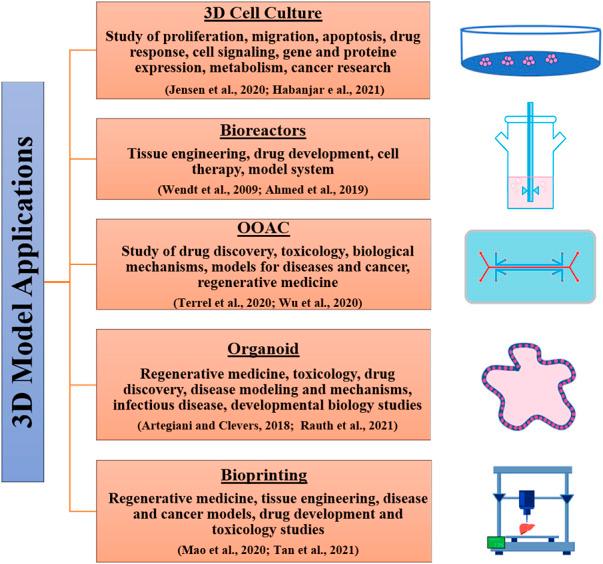
Recently, research is undergoing a drastic change in the application of the animal model as a unique investigation strategy, considering an alternative approach for the development of science for the future. Although conventional monolayer cell cultures represent an established and widely used method, the lack of tissue architecture and the complexity of such a model fails to inform true biological processes . Recent advances in cell culture techniques have revolutionized culture tools for biomedical research by creating powerful three-dimensional (3D) models to recapitulate cell heterogeneity, structure and functions of primary tissues. These models also bridge the gap between traditional two-dimensional (2D) single-layer cultures and animal models. 3D culture systems allow researchers to recreate human organs and diseases in one dish and thus holds great promise for many applications such as regenerative medicine, drug discovery, precision medicine, and cancer research, and gene expression studies. Bioengineering has made an important contribution in the context of 3D systems using scaffolds that help mimic the microenvironments in which cells naturally reside, supporting the mechanical, physical and biochemical requirements for cellular growth and function. We therefore speak of models based on organoids, bioreactors, organ-on-a-chip up to bioprinting and each of these systems provides its own advantages and applications. All of these techniques prove to be excellent candidates for the development of alternative methods for animal testing, as well as revolutionizing cell culture technology. 3D systems will therefore be able to provide new ideas for the study of cellular interactions both in basic and more specialized research, in compliance with the 3R principle. In this review, we provide a comparison of 2D cell culture with 3D cell culture, provide details of some of the different 3D culture techniques currently available by discussing their strengths as well as their potential applications.
最近,考虑到未来科学发展的另一种方法,动物模型作为一种独特的研究策略在应用方面正经历着巨大的变革。尽管传统的单层细胞培养是一种既定且广泛使用的方法,但这种模型缺乏组织结构且不够复杂,无法反映真实的生物学过程。细胞培养技术的最新进展通过创建强大的三维(3D)模型来概括细胞异质性、原代组织的结构和功能,从而彻底改变了生物医学研究的培养工具。这些模型还弥合了传统二维(2D)单层培养与动物模型之间的差距。3D培养系统使研究人员能够在一个培养皿中重现人体器官和疾病,因此在再生医学、药物发现、精准医学、癌症研究和基因表达研究等许多应用中具有巨大潜力。生物工程在使用支架的3D系统中做出了重要贡献,这些支架有助于模拟细胞自然存在的微环境,支持细胞生长和功能所需的机械、物理和生化条件。因此,我们可以说有基于类器官、生物反应器、芯片器官直至生物打印的模型,并且这些系统中的每一个都有其自身的优势和应用。所有这些技术都被证明是开发替代动物试验方法的优秀候选者,同时也彻底改变了细胞培养技术。因此,3D系统将能够为基础研究和更专业研究中的细胞相互作用研究提供新思路,符合3R原则。在这篇综述中,我们比较了2D细胞培养和3D细胞培养,通过讨论一些当前可用的不同3D培养技术的优势及其潜在应用,提供了它们的详细信息。

 Zotero 插件