
转移性结直肠癌中的精准医学:靶向ERBB2(HER-2)癌基因。
Precision Medicine in Metastatic Colorectal Cancer: Targeting ERBB2 (HER-2) Oncogene.
作者信息
Torres-Jiménez Javier, Esteban-Villarrubia Jorge, Ferreiro-Monteagudo Reyes
机构信息
Medical Oncology Department, MD Anderson Cancer Center Madrid, 28033 Madrid, Spain.
Medical Oncology Department, University Hospital Ramon y Cajal, 28034 Madrid, Spain.
出版信息
Cancers (Basel). 2022 Jul 30;14(15):3718. doi: 10.3390/cancers14153718.
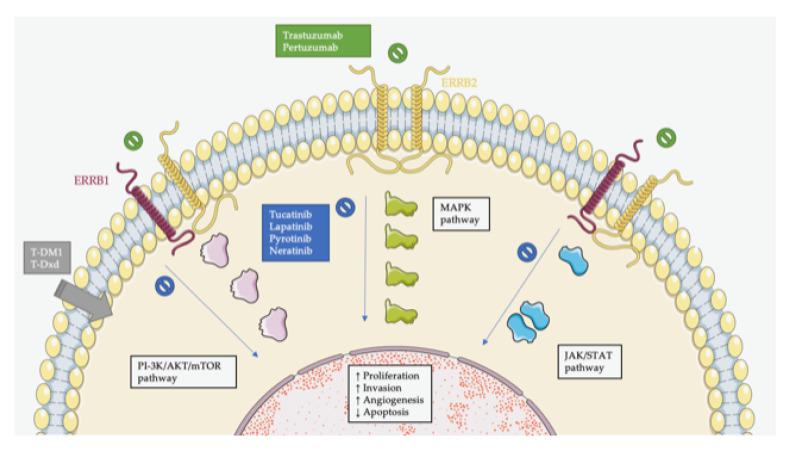
Colorectal cancer (CRC) is the third most common cancer in terms of incidence rate in adults and the second most common cause of cancer-related death in Europe. The treatment of metastatic CRC (mCRC) is based on the use of chemotherapy, anti-vascular endothelial growth factor (VEGF), and anti-epidermal growth factor receptor (EGFR) for RAS wild-type tumors. Precision medicine tries to identify molecular alterations that could be treated with targeted therapies. ERBB2 amplification (also known as HER-2) has been identified in 2-3% of patients with mCRC, but there are currently no approved ERBB2-targeted therapies for mCRC. The purpose of this review is to describe the molecular structure of ERBB2, clinical features of these patients, diagnosis of ERBB2 alterations, and the most relevant clinical trials with ERBB2-targeted therapies in mCRC.
就发病率而言,结直肠癌(CRC)是成年人中第三大常见癌症,在欧洲是癌症相关死亡的第二大常见原因。转移性结直肠癌(mCRC)的治疗基于对RAS野生型肿瘤使用化疗、抗血管内皮生长因子(VEGF)和抗表皮生长因子受体(EGFR)。精准医学试图识别可用靶向疗法治疗的分子改变。在2%-3%的mCRC患者中已发现ERBB2扩增(也称为HER-2),但目前尚无批准用于mCRC的ERBB2靶向疗法。本综述的目的是描述ERBB2的分子结构、这些患者的临床特征、ERBB2改变的诊断以及mCRC中使用ERBB2靶向疗法的最相关临床试验。
 Zotero 插件