
小儿重症哮喘中不要忘记哮喘共病!
Do not forget asthma comorbidities in pediatric severe asthma!
作者信息
Ronco Lucia, Folino Anna, Goia Manuela, Crida Benedetta, Esposito Irene, Bignamini Elisabetta
机构信息
Department of Pediatric Science, School of Medicine, University of Turin, Turin, Italy.
Department of Surgical Science, University of Turin, Turin, Italy.
出版信息
Front Pediatr. 2022 Jul 29;10:932366. doi: 10.3389/fped.2022.932366. eCollection 2022.
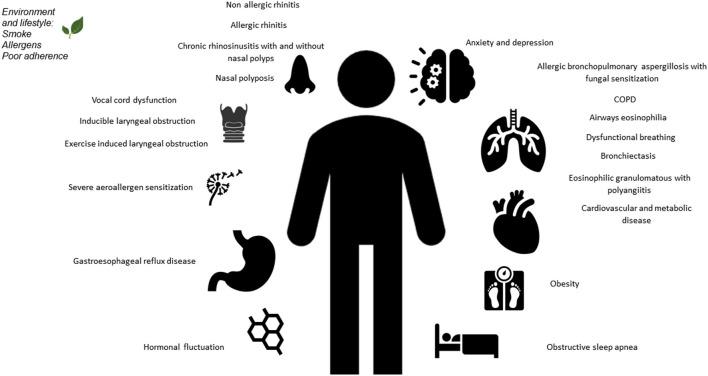
Asthma is the most common chronic respiratory disease in childhood. The long-term goals in managing asthma aim to control symptoms and prevent exacerbations, as well as to reduce side effects of therapy and mortality disease-related. Most of patients have mild to moderate asthma and respond well to standard therapies. However, a minor proportion of children with asthma has severe disease that remains uncontrolled despite optimal adherence to prescribed therapy and treatment of contributory factors, including trigger exposures and comorbidities, which can mimic or worsen asthma and contribute to exacerbations and poor quality of life. Evaluation of comorbidities is fundamental to optimize the management of the disease in a subgroup of patients with poor responder asthma. The overall aim of this article is to describe characteristics of main pediatric severe asthma comorbidities reported in literature, giving clinicians tools to recognize and manage properly these conditions.
哮喘是儿童期最常见的慢性呼吸道疾病。哮喘管理的长期目标旨在控制症状、预防发作,以及减少治疗的副作用和疾病相关死亡率。大多数患者患有轻度至中度哮喘,对标准疗法反应良好。然而,一小部分哮喘儿童患有严重疾病,尽管最佳地坚持规定治疗并治疗了包括触发因素暴露和合并症在内的促成因素(这些因素可模拟或加重哮喘并导致发作和生活质量差),但病情仍未得到控制。评估合并症对于优化难治性哮喘亚组患者的疾病管理至关重要。本文的总体目标是描述文献中报道的主要儿科严重哮喘合并症的特征,为临床医生提供识别和妥善管理这些病症的工具。
 Zotero 插件