
线粒体 mRNA 的定位受翻译动力学和空间运输的控制。
Mitochondrial mRNA localization is governed by translation kinetics and spatial transport.
机构信息
Department of Chemistry & Biochemistry, University of California, San Diego, La Jolla, California, United States of America.
Department of Physics, University of California, San Diego, La Jolla, California, United States of America.
出版信息
PLoS Comput Biol. 2022 Aug 19;18(8):e1010413. doi: 10.1371/journal.pcbi.1010413. eCollection 2022 Aug.
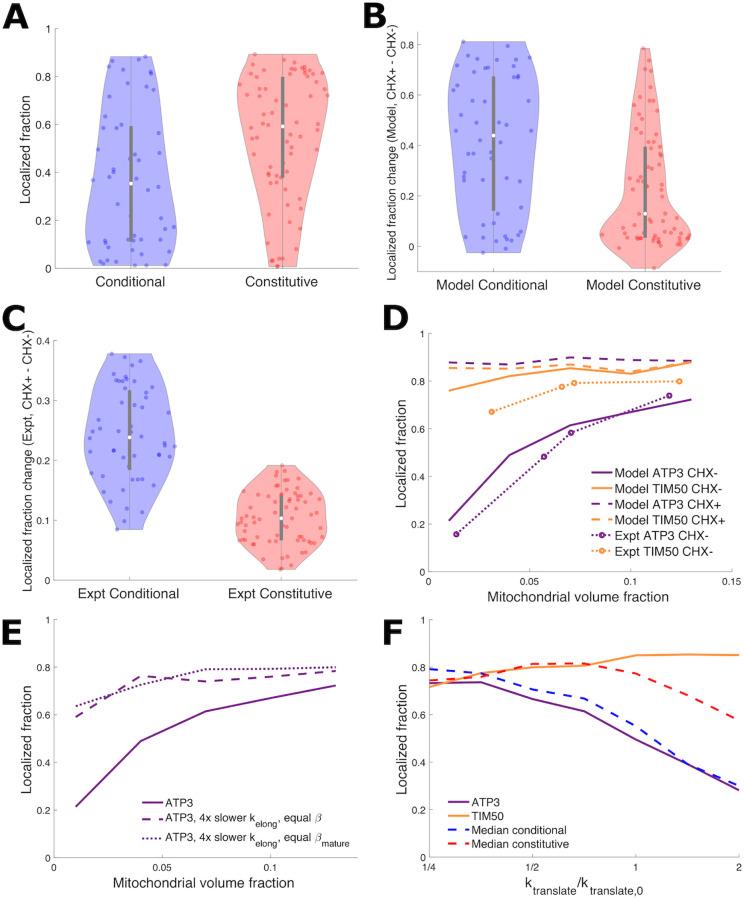
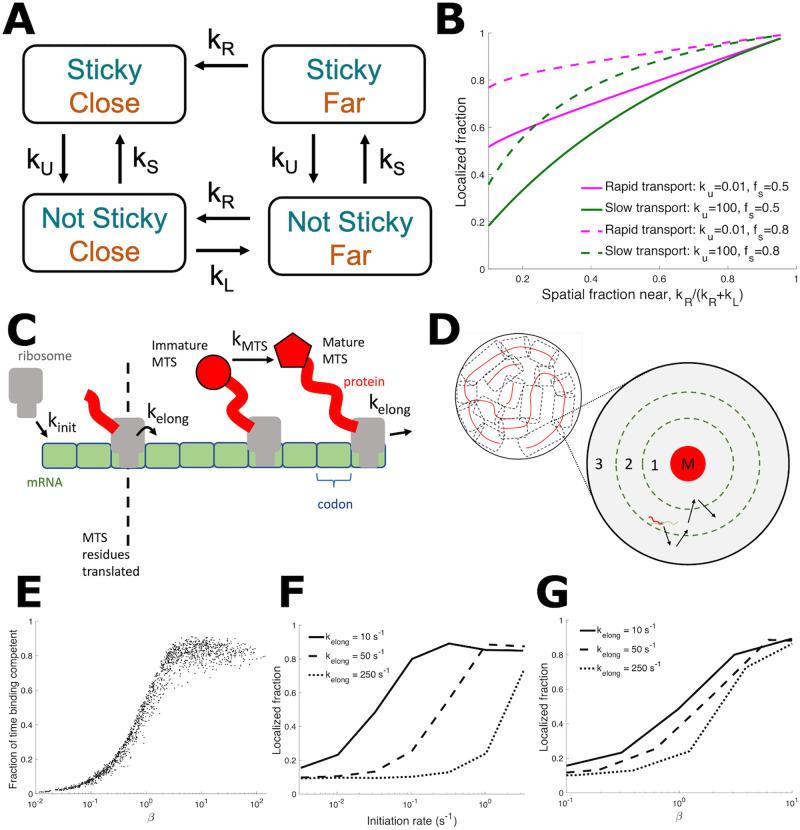
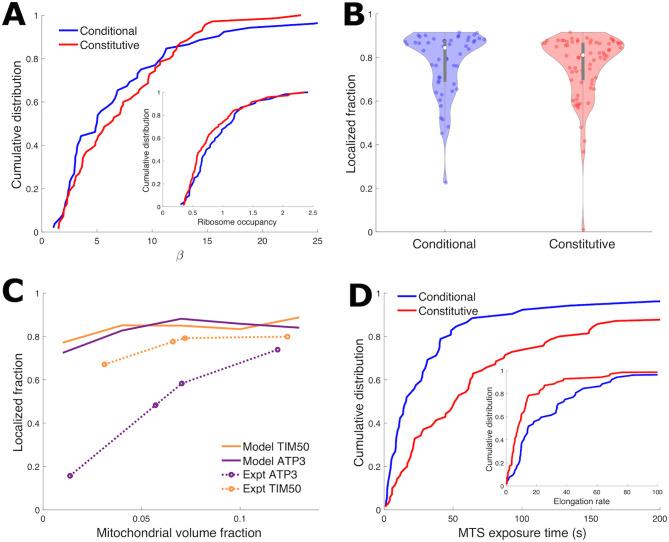
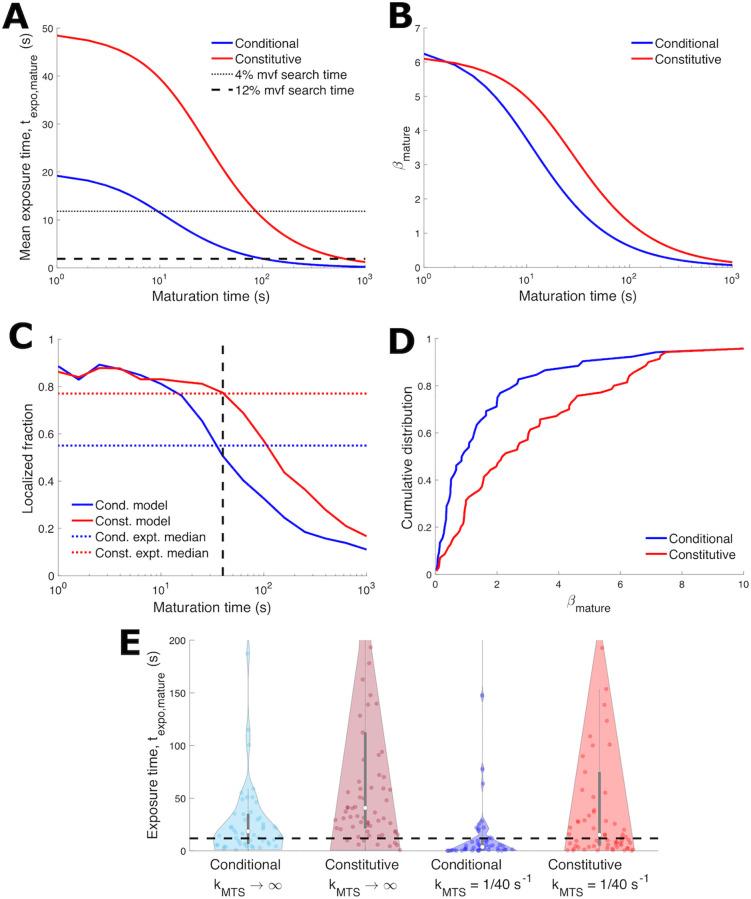
For many nuclear-encoded mitochondrial genes, mRNA localizes to the mitochondrial surface co-translationally, aided by the association of a mitochondrial targeting sequence (MTS) on the nascent peptide with the mitochondrial import complex. For a subset of these co-translationally localized mRNAs, their localization is dependent on the metabolic state of the cell, while others are constitutively localized. To explore the differences between these two mRNA types we developed a stochastic, quantitative model for MTS-mediated mRNA localization to mitochondria in yeast cells. This model includes translation, applying gene-specific kinetics derived from experimental data; and diffusion in the cytosol. Even though both mRNA types are co-translationally localized we found that the steady state number, or density, of ribosomes along an mRNA was insufficient to differentiate the two mRNA types. Instead, conditionally-localized mRNAs have faster translation kinetics which modulate localization in combination with changes to diffusive search kinetics across metabolic states. Our model also suggests that the MTS requires a maturation time to become competent to bind mitochondria. Our work indicates that yeast cells can regulate mRNA localization to mitochondria by controlling mitochondrial volume fraction (influencing diffusive search times) and gene translation kinetics (adjusting mRNA binding competence) without the need for mRNA-specific binding proteins. These results shed light on both global and gene-specific mechanisms that enable cells to alter mRNA localization in response to changing metabolic conditions.
对于许多核编码的线粒体基因,mRNA 在翻译的同时定位于线粒体表面,这得益于新生肽上的线粒体靶向序列 (MTS) 与线粒体导入复合物的结合。对于这些共翻译定位的 mRNA 的一部分,它们的定位取决于细胞的代谢状态,而其他则是组成型定位的。为了探索这两种 mRNA 类型之间的差异,我们开发了一种用于酵母细胞中线粒体 MTS 介导的 mRNA 定位的随机、定量模型。该模型包括翻译,应用来自实验数据的基因特异性动力学;以及在细胞质中的扩散。尽管这两种 mRNA 类型都是共翻译定位的,但我们发现核糖体在 mRNA 上的稳态数量或密度不足以区分这两种 mRNA 类型。相反,条件定位的 mRNA 具有更快的翻译动力学,这与代谢状态下扩散搜索动力学的变化相结合来调节定位。我们的模型还表明,MTS 需要一定的成熟时间才能有能力与线粒体结合。我们的工作表明,酵母细胞可以通过控制线粒体体积分数(影响扩散搜索时间)和基因翻译动力学(调节 mRNA 结合能力)来调节线粒体的 mRNA 定位,而无需特定的 mRNA 结合蛋白。这些结果揭示了使细胞能够响应代谢条件变化改变 mRNA 定位的全局和基因特异性机制。
 Zotero 插件