
基于世界卫生组织全球数据库 VigiBase 的真实生活中的草药抗癌药物相互作用。
Herb-anticancer drug interactions in real life based on VigiBase, the WHO global database.
机构信息
Department of Pharmacotherapy and Pharmaceutics, Faculty of Pharmacy, Université Libre de Bruxelles (ULB), Boulevard du Triomphe, CP 205/07, Access 2, Campus de la Plaine, Building BC, 1050, Brussels, Belgium.
Vigilance Division, Cell Human Pharmacovigilance Evaluation, Federal Agency for Medicines and Health Products (FAMHP), Brussels, Belgium.
出版信息
Sci Rep. 2022 Aug 19;12(1):14178. doi: 10.1038/s41598-022-17704-z.
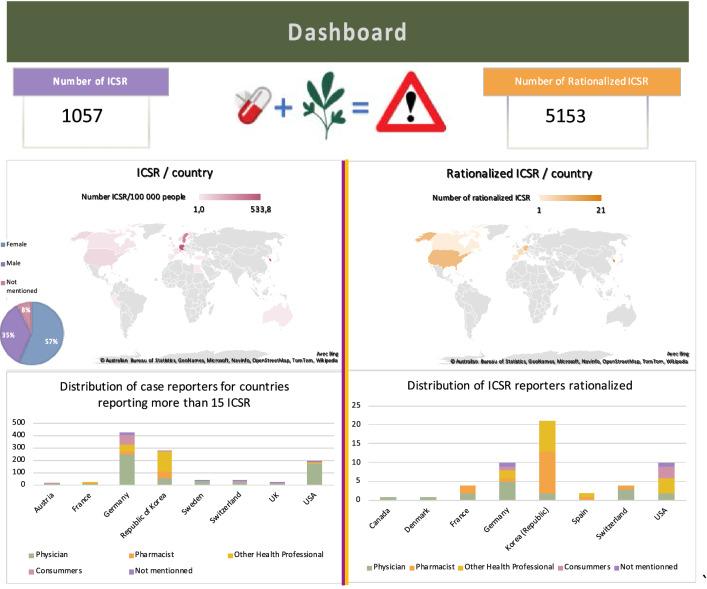
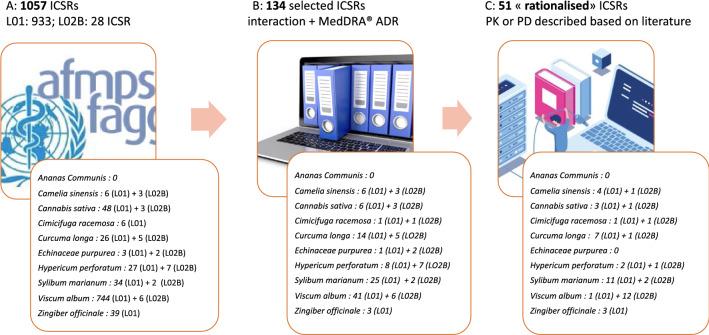
Cancer patients could combine herbal treatments with their chemotherapy. We consulted VigiBase, a WHO database of individual case safety reports (ICSRs) which archives reports of suspected Adverse Drug Reactions (ADRs) when herbal products are used in conjunction with anti-cancer treatment. We focused on the possible interactions between antineoplastic (L01 ATC class) or hormone antagonists (L02B ATC class) with 10 commonly used herbs (pineapple, green tea, cannabis, black cohosh, turmeric, echinacea, St John's wort, milk thistle and ginger) to compare ADRs described in ICSRs with the literature. A total of 1057 ICSRs were extracted from the database but only 134 were complete enough (or did not concern too many therapeutic lines) to keep them for analysis. Finally, 51 rationalizable ICSRs could be explained, which led us to propose a pharmacokinetic or pharmacodynamic interaction mechanism. Reports concerned more frequently women and half of the rationalizable ICSRs involved Viscum album and Silybum marianum. 5% of the ADRs described could have been avoided if clinicians had had access to the published information. It is also important to note that in 8% of the cases, the ADRs observed were life threatening. Phytovigilance should thus be considered more by health care professionals to best treat cancer patients and for better integrative care.
癌症患者可以将草药治疗与化疗结合使用。我们查阅了世卫组织个体病例安全报告数据库(VigiBase),该数据库收录了草药与抗癌治疗联合使用时疑似药物不良反应报告。我们主要关注抗肿瘤(L01 药物类别)或激素拮抗剂(L02B 药物类别)与 10 种常用草药(菠萝、绿茶、大麻、黑升麻、姜黄、紫锥菊、贯叶连翘、奶蓟草和生姜)之间可能存在的相互作用,将数据库中描述的不良反应与文献进行比较。从数据库中提取了 1057 份病例报告,但只有 134 份足够完整(或不涉及太多治疗方案),可以保留下来进行分析。最终,有 51 份可以用合理的药物相互作用机制来解释,这使我们提出了一种药代动力学或药效学相互作用机制。报告更频繁地涉及女性,且 51 份可解释的病例报告中有一半涉及槲寄生和水飞蓟。如果临床医生能够获得已发表的信息,那么 5%的描述的不良反应是可以避免的。还需要注意的是,在 8%的情况下,观察到的不良反应是威胁生命的。因此,医疗保健专业人员应该更加重视植物药物警戒,以更好地治疗癌症患者,并提供更好的综合护理。
 Zotero 插件