
多因素协同驱动的光子水凝胶适体传感器用于溶菌酶的简便、无标记和比色检测。
Multi-Factors Cooperatively Actuated Photonic Hydrogel Aptasensors for Facile, Label-Free and Colorimetric Detection of Lysozyme.
机构信息
Key Laboratory of New Energy and New Functional Materials, Shaanxi Key Laboratory of Chemical Reaction Engineering, College of Chemistry and Chemical Engineering, Yan'an University, Yan'an 716000, China.
Technical Institute of Physics and Chemistry, Chinese Academy of Sciences, Beijing 100190, China.
出版信息
Biosensors (Basel). 2022 Aug 20;12(8):662. doi: 10.3390/bios12080662.
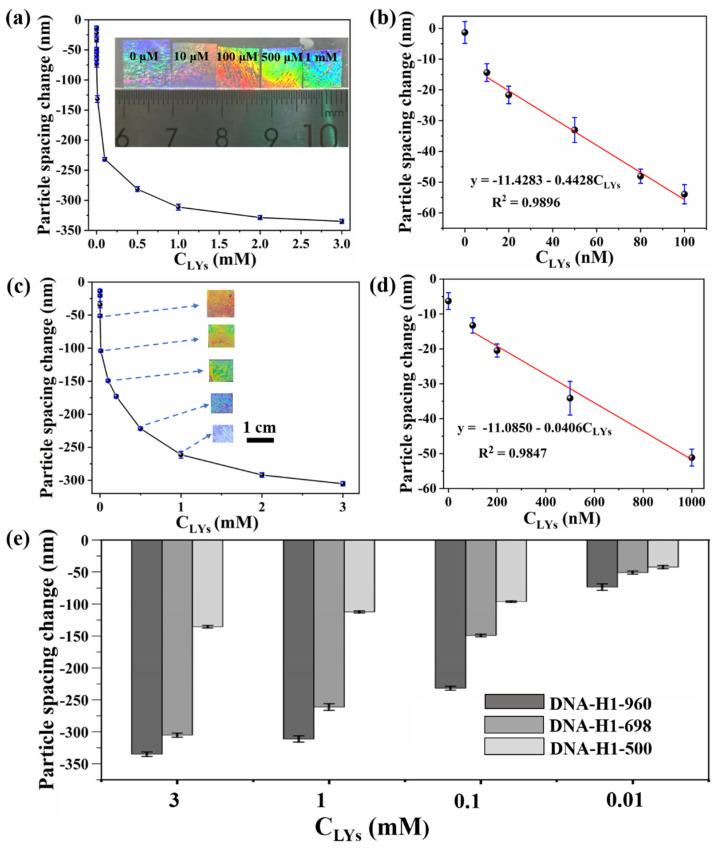
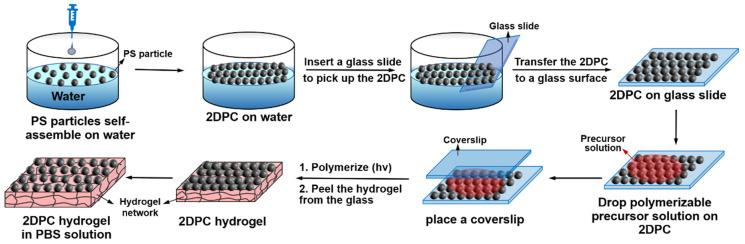
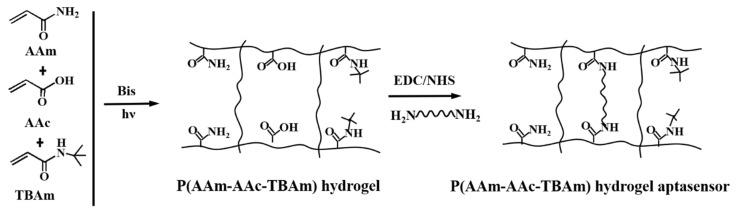
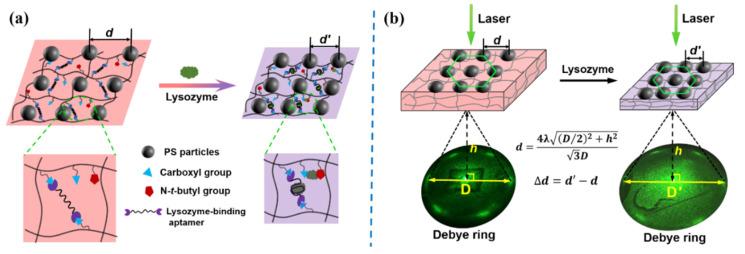
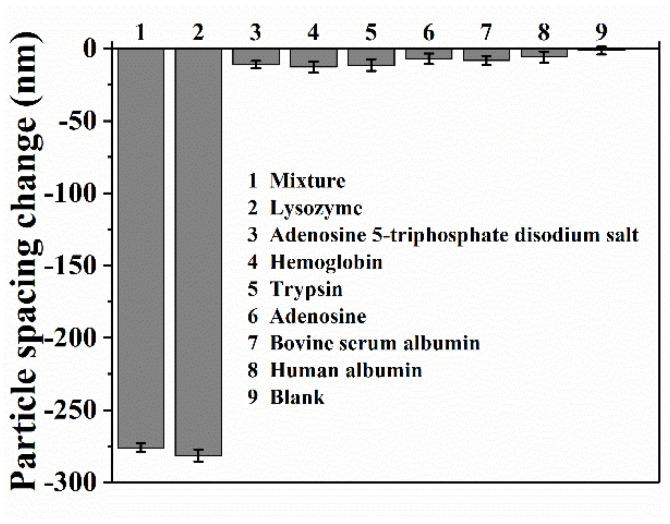
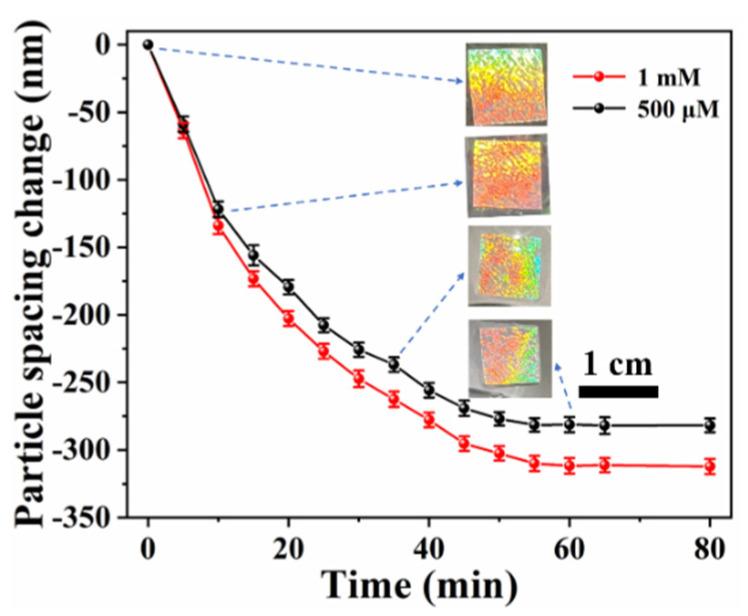
Responsive two-dimensional photonic crystal (2DPC) hydrogels have been widely used as smart sensing materials for constructing various optical sensors to accurately detect different target analytes. Herein, we report photonic hydrogel aptasensors based on aptamer-functionalized 2DPC poly(acrylamide-acrylic acid-N-tert-butyl acrylamide) hydrogels for facile, label-free and colorimetric detection of lysozyme in human serum. The constructed photonic hydrogel aptasensors undergo shrinkage upon exposure to lysozyme solution through multi-factors cooperative actuation. Here, the specific binding between the aptamer and lysozyme, and the simultaneous interactions between carboxyl anions and N-tert-butyl groups with lysozyme, increase the cross-linking density of the hydrogel, leading to its shrinkage. The aptasensors' shrinkage decreases the particle spacing of the 2DPC embedded in the hydrogel network. It can be simply monitored by measuring the Debye diffraction ring of the photonic hydrogel aptasensors using a laser pointer and a ruler without needing sophisticated apparatus. The significant shrinkage of the aptasensors can be observed by the naked eye via the hydrogel size and color change. The aptasensors show good sensitivity with a limit of detection of 1.8 nM, high selectivity and anti-interference for the detection of lysozyme. The photonic hydrogel aptasensors have been successfully used to accurately determine the concentration of lysozyme in human serum. Therefore, novel photonic hydrogel aptasensors can be constructed by designing functional monomers and aptamers that can specifically bind target analytes.
响应性二维光子晶体(2DPC)水凝胶已被广泛用作构建各种光学传感器的智能传感材料,以准确检测不同的目标分析物。在此,我们报道了基于适配体功能化的 2DPC 聚(丙烯酰胺-丙烯酸-N-叔丁基丙烯酰胺)水凝胶的光子水凝胶适体传感器,用于人血清中溶菌酶的简便、无标记和比色检测。构建的光子水凝胶适体传感器在暴露于溶菌酶溶液时会通过多种因素协同作用发生收缩。在这里,适配体与溶菌酶之间的特异性结合以及羧基阴离子与 N-叔丁基基团与溶菌酶之间的同时相互作用增加了水凝胶的交联密度,导致其收缩。适体传感器的收缩减小了嵌入水凝胶网络中的 2DPC 的颗粒间距。可以通过使用激光笔和尺子简单地测量光子水凝胶适体传感器的德拜衍射环来监测其收缩,而无需复杂的仪器。通过凝胶尺寸和颜色变化,可以通过肉眼观察到适体传感器的明显收缩。该适体传感器对溶菌酶的检测具有良好的灵敏度,检测限低至 1.8 nM,具有高选择性和抗干扰性。该光子水凝胶适体传感器已成功用于准确测定人血清中溶菌酶的浓度。因此,可以通过设计能够特异性结合目标分析物的功能单体和适配体来构建新型光子水凝胶适体传感器。


 Zotero 插件