
产毒内共生体保护病原菌真菌免受微捕食者侵害。
Toxin-Producing Endosymbionts Shield Pathogenic Fungus against Micropredators.
机构信息
Department of Biomolecular Chemistry, Leibniz Institute for Natural Product Research and Infection Biology (HKI), Jena, Germany.
Junior Research Group Evolution of Microbial Interactions, Leibniz Institute for Natural Product Research and Infection Biology (HKI), Jena, Germany.
出版信息
mBio. 2022 Oct 26;13(5):e0144022. doi: 10.1128/mbio.01440-22. Epub 2022 Aug 25.
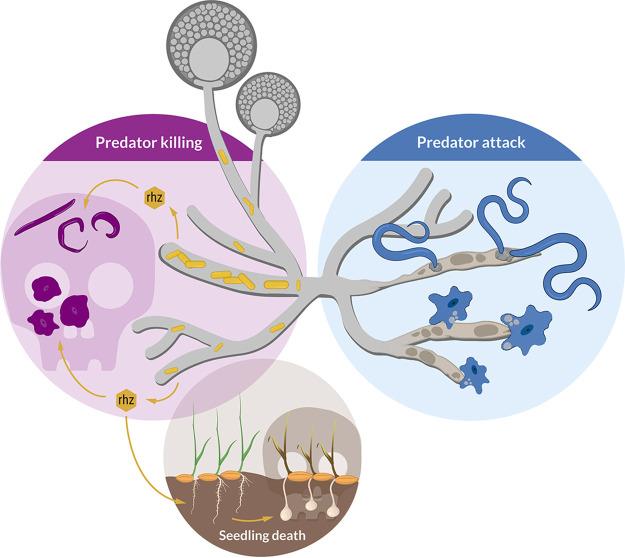
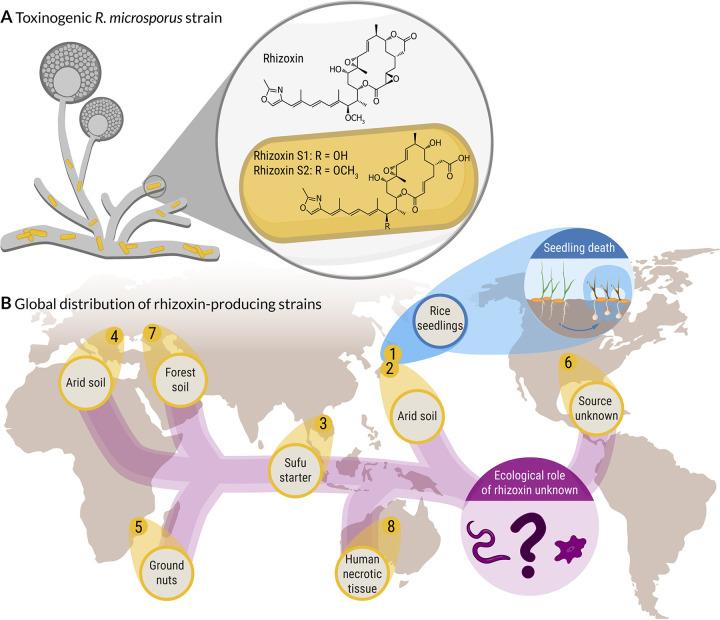
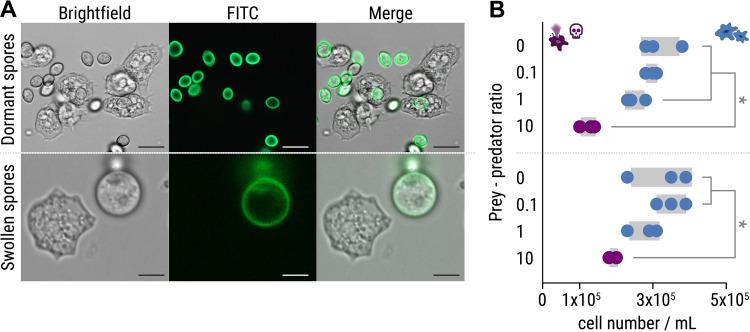
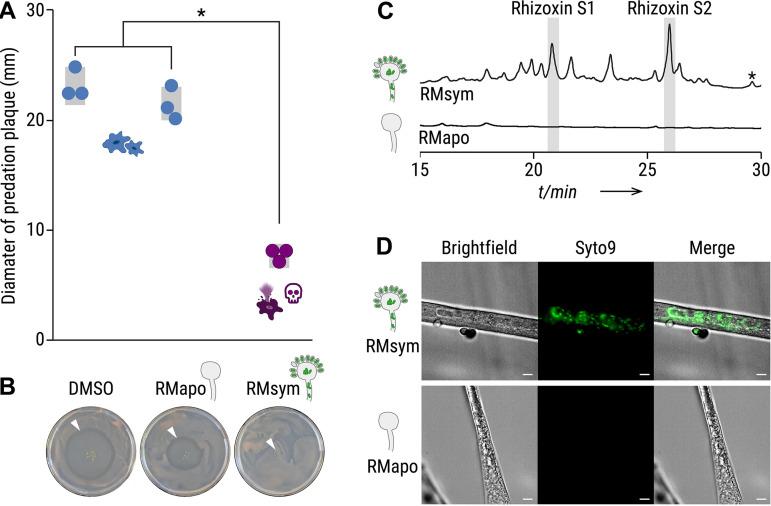
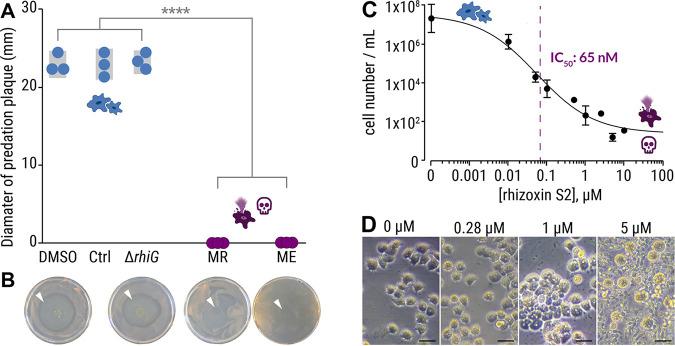
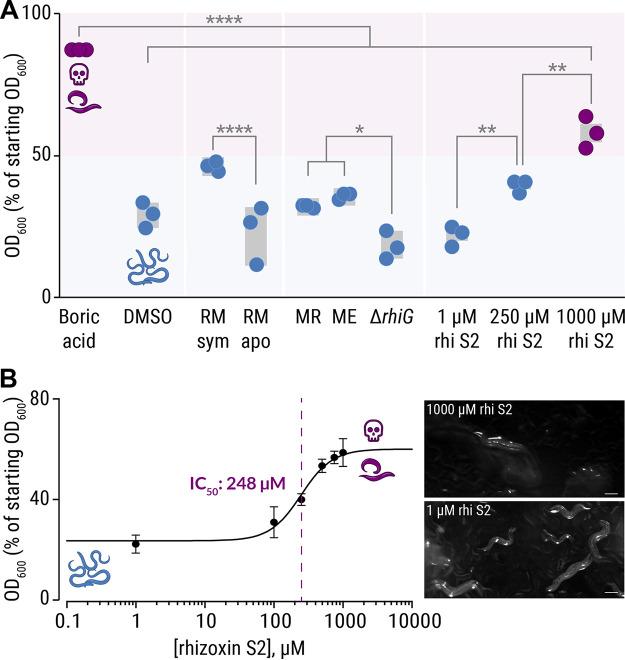
The fungus Rhizopus microsporus harbors a bacterial endosymbiont () for the production of the antimitotic toxin rhizoxin. Although rhizoxin is the causative agent of rice seedling blight, the toxinogenic bacterial-fungal alliance is, not restricted to the plant disease. It has been detected in numerous environmental isolates from geographically distinct sites covering all five continents, thus raising questions regarding the ecological role of rhizoxin beyond rice seedling blight. Here, we show that rhizoxin serves the fungal host in fending off protozoan and metazoan predators. Fluorescence microscopy and coculture experiments with the fungivorous amoeba revealed that ingestion of R. microsporus spores is toxic to . This amoebicidal effect is caused by the dominant bacterial rhizoxin congener rhizoxin S2, which is also lethal toward the model nematode Caenorhabditis elegans. By combining stereomicroscopy, automated image analysis, and quantification of nematode movement, we show that the fungivorous nematode Aphelenchus avenae actively feeds on R. microsporus that is lacking endosymbionts, whereas worms coincubated with symbiotic R. microsporus are significantly less lively. This study uncovers an unexpected ecological role of rhizoxin as shield against micropredators. This finding suggests that predators may function as an evolutionary driving force to maintain toxin-producing endosymbionts in nonpathogenic fungi. The soil community is a complex system characterized by predator-prey interactions. Fungi have developed effective strategies to defend themselves against predators. Understanding these strategies is of critical importance for ecology, medicine, and biotechnology. In this study, we shed light on the defense mechanisms of the phytopathogenic - symbiosis that has spread worldwide. We report an unexpected role of rhizoxin, a secondary metabolite produced by the bacterium residing within the hyphae of R. microsporus. We show that this bacterial secondary metabolite is utilized by the fungal host to successfully fend off fungivorous protozoan and metazoan predators and thus identified a fundamentally new function of this infamous cytotoxic compound. This endosymbiont-dependent predator defense illustrates an unusual strategy employed by fungi that has broader implications, since it may serve as a model for understanding how animal predation acts as an evolutionary driving force to maintain endosymbionts in nonpathogenic fungi.
真菌里氏木霉(Rhizopus microsporus)携带有一个细菌内共生体(),用于生产抗有丝分裂毒素里氏霉素(rhizoxin)。尽管里氏霉素是水稻苗疫病的病原体,但产毒真菌-细菌联合体不仅限于这种植物病害。它已在来自全球不同地区的众多环境分离株中被检测到,涵盖了所有五个大洲,这引发了关于里氏霉素在水稻苗疫病之外的生态作用的问题。在这里,我们表明里氏霉素有助于真菌宿主抵御原生动物和后生动物捕食者。荧光显微镜和与食真菌变形虫()的共培养实验表明,吞噬里氏木霉孢子对变形虫是有毒的。这种杀变形虫效应是由占主导地位的细菌里氏霉素同系物里氏霉素 S2 引起的,该毒素对模式线虫秀丽隐杆线虫(Caenorhabditis elegans)也是致命的。通过结合立体显微镜、自动图像分析和线虫运动的定量分析,我们表明,食真菌线虫燕麦曲虫(Aphelenchus avenae)积极取食缺乏内共生体的里氏木霉,但与共生里氏木霉共培养的线虫则明显不活跃。这项研究揭示了里氏霉素作为抵御微生物捕食者的意外生态作用。这一发现表明,捕食者可能是维持非致病性真菌产毒内共生体的进化驱动力。土壤群落是一个以捕食者-猎物相互作用为特征的复杂系统。真菌已经发展出有效的策略来抵御捕食者。了解这些策略对于生态学、医学和生物技术至关重要。在这项研究中,我们揭示了这种已在全球范围内传播的植物病原共生体的防御机制。我们报告了里氏霉素(一种由居住在里氏木霉菌丝内的细菌产生的次生代谢物)的一个意想不到的作用。我们表明,这种细菌次生代谢物被真菌宿主利用来成功抵御食真菌的原生动物和后生动物捕食者,从而确定了这种臭名昭著的细胞毒性化合物的一个全新功能。这种依赖内共生体的捕食者防御说明了真菌所采用的一种不寻常策略,这具有更广泛的意义,因为它可能成为理解动物捕食如何作为一种进化驱动力来维持非致病性真菌中的内共生体的模型。

 Zotero 插件