
重新审视抓握试验:正中神经损伤大鼠模型功能恢复的系统评价
The Grasping Test Revisited: A Systematic Review of Functional Recovery in Rat Models of Median Nerve Injury.
作者信息
Lauer Henrik, Prahm Cosima, Thiel Johannes Tobias, Kolbenschlag Jonas, Daigeler Adrien, Hercher David, Heinzel Johannes C
机构信息
Department of Hand-, Plastic, Reconstructive and Burn Surgery, BG Unfallklinik Tuebingen, University of Tuebingen, Schnarrenbergstraße 95, 72076 Tuebingen, Germany.
Ludwig Boltzmann Institute for Traumatology, The Research Center in Cooperation with AUVA, Donaueschingenstraße 13, 1200 Vienna, Austria.
出版信息
Biomedicines. 2022 Aug 3;10(8):1878. doi: 10.3390/biomedicines10081878.
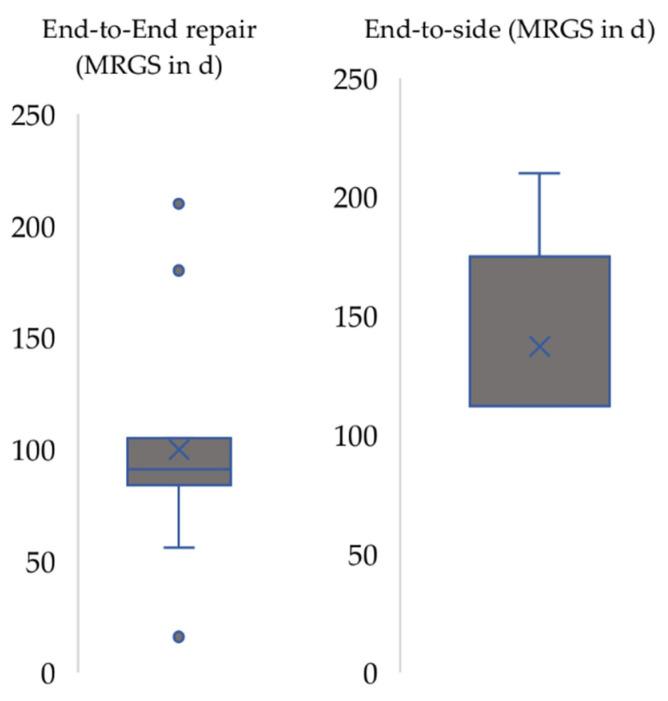
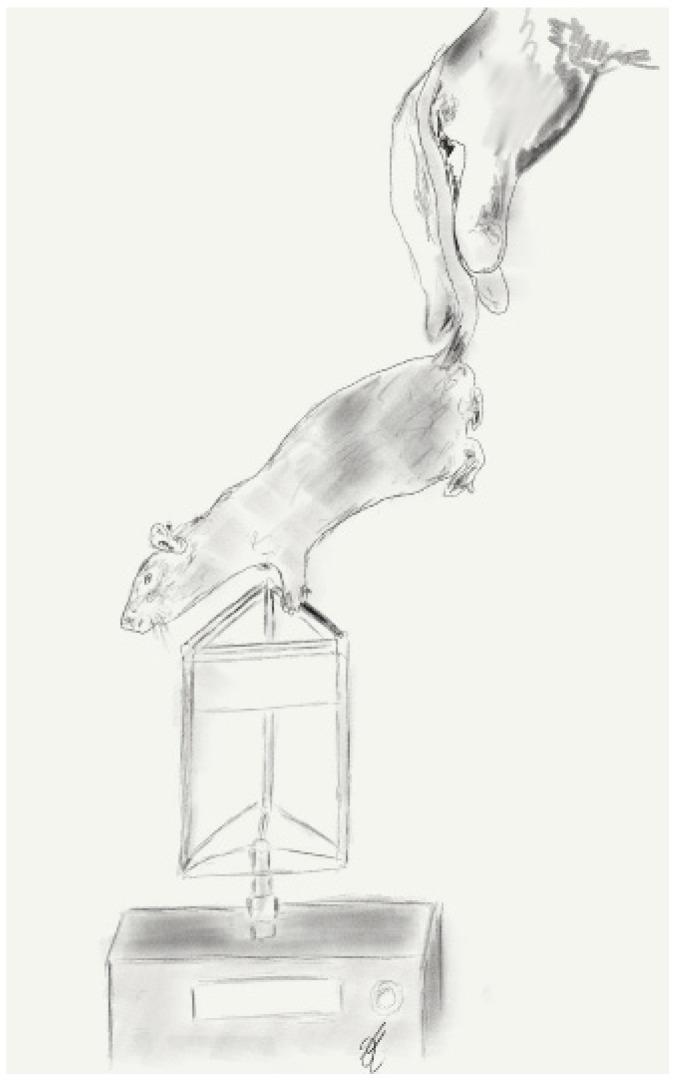
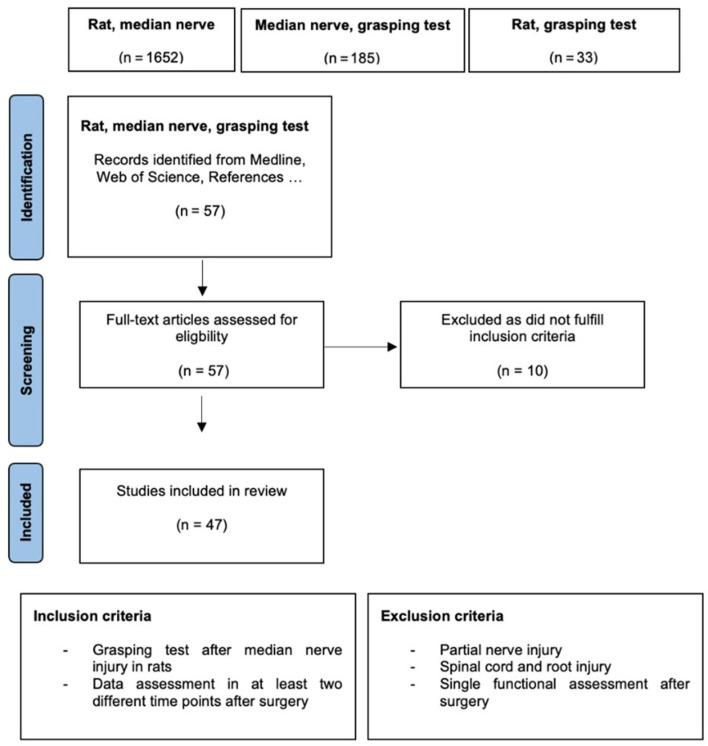
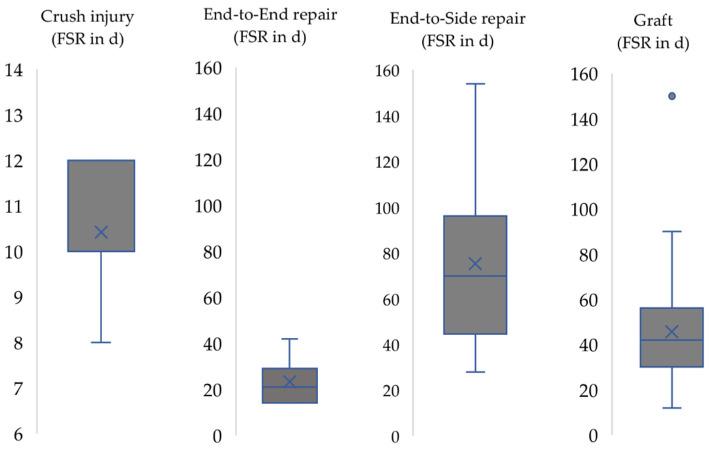
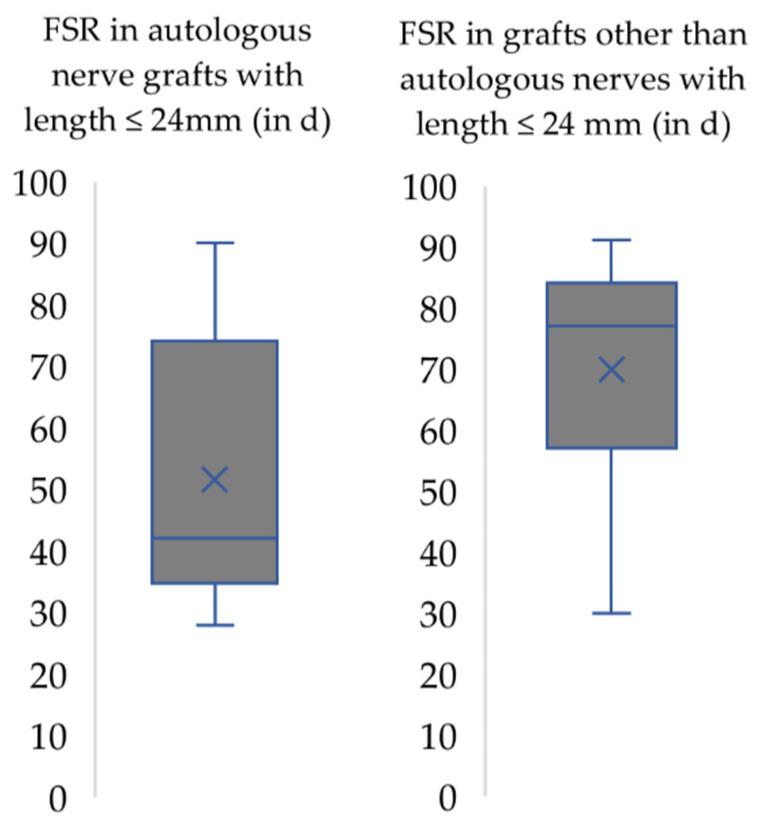
The rat median nerve model is a well-established and frequently used model for peripheral nerve injury and repair. The grasping test is the gold-standard to evaluate functional recovery in this model. However, no comprehensive review exists to summarize the course of functional recovery in regard to the lesion type. According to PRISMA-guidelines, research was performed, including the databases PubMed and Web of Science. Groups were: (1) crush injury, (2) transection with end-to-end or with (3) end-to-side coaptation and (4) isogenic or acellular allogenic grafting. Total and respective number, as well as rat strain, type of nerve defect, length of isogenic or acellular allogenic allografts, time at first signs of motor recovery (FSR) and maximal recovery grasping strength (MRGS), were evaluated. In total, 47 articles met the inclusion criteria. Group I showed earliest signs of motor recovery. Slow recovery was observable in group III and in graft length above 25 mm. Isografts recovered faster compared to other grafts. The onset and course of recovery is heavily dependent from the type of nerve injury. The grasping test should be used complementary in addition to other volitional and non-volitional tests. Repetitive examinations should be planned carefully to optimize assessment of valid and reliable data.
大鼠正中神经模型是一种成熟且常用的周围神经损伤与修复模型。抓握试验是评估该模型功能恢复的金标准。然而,目前尚无全面综述总结不同损伤类型下的功能恢复过程。根据PRISMA指南,我们进行了研究,检索了PubMed和Web of Science数据库。分组如下:(1)挤压伤,(2)端端吻合或(3)端侧吻合的横断伤,以及(4)同基因或脱细胞异体移植。评估了每组的总数和各自数量,以及大鼠品系、神经缺损类型、同基因或脱细胞异体移植物的长度、运动恢复首次迹象出现的时间(FSR)和最大恢复抓握强度(MRGS)。共有47篇文章符合纳入标准。第一组显示出最早的运动恢复迹象。第三组以及移植物长度超过25mm时恢复较慢。同基因移植物比其他移植物恢复得更快。恢复的起始和过程很大程度上取决于神经损伤的类型。除了其他自主和非自主测试外,抓握试验应作为补充使用。应仔细规划重复检查,以优化对有效和可靠数据的评估。

 Zotero 插件