
炎症、缺氧和阿片受体表达在阻塞性睡眠呼吸暂停患者疼痛调节中的作用。
The Role of Inflammation, Hypoxia, and Opioid Receptor Expression in Pain Modulation in Patients Suffering from Obstructive Sleep Apnea.
机构信息
Department of Sleep Medicine and Metabolic Disorders, Medical University of Lodz, 92-215 Lodz, Poland.
Department of Neurosurgery, Spine and Peripheral Nerves Surgery, Medical University of Lodz, 90-549 Lodz, Poland.
出版信息
Int J Mol Sci. 2022 Aug 13;23(16):9080. doi: 10.3390/ijms23169080.
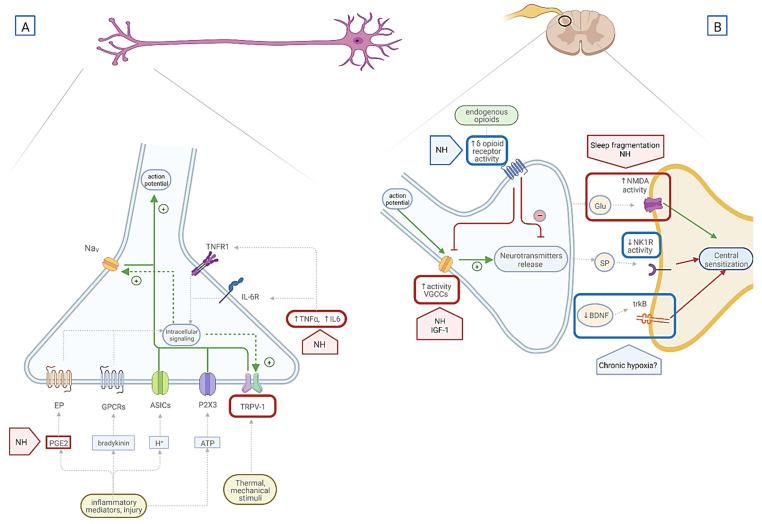
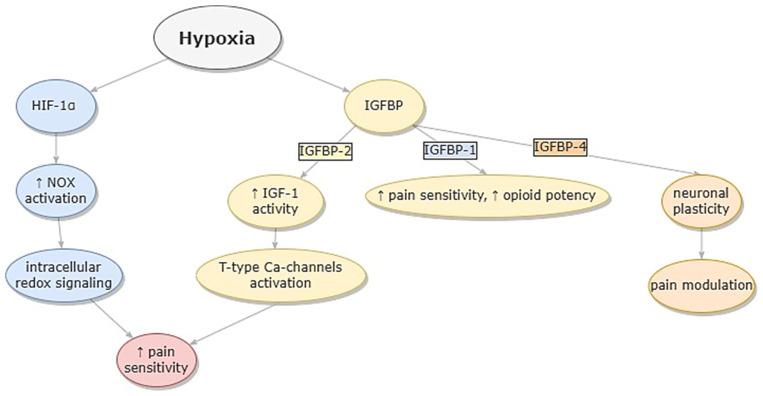
Obstructive sleep apnea (OSA) is a relatively common disease in the general population. Besides its interaction with many comorbidities, it can also interact with potentially painful conditions and modulate its course. The association between OSA and pain modulation has recently been a topic of concern for many scientists. The mechanism underlying OSA-related pain connection has been linked with different pathophysiological changes in OSA and various pain mechanisms. Furthermore, it may cause both chronic and acute pain aggravation as well as potentially influencing the antinociceptive mechanism. Characteristic changes in OSA such as nocturnal hypoxemia, sleep fragmentation, and systemic inflammation are considered to have a curtailing impact on pain perception. Hypoxemia in OSA has been proven to have a significant impact on increased expression of proinflammatory cytokines influencing the hyperalgesic priming of nociceptors. Moreover, hypoxia markers by themselves are hypothesized to modulate intracellular signal transduction in neurons and have an impact on nociceptive sensitization. Pain management in patients with OSA may create problems arousing from alterations in neuropeptide systems and overexpression of opioid receptors in hypoxia conditions, leading to intensification of side effects, e.g., respiratory depression and increased opioid sensitivity for analgesic effects. In this paper, we summarize the current knowledge regarding pain and pain treatment in OSA with a focus on molecular mechanisms leading to nociceptive modulation.
阻塞性睡眠呼吸暂停(OSA)是一种在普通人群中相对常见的疾病。除了与许多合并症相互作用外,它还可以与潜在的疼痛状况相互作用并调节其病程。OSA 与疼痛调节之间的关联最近引起了许多科学家的关注。OSA 相关疼痛联系的潜在机制与 OSA 中的不同病理生理变化和各种疼痛机制有关。此外,它可能导致慢性和急性疼痛加重,并可能影响抗伤害机制。OSA 的特征性变化,如夜间低氧血症、睡眠碎片化和全身炎症,被认为对疼痛感知有抑制作用。OSA 中的低氧血症已被证明会显著增加影响伤害感受器痛觉过敏启动的促炎细胞因子的表达。此外,缺氧标志物本身被假设可以调节神经元内的细胞内信号转导,并对伤害感受敏化产生影响。OSA 患者的疼痛管理可能会因神经肽系统的改变和缺氧条件下阿片受体的过度表达而引起问题,导致副作用加剧,例如呼吸抑制和增加阿片类药物的敏感性以达到镇痛效果。本文总结了目前关于 OSA 中疼痛和疼痛治疗的知识,重点介绍了导致伤害感受调节的分子机制。


 Zotero 插件