
MRI 预测抗抑郁药治疗反应的生物标志物。
MRI predictors of pharmacotherapy response in major depressive disorder.
机构信息
Department of Psychiatry, University of Pittsburgh, Pittsburgh, PA, USA.
Department of Psychiatry, University of Pittsburgh, Pittsburgh, PA, USA; Department of Bioengineering, University of Pittsburgh, Pittsburgh, PA, USA.
出版信息
Neuroimage Clin. 2022;36:103157. doi: 10.1016/j.nicl.2022.103157. Epub 2022 Aug 17.
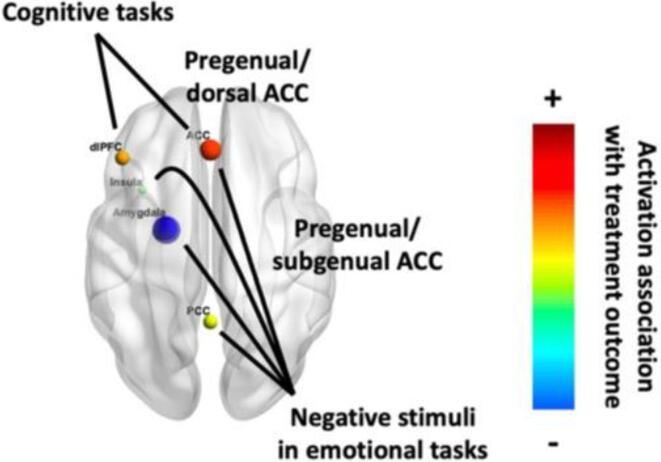
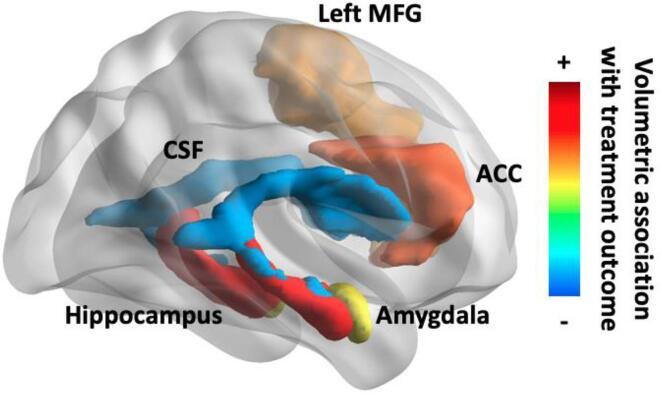
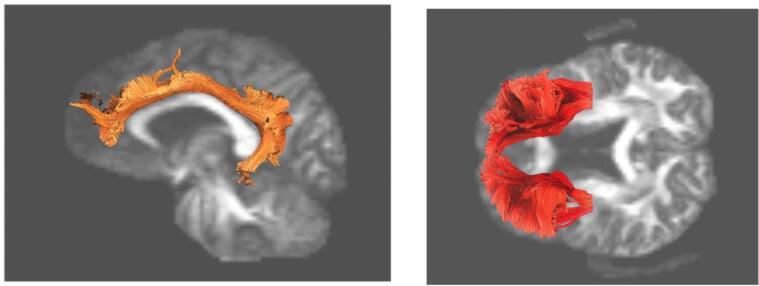
Major depressive disorder is among the most prevalent psychiatric disorders, exacting a substantial personal, social, and economic toll. Antidepressant treatment typically involves an individualized trial and error approach with an inconsistent success rate. Despite a pressing need, no reliable biomarkers for predicting treatment outcome have yet been discovered. Brain MRI measures hold promise in this regard, though clinical translation remains elusive. In this review, we summarize structural MRI and functional MRI (fMRI) measures that have been investigated as predictors of treatment outcome. We broadly divide these into five categories including three structural measures: volumetric, white matter burden, and white matter integrity; and two functional measures: resting state fMRI and task fMRI. Currently, larger hippocampal volume is the most widely replicated predictor of successful treatment. Lower white matter hyperintensity burden has shown robustness in late life depression. However, both have modest discriminative power. Higher fractional anisotropy of the cingulum bundle and frontal white matter, amygdala hypoactivation and anterior cingulate cortex hyperactivation in response to negative emotional stimuli, and hyperconnectivity within the default mode network (DMN) and between the DMN and executive control network also show promise as predictors of successful treatment. Such network-focused measures may ultimately provide a higher-dimensional measure of treatment response with closer ties to the underlying neurobiology.
重度抑郁症是最常见的精神障碍之一,给个人、社会和经济带来了巨大的负担。抗抑郁治疗通常涉及个体化的尝试和错误方法,成功率不一致。尽管有迫切的需求,但尚未发现可靠的生物标志物来预测治疗效果。脑 MRI 测量在这方面具有前景,但临床转化仍然难以实现。在这篇综述中,我们总结了作为治疗结果预测因子的结构 MRI 和功能 MRI(fMRI)测量。我们将这些测量大致分为五类,包括三个结构测量:体积、白质负担和白质完整性;以及两个功能测量:静息态 fMRI 和任务 fMRI。目前,海马体体积较大是最广泛复制的治疗成功预测因子。白质高信号负担较低在老年抑郁症中表现出稳健性。然而,它们的区分能力都很有限。扣带束和额白质的各向异性分数较高、对负性情绪刺激的杏仁核激活减少和前扣带皮层激活增加,以及默认模式网络(DMN)内和 DMN 与执行控制网络之间的过度连接,也显示出作为治疗成功预测因子的潜力。这种以网络为中心的测量方法最终可能提供一种更高维度的治疗反应测量方法,与潜在的神经生物学更密切相关。

 Zotero 插件