
伊拉克/阿富汗战争肺损伤反映了烧坑暴露。
Iraq/Afghanistan war lung injury reflects burn pits exposure.
机构信息
University of Rochester School of Medicine and Dentistry, Simon Business School, University of Rochester, Rochester, USA.
Yale University School of Medicine, New Haven, USA.
出版信息
Sci Rep. 2022 Aug 29;12(1):14671. doi: 10.1038/s41598-022-18252-2.
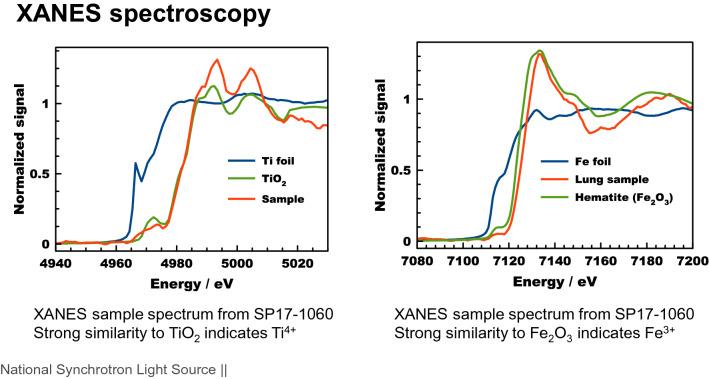
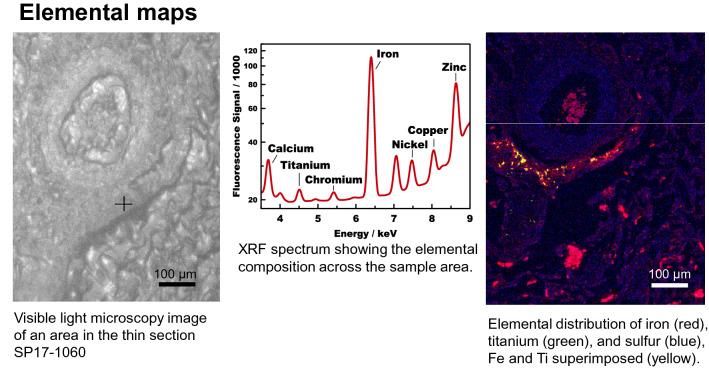
This descriptive case series retrospectively reviewed medical records from thirty-one previously healthy, war-fighting veterans who self-reported exposure to airborne hazards while serving in Iraq and Afghanistan between 2003 and the present. They all noted new-onset dyspnea, which began during deployment or as a military contractor. Twenty-one subjects underwent non-invasive pulmonary diagnostic testing, including maximum expiratory pressure (MEP) and impulse oscillometry (IOS). In addition, five soldiers received a lung biopsy; tissue results were compared to a previously published sample from a soldier in our Iraq Afghanistan War Lung Injury database and others in our database with similar exposures, including burn pits. We also reviewed civilian control samples (5) from the Stony Brook University database. Military personnel were referred to our International Center of Excellence in Deployment Health and Medical Geosciences, Donald and Barbara Zucker School of Medicine at Hofstra/Northwell under the auspices of Northwell IRB: 17-0140-FIMR Feinstein Institution for Medical Research "Clinicopathologic characteristics of Iraq Afghanistan War Lung Injury." We retrospectively examined medical records, including exposure data, radiologic imaging, and non-invasive pulmonary function testing (MGC Diagnostic Platinum Elite Plethysmograph) using the American Thoracic Society (ATS) standard interpretation based on Morgan et al., and for a limited cohort, biopsy data. Lung tissue, when available, was examined for carbonaceous particles, polycyclic aromatic hydrocarbons (Raman spectroscopy), metals, titanium connected to iron (Brookhaven National Laboratory, National Synchrotron Light Source II, Beamline 5-ID), oxidized metals, combustion temperature, inflammatory cell accumulation and fibrosis, neutrophil extracellular traps, Sirius red, Prussian Blue, as well as polarizable crystals/particulate matter/dust. Among twenty-one previously healthy, deployable soldiers with non-invasive pulmonary diagnostic tests, post-deployment, all had severely decreased MEP values, averaging 42% predicted. These same patients concurrently demonstrated abnormal airways reactance (X5Hz) and peripheral/distal airways resistance (D5-D20%) via IOS, averaging - 1369% and 23% predicted, respectively. These tests support the concept of airways hyperresponsiveness and distal airways narrowing, respectively. Among the five soldiers biopsied, all had constrictive bronchiolitis. We detected the presence of polycyclic aromatic hydrocarbons (PAH)-which are products of incomplete combustion-in the lung tissue of all five warfighters. All also had detectable titanium and iron in the lungs. Metals were all oxidized, supporting the concept of inhaling burned metals. Combustion temperature was consistent with that of burned petrol rather than higher temperatures noted with cigarettes. All were nonsmokers. Neutrophil extracellular traps were reported in two biopsies. Compared to our prior biopsies in our Middle East deployment database, these histopathologic results are similar, since all database biopsies have constrictive bronchiolitis, one has lung fibrosis with titanium bound to iron in fixed mathematical ratios of 1:7 and demonstrated polarizable crystals. These results, particularly constrictive bronchiolitis and polarizable crystals, support the prior data of King et al. (N. Engl. J. Med. 365:222-230, 2011) Soldiers in this cohort deployed to Iraq and Afghanistan since 2003, with exposure to airborne hazards, including sandstorms, burn pits, and improvised explosive devices, are at high risk for developing chronic clinical respiratory problems, including: (1) reduction in respiratory muscle strength; (2) airways hyperresponsiveness; and (3) distal airway narrowing, which may be associated with histopathologic evidence of lung damage, reflecting inhalation of burned particles from burn pits along with particulate matter/dust. Non-invasive pulmonary diagnostic tests are a predictor of burn pit-induced lung injury.
这是一个描述性的病例系列研究,回顾了 31 名以前健康的参战老兵的医疗记录,他们自 2003 年以来在伊拉克和阿富汗服役时报告接触过空气传播的危害。他们都出现了新发作的呼吸困难,这种呼吸困难始于部署期间或作为军事承包商期间。21 名受试者接受了非侵入性肺诊断测试,包括最大呼气压力(MEP)和脉冲振荡(IOS)。此外,5 名士兵接受了肺活检;组织结果与我们的伊拉克-阿富汗战争肺损伤数据库中的一名士兵和我们数据库中其他具有类似暴露的样本进行了比较,包括烧伤坑。我们还回顾了来自石溪大学数据库的 5 名平民对照组样本。在诺斯韦尔 IRB 的支持下,军事人员被转介到我们的部署健康和医学地球科学卓越国际中心、霍夫斯特拉/诺斯韦尔的唐纳德和芭芭拉·扎克医学院,进行 17-0140-FIMR Feinstein 医学研究所“伊拉克-阿富汗战争肺损伤的临床病理特征”研究。我们回顾了医疗记录,包括暴露数据、放射影像学和非侵入性肺功能测试(MGC 诊断白金精英 plethysmograph),使用美国胸科学会(ATS)基于 Morgan 等人的标准解释,以及有限的队列,活检数据。当有肺组织时,检查碳质颗粒、多环芳烃(拉曼光谱)、金属、与铁连接的钛(布鲁克海文国家实验室、国家同步辐射光源 II、光束线 5-ID)、氧化金属、燃烧温度、炎症细胞积累和纤维化、中性粒细胞细胞外陷阱、 Sirius 红、普鲁士蓝以及可极化晶体/颗粒/尘埃。在 21 名以前健康、可部署的士兵中,接受非侵入性肺诊断测试的士兵在部署后,所有 MEP 值均严重下降,平均为预测值的 42%。这些相同的患者同时表现出异常气道电抗(X5Hz)和外周/远端气道阻力(D5-D20%)通过 IOS 平均分别为-1369%和 23%的预测值。这些测试分别支持气道高反应性和远端气道狭窄的概念。在接受活检的 5 名士兵中,所有人都患有缩窄性细支气管炎。我们在所有 5 名战斗人员的肺组织中检测到多环芳烃(PAH)-不完全燃烧的产物。所有人的肺部都有可检测到的钛和铁。所有金属都被氧化,支持吸入燃烧金属的概念。燃烧温度与燃烧汽油的温度一致,而不是与香烟相关的较高温度。所有人都是不吸烟者。两份活检报告中都有中性粒细胞细胞外陷阱。与我们之前在中东部署数据库中的活检相比,这些组织病理学结果相似,因为所有数据库活检都有缩窄性细支气管炎,一份活检有肺纤维化,钛与铁以 1:7 的固定数学比例结合,并表现出可极化晶体。这些结果,特别是缩窄性细支气管炎和可极化晶体,支持 King 等人的先前数据(N Engl J Med 365:222-230, 2011)。自 2003 年以来,部署到伊拉克和阿富汗的这一队列士兵接触到空气传播的危害,包括沙尘暴、烧伤坑和简易爆炸装置,他们患慢性临床呼吸道问题的风险很高,包括:(1)呼吸肌力量下降;(2)气道高反应性;(3)远端气道狭窄,这可能与吸入燃烧坑中的燃烧颗粒以及颗粒/尘埃引起的肺损伤的组织病理学证据有关。非侵入性肺诊断测试是烧伤坑引起的肺损伤的预测指标。



 Zotero 插件