
雌二醇暴露 14 天后,自然杀伤 T 细胞的激活有助于小鼠肝脏中 Th1 偏向。
Activation of natural killer T cells contributes to Th1 bias in the murine liver after 14 d of ethinylestradiol exposure.
机构信息
New Drug Screening Center, China Pharmaceutical University, Nanjing 210009, Jiangsu Province, China.
Department of Pharmacology, China Pharmaceutical University, Nanjing 210009, Jiangsu Province, China.
出版信息
World J Gastroenterol. 2022 Jul 14;28(26):3150-3163. doi: 10.3748/wjg.v28.i26.3150.
BACKGROUND
As the main component of oral contraceptives (OCs), ethinylestradiol (EE) has been widely applied as a model drug to induce murine intrahepatic cholestasis. The clinical counterpart of EE-induced cholestasis includes women who are taking OCs, sex hormone replacement therapy, and susceptible pregnant women. Taking intrahepatic cholestasis of pregnancy (ICP) as an example, ICP consumes the medical system due to its high-risk fetal burden and the impotency of ursodeoxycholic acid in reducing adverse perinatal outcomes.
AIM
To explore the mechanisms and therapeutic strategies of EE-induced cholestasis based on the liver immune microenvironment.
METHODS
Male C57BL/6J mice or invariant natural killer T (iNKT) cell deficiency (Jα18 mice) were administered with EE (10 mg/kg, subcutaneous) for 14 d.
RESULTS
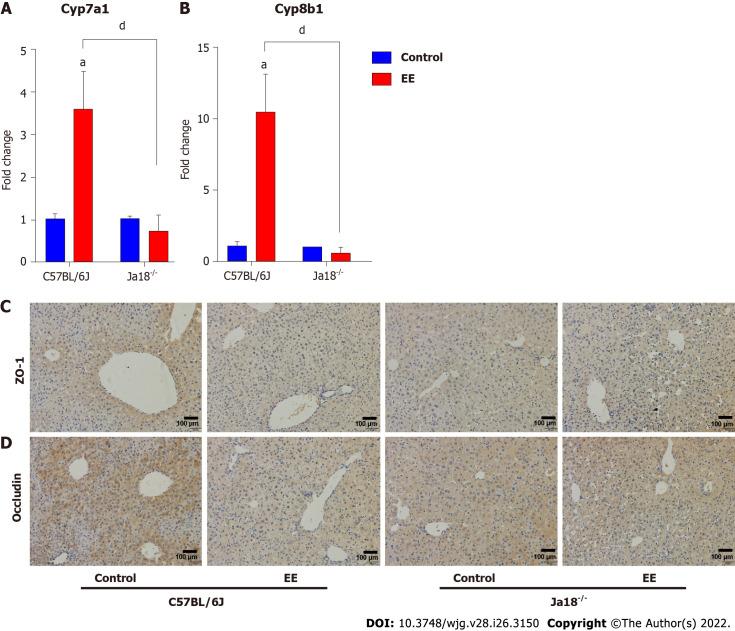
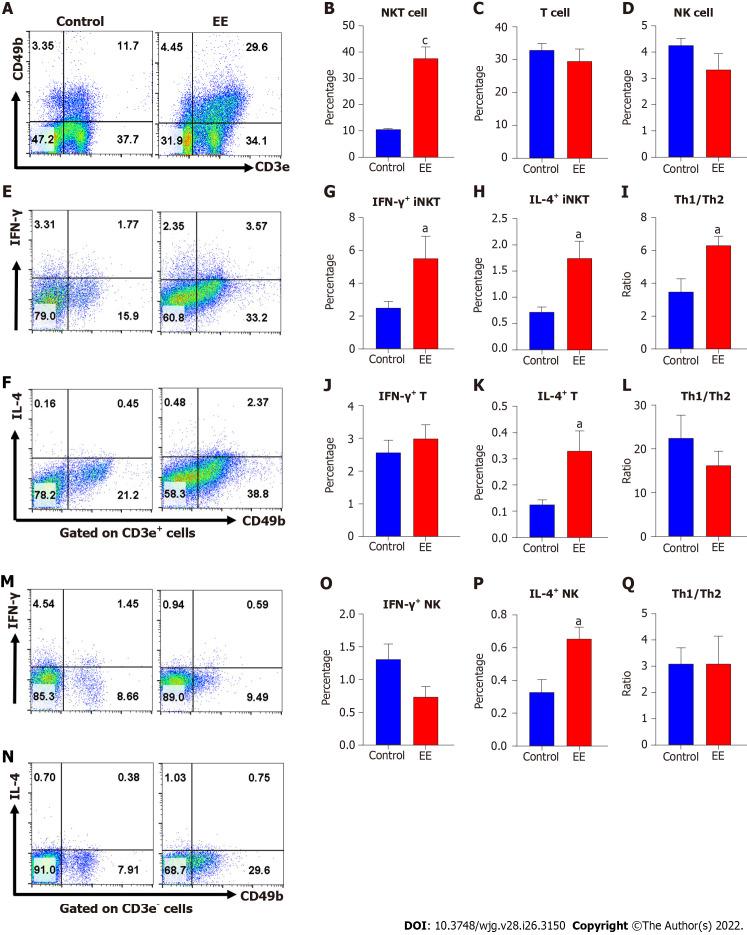
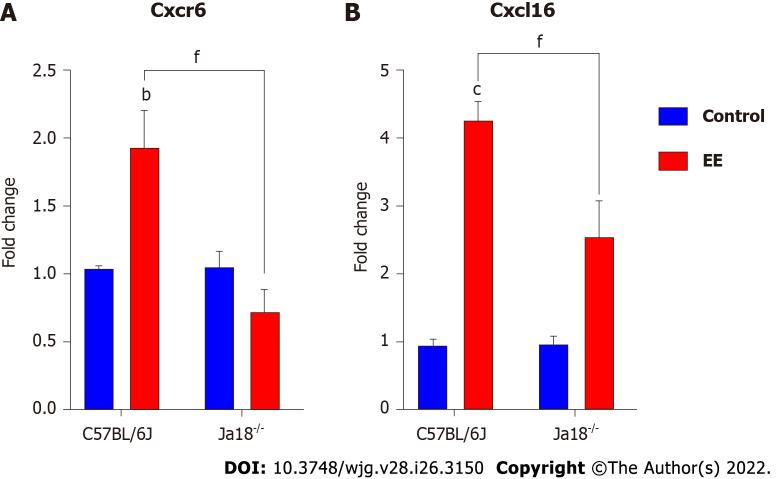
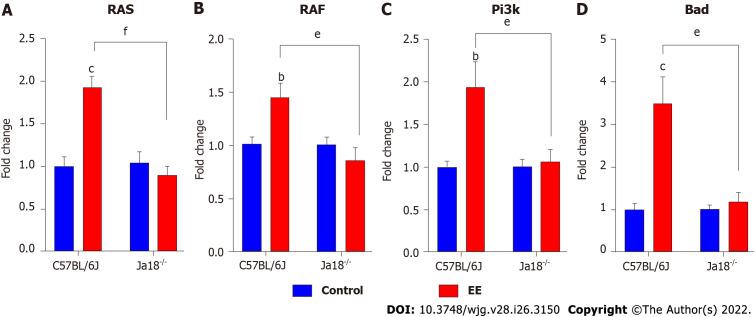
Both Th1 and Th2 cytokines produced by NKT cells increased in the liver skewing toward a Th1 bias. The expression of the chemokine/chemokine receptor Cxcr6/Cxcl16, toll-like receptors, Ras/Rad, and PI3K/Bad signaling was upregulated after EE administration. EE also influenced bile acid synthase Cyp7a1, Cyp8b1, and tight junctions ZO-1 and Occludin, which might be associated with EE-induced cholestasis. iNKT cell deficiency (Jα18 mice) robustly alleviated cholestatic liver damage and lowered the expression of the abovementioned signaling pathways.
CONCLUSION
Hepatic NKT cells play a pathogenic role in EE-induced intrahepatic cholestasis. Our research improves the understanding of intrahepatic cholestasis by revealing the hepatic immune microenvironment and also provides a potential clinical treatment by regulating iNKT cells.
背景
作为口服避孕药(OCs)的主要成分,炔雌醇(EE)已被广泛用作诱导小鼠肝内胆汁淤积的模型药物。EE 诱导的胆汁淤积的临床对应物包括正在服用 OCs、性激素替代疗法和易感孕妇的女性。以妊娠肝内胆汁淤积症(ICP)为例,ICP 因其对胎儿的高风险负担以及熊去氧胆酸降低不良围产期结局的无效性而消耗医疗系统。
目的
基于肝免疫微环境探讨 EE 诱导的胆汁淤积的机制和治疗策略。
方法
雄性 C57BL/6J 小鼠或不变自然杀伤 T(iNKT)细胞缺乏(Jα18 小鼠)皮下给予 EE(10mg/kg)14 天。
结果
NKT 细胞在肝脏中产生的 Th1 和 Th2 细胞因子均增加,向 Th1 倾斜。趋化因子/趋化因子受体 Cxcr6/Cxcl16、Toll 样受体、Ras/Rad 和 PI3K/Bad 信号的表达在 EE 给药后上调。EE 还影响胆汁酸合成酶 Cyp7a1、Cyp8b1 和紧密连接 ZO-1 和 Occludin,这可能与 EE 诱导的胆汁淤积有关。iNKT 细胞缺乏(Jα18 小鼠)强烈缓解胆汁淤积性肝损伤并降低上述信号通路的表达。
结论
肝 NKT 细胞在 EE 诱导的肝内胆汁淤积中起致病作用。我们的研究通过揭示肝免疫微环境,提高了对肝内胆汁淤积的认识,并通过调节 iNKT 细胞提供了一种潜在的临床治疗方法。


 Zotero 插件