
β2微球蛋白在老年人的颊细胞中过度表达,且与p16和炎症基因的表达相关。
β2-microglobulin is overexpressed in buccal cells of elderly and correlated with expression of p16 and inflammatory genes.
作者信息
Althubiti Mohammad
机构信息
Biochemistry Department, Faculty of Medicine, Umm Al-Qura University, Makkah, Saudi Arabia.
出版信息
Saudi J Biol Sci. 2022 Oct;29(10):103418. doi: 10.1016/j.sjbs.2022.103418. Epub 2022 Aug 19.
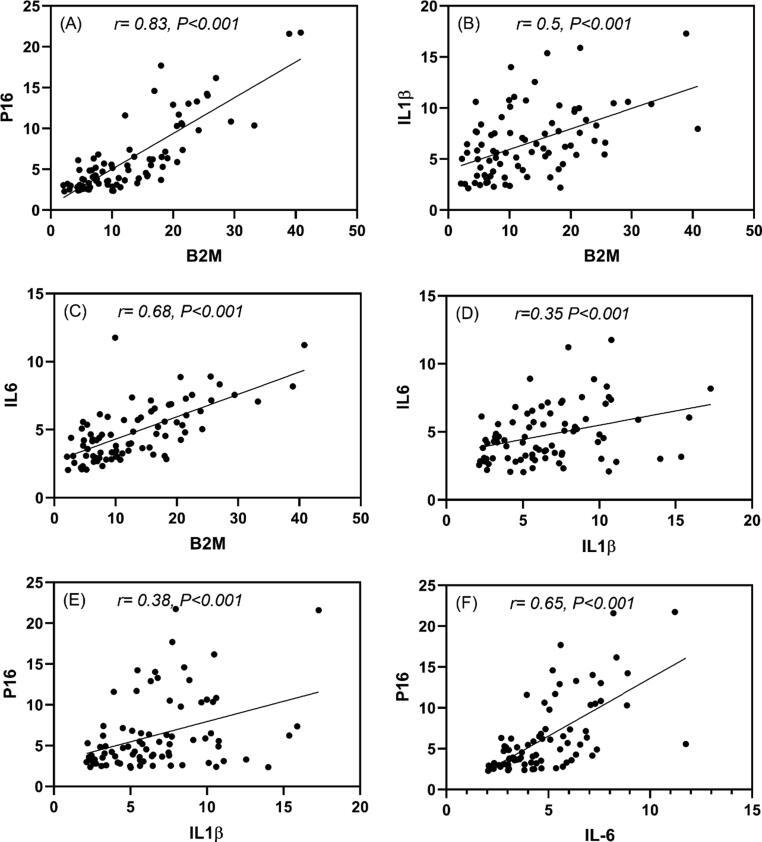
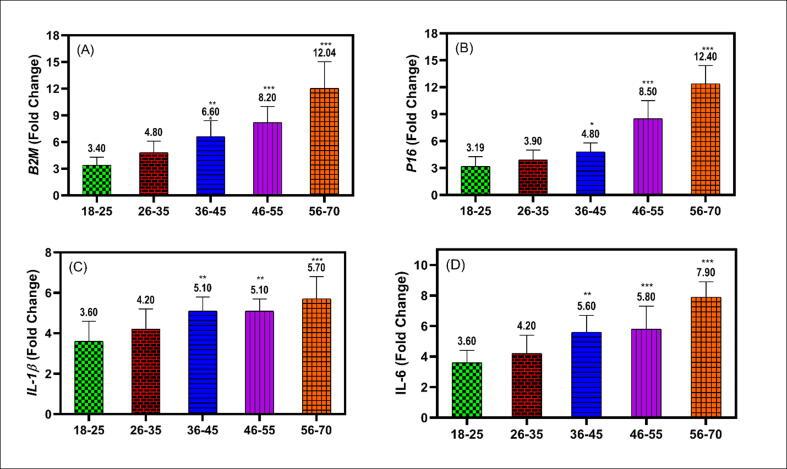
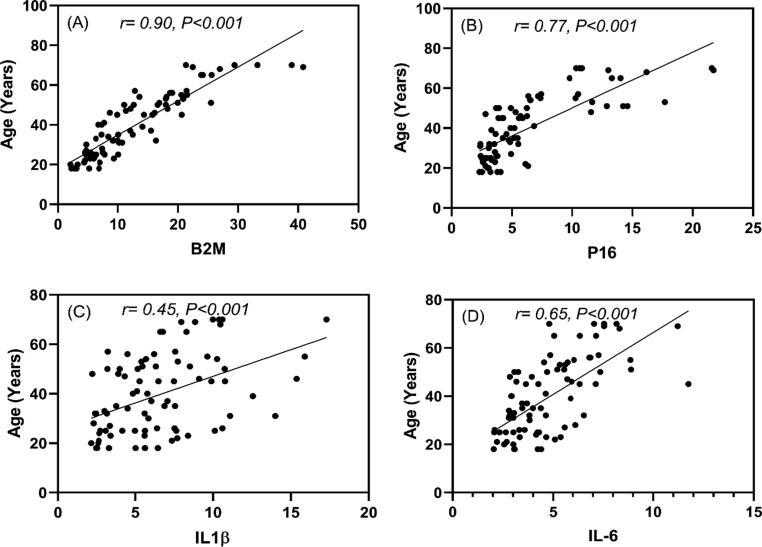
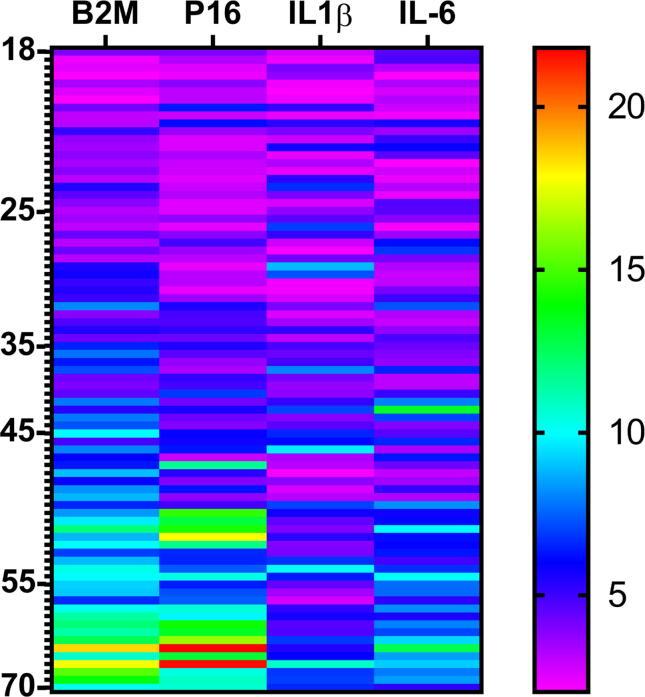
β2M (Beta 2 microglobulin) is a small protein that is found in all nucleated cells, previous finding showed that its levels increased in the serum of the elderly. Buccal cell samples are none invasive approach for assessing the expression of target genes. There was rationality to assess the expression of β2M in buccal cells of people of a different group of ages. Indeed, the expression of β2M increased significantly with fold change 3.40, 4.80, 6.60, 8.20 and 12.04 for the group of age 18-25 years, 26-35 years, 36-45 years, 46-55 years, and 56-70 years respectively. The same observation was seen with markers of biological aging (p16) with fold change 3.19, 3.90, 4.80*, 8.50 and 12.40 for the group of age 18-25 years, 26-35 years, 36-45 years, 46-55 years, and 56-70 years respectively. As expected, there was an increase in the inflammatory genes (IL-1 β and IL-6) expression in the elderly. Moreover, there was a direct significant correlation (r = 90, p < 0.001) between β2M expression and age (years), and the same direct significant correlation between p16 expression and age (years) was also seen (r = 90, p < 0.001). In addition, a direct correlation between β2M and p16 was also seen (r = 0.8.3, p < 0.001), there was also direct correlation between β2M and IL-1 β and IL-6 with (r = 0.5, p < 0.001; r = 0.68, p < 0.001) respectively. This evidence showed that β2M increased in buccal cells of the elderly compared to younger, and thereby buccal cells can be exploited to assess biological aging by measuring β2M levels, however, large sample size and using another assessing method such as β2M protein levels should be performed to confirm the results.
β2微球蛋白(Beta 2微球蛋白)是一种存在于所有有核细胞中的小蛋白质,先前的研究发现其在老年人血清中的水平会升高。颊细胞样本是评估靶基因表达的非侵入性方法。评估不同年龄组人群颊细胞中β2微球蛋白的表达具有合理性。事实上,18 - 25岁、26 - 35岁、36 - 45岁、46 - 55岁和56 - 70岁年龄组的β2微球蛋白表达分别显著增加,倍数变化为3.40、4.80、6.60、8.20和12.04。生物衰老标志物(p16)也有同样的观察结果,18 - 25岁、26 - 35岁、36 - 45岁、46 - 55岁和56 - 70岁年龄组的倍数变化分别为3.19、3.90、4.80*、8.50和12.40。正如预期的那样,老年人炎症基因(IL - 1β和IL - 6)的表达增加。此外,β2微球蛋白表达与年龄(岁)之间存在直接显著相关性(r = 90,p < 0.001),p16表达与年龄(岁)之间也观察到相同的直接显著相关性(r = 90,p < 0.001)。此外,β2微球蛋白与p16之间也存在直接相关性(r = 0.83,p < 0.001),β2微球蛋白与IL - 1β和IL - 6之间也分别存在直接相关性(r = 0.5,p < 0.001;r = 0.68,p < 0.001)。这一证据表明,与年轻人相比,老年人颊细胞中的β2微球蛋白增加,因此可以通过测量β2微球蛋白水平利用颊细胞来评估生物衰老,然而,需要进行大样本量研究并使用另一种评估方法,如β2微球蛋白蛋白水平,以证实结果。
 Zotero 插件