
探索囊性纤维化肺部微生物组:充分利用棘手情况。
Exploring the Cystic Fibrosis Lung Microbiome: Making the Most of a Sticky Situation.
机构信息
Department of Pediatrics, University of Michigan, Ann Arbor, Michigan, USA.
Department of Medicine, Cumming School of Medicine, University of Calgary, Calgary, Alberta, Canada.
出版信息
J Pediatric Infect Dis Soc. 2022 Sep 7;11(Supplement_2):S13-S22. doi: 10.1093/jpids/piac036.
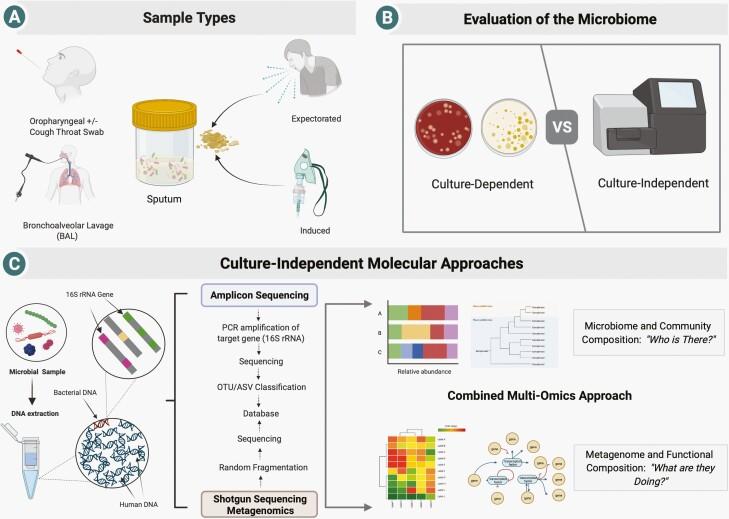
Chronic lower respiratory tract infections are a leading contributor to morbidity and mortality in persons with cystic fibrosis (pwCF). Traditional respiratory tract surveillance culturing has focused on a limited range of classic pathogens; however, comprehensive culture and culture-independent molecular approaches have demonstrated complex communities highly unique to each individual. Microbial community structure evolves through the lifetime of pwCF and is associated with baseline disease state and rates of disease progression including occurrence of pulmonary exacerbations. While molecular analysis of the airway microbiome has provided insight into these dynamics, challenges remain including discerning not only "who is there" but "what they are doing" in relation to disease progression. Moreover, the microbiome can be leveraged as a multi-modal biomarker for both disease activity and prognostication. In this article, we review our evolving understanding of the role these communities play in pwCF and identify challenges in translating microbiome data to clinical practice.
慢性下呼吸道感染是囊性纤维化(pwCF)患者发病率和死亡率的主要原因。传统的呼吸道监测培养主要集中在有限的几种经典病原体上;然而,全面的培养和非培养的分子方法已经证明了每个个体都具有高度独特的复杂群落。微生物群落结构在 pwCF 的整个生命周期中不断演变,并与基线疾病状态和疾病进展率相关,包括肺部恶化的发生。虽然对气道微生物组的分子分析提供了对这些动态的深入了解,但仍然存在挑战,包括不仅要分辨“谁在那里”,还要分辨“他们在做什么”与疾病进展有关。此外,微生物组可以作为疾病活动和预后的多模态生物标志物。在本文中,我们回顾了我们对这些群落在 pwCF 中所起作用的不断发展的认识,并确定了将微生物组数据转化为临床实践的挑战。


 Zotero 插件