
紫外线处理对两种氧化锆基陶瓷表面接触角、成纤维细胞细胞毒性和增殖的影响。
The Effect of UV Treatment on Surface Contact Angle, Fibroblast Cytotoxicity, and Proliferation with Two Types of Zirconia-Based Ceramics.
机构信息
Institute of Odontology, Faculty of Medicine, Vilnius University, 03101 Vilnius, Lithuania.
Institute of Biochemistry, Life Sciences Center, Vilnius University, 03101 Vilnius, Lithuania.
出版信息
Int J Environ Res Public Health. 2022 Sep 5;19(17):11113. doi: 10.3390/ijerph191711113.
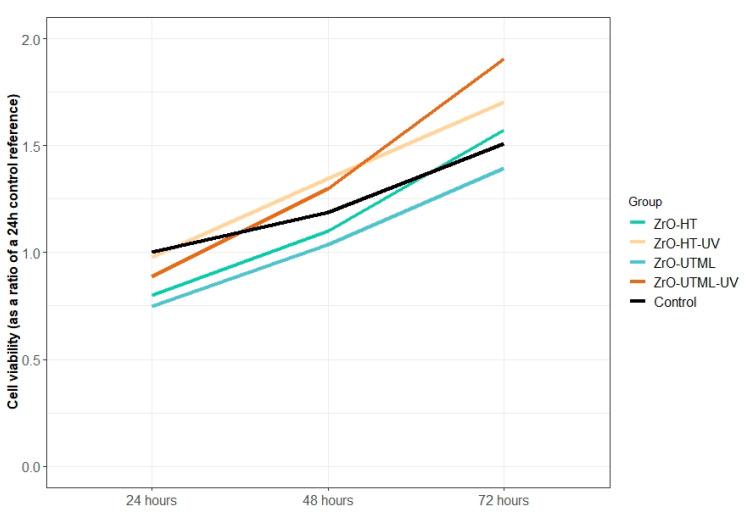
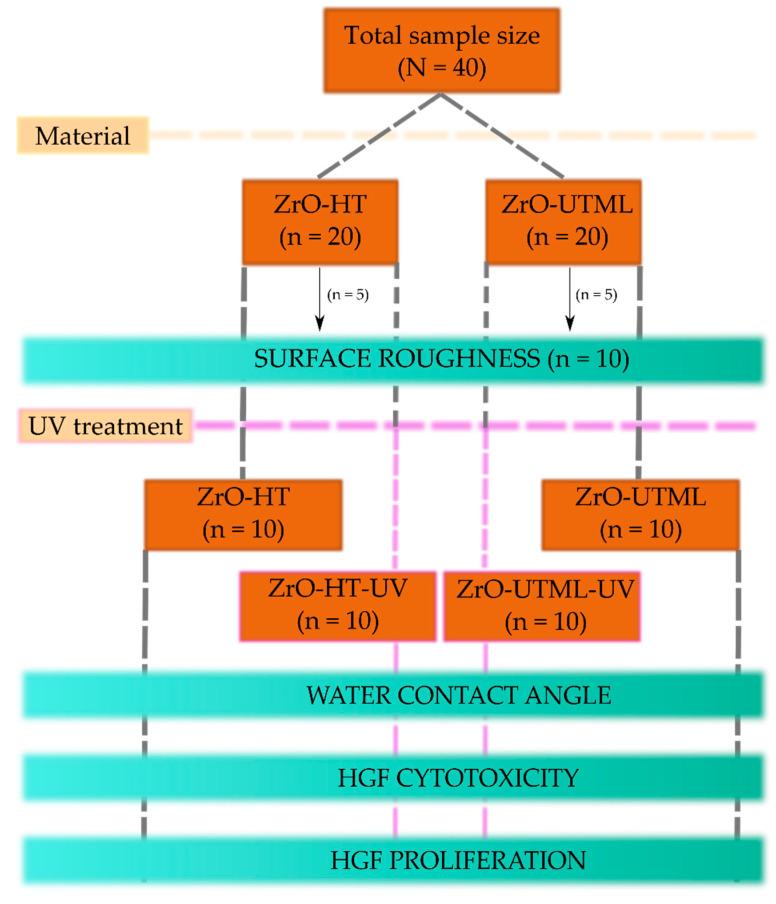
UV photofunctionalization of Zirconia-based materials for abutment fabrication is a promising approach that might influence the formation of a sound peri-implant seal, thus promoting long-term soft and hard tissue implant integration. This study aimed to evaluate the effect of UV treatment of test specimens made by two different ZnO-based ceramic materials on the hydrophilicity, cell cytotoxicity, and proliferation of human gingival fibroblasts (HGFs). Two Zirconia-based materials, high-translucent and ultra-translucent multi-layered Zirconia (Katana, Kuraray Noritake, Japan), were used to prepare a total of 40 specimens distributed in two equally sized groups based on the material ( = 20). The same surface finishing protocol was applied for all specimens, as suggested by the manufacturer. Half the specimens from each group were treated with UV-C light for 48 h. Water contact angle (WCA), fibroblast cytotoxicity, and proliferation were investigated. The WCA values for the high-translucent Zirconia ranged from 69.9° ± 6.4° to 73.7° ± 13.9° for the treated/non-treated specimens and from 79.5° ± 12.8° to 83.4° ± 11.4° for the ultra-translucent multi-layered Zirconia, respectively. However, the difference was insignificant (F(16) = 3.50, = 0.292). No significant difference was observed for the fibroblast cytotoxicity test. The results for proliferation revealed a significant difference, which was material-dependent (F(8) = 9.58, = 0.005). We found that UV surface photofunctionalization of ZrO-based materials alters the human gingival fibroblast cell viability, which might produce favourable results for cell proliferation.
基于氧化锆的材料的紫外线光功能化用于基台制造是一种很有前途的方法,它可能影响到健康的种植体周围密封的形成,从而促进长期的软硬组织种植体整合。本研究旨在评估两种不同的基于氧化锌的陶瓷材料的测试样本经紫外线处理后对亲水性、细胞细胞毒性和人牙龈成纤维细胞(HGFs)增殖的影响。使用两种氧化锆基材料,高透光性和超高透光性多层氧化锆(Katana,Kuraray Noritake,日本),共制备了 40 个样本,根据材料分为两组(每组 20 个)。所有样本均采用制造商建议的相同表面精整方案。每组的一半样本用 UV-C 光处理 48 小时。研究了水接触角(WCA)、成纤维细胞细胞毒性和增殖。高透光氧化锆的 WCA 值从处理/未处理样本的 69.9°±6.4°到 73.7°±13.9°,超透光多层氧化锆的 WCA 值从 79.5°±12.8°到 83.4°±11.4°。然而,差异不显著(F(16)=3.50,=0.292)。细胞毒性试验未观察到显著差异。增殖结果显示存在显著差异,这与材料有关(F(8)=9.58,=0.005)。我们发现,基于 ZrO 的材料的紫外线表面光功能化改变了人牙龈成纤维细胞的活力,这可能对细胞增殖产生有利的结果。


 Zotero 插件