
COVID-19 和妊娠糖尿病:营养和药物干预在预防不良结局中的作用。
COVID-19 and Gestational Diabetes: The Role of Nutrition and Pharmacological Intervention in Preventing Adverse Outcomes.
机构信息
Obstetrics and Gynaecology Unit, Department of Medicine and Surgery, University of Parma, 43126 Parma, Italy.
Department of Obstetrics and Gynaecology, University Hospital Rechts der Isar, Technical University of Munich, 81675 Munich, Germany.
出版信息
Nutrients. 2022 Aug 30;14(17):3562. doi: 10.3390/nu14173562.
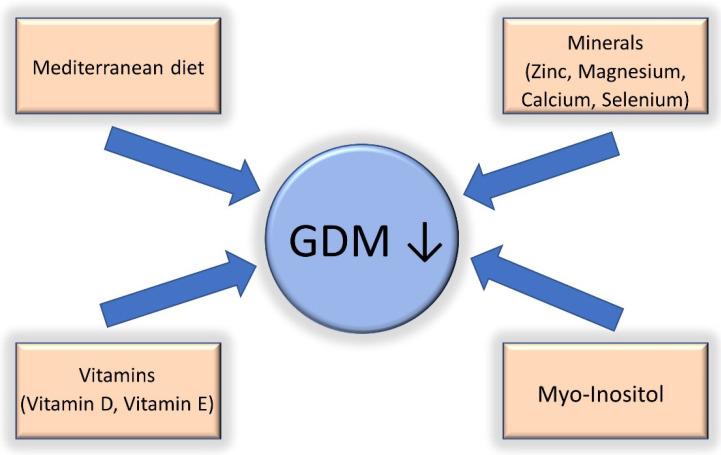
Pregnant women with GDM affected by COVID-19 seem to be at higher risk of adverse maternal and neonatal outcomes, especially those with overweight or obesity. Good glycemic control seems to be the most effective measure in reducing the risk of GDM and severe COVID-19. For such purposes, the Mediterranean diet, micronutrient supplementation, and physical activity are considered the first line of treatment. Failure to achieve glycemic control leads to the use of insulin, and this clinical scenario has been shown to be associated with an increased risk of adverse maternal and neonatal outcomes. In this review, we explore the current evidence pertaining to the pathogenesis of SARS-CoV-2 leading to the main complications caused by COVID-19 in patients with GDM. We also discuss the incidence of complications caused by COVID-19 in pregnant women with GDM according to their treatment.
患有 COVID-19 的妊娠合并糖尿病(GDM)的孕妇似乎面临更高的不良母婴结局风险,尤其是那些超重或肥胖的孕妇。良好的血糖控制似乎是降低 GDM 和严重 COVID-19 风险的最有效措施。为此,地中海饮食、微量营养素补充和体育锻炼被认为是一线治疗方法。如果血糖控制失败,就会使用胰岛素,这种临床情况已被证明与不良母婴结局风险增加有关。在这篇综述中,我们探讨了导致 GDM 患者 COVID-19 主要并发症的 SARS-CoV-2 发病机制的现有证据。我们还根据 GDM 孕妇的治疗情况讨论了 COVID-19 引起的并发症的发生率。
 Zotero 插件