
肺纤维化气道中多孔微球颗粒的 CFD 模拟。
CFD simulation of porous microsphere particles in the airways of pulmonary fibrosis.
机构信息
School of Mechanical Engineering, Qilu University of Technology (Shandong Academy of Sciences), Jinan 250353, China; Shandong Institute of Mechanical Design and Research, Jinan 250031, China.
School of Mechanical Engineering, Qilu University of Technology (Shandong Academy of Sciences), Jinan 250353, China; Shandong Institute of Mechanical Design and Research, Jinan 250031, China; School of Arts and Design, Qilu University of Technology (Shandong Academy of Sciences), Jinan 250353, China.
出版信息
Comput Methods Programs Biomed. 2022 Oct;225:107094. doi: 10.1016/j.cmpb.2022.107094. Epub 2022 Sep 2.
BACKGROUND AND OBJECTIVE
Pulmonary fibrosis (PF) is a chronic progressive disease with an extremely high mortality rate and is a complication of COVID-19. Inhalable microspheres have been increasingly used in the treatment of lung diseases such as PF in recent years. Compared to the direct inhalation of drugs, a larger particle size is required to ensure the sustained release of microspheres. However, the clinical symptoms of PF may lead to the easier deposition of microspheres in the upper respiratory tract. Therefore, it is necessary to understand the effects of PF on the deposition of microspheres in the respiratory tract.
METHODS
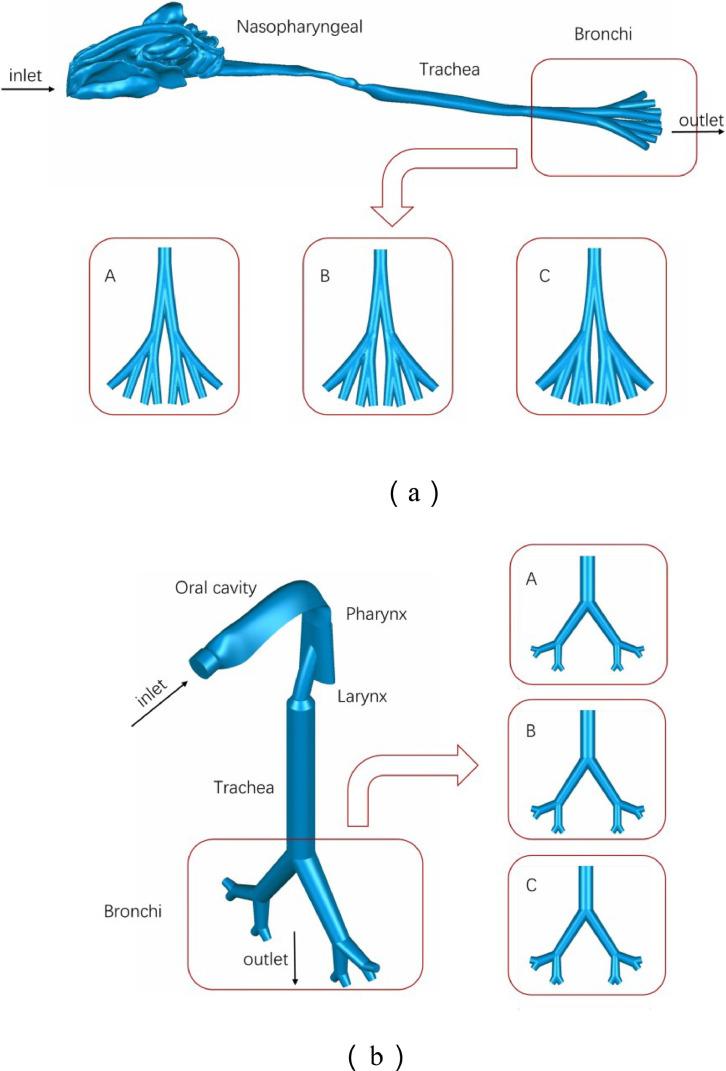
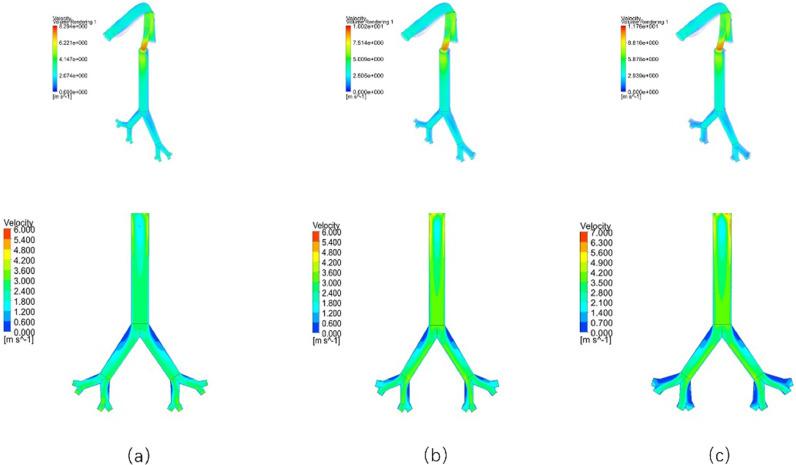
In this study, airway models with different degrees of PF in humans and mice were established, and the transport and deposition of microspheres in the airway were simulated using computational fluid dynamics.
RESULTS
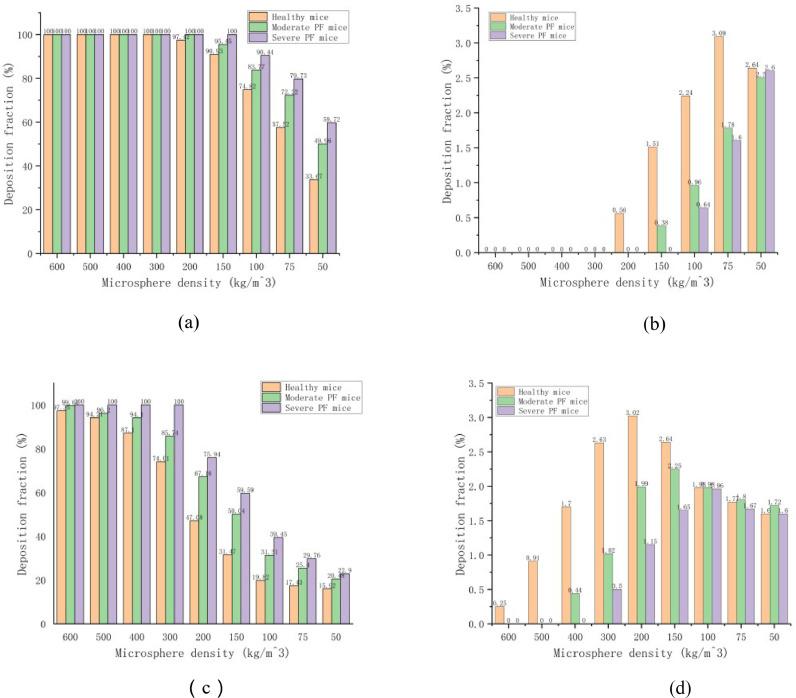
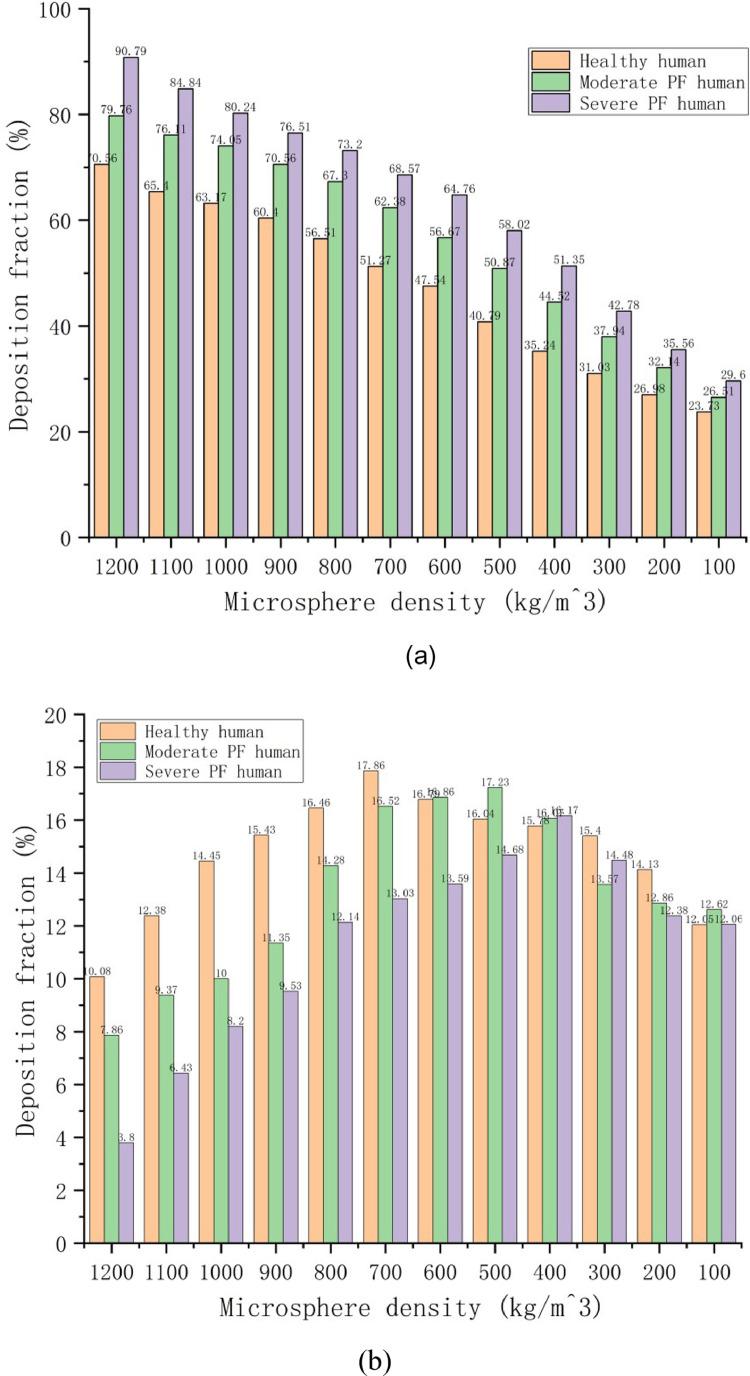
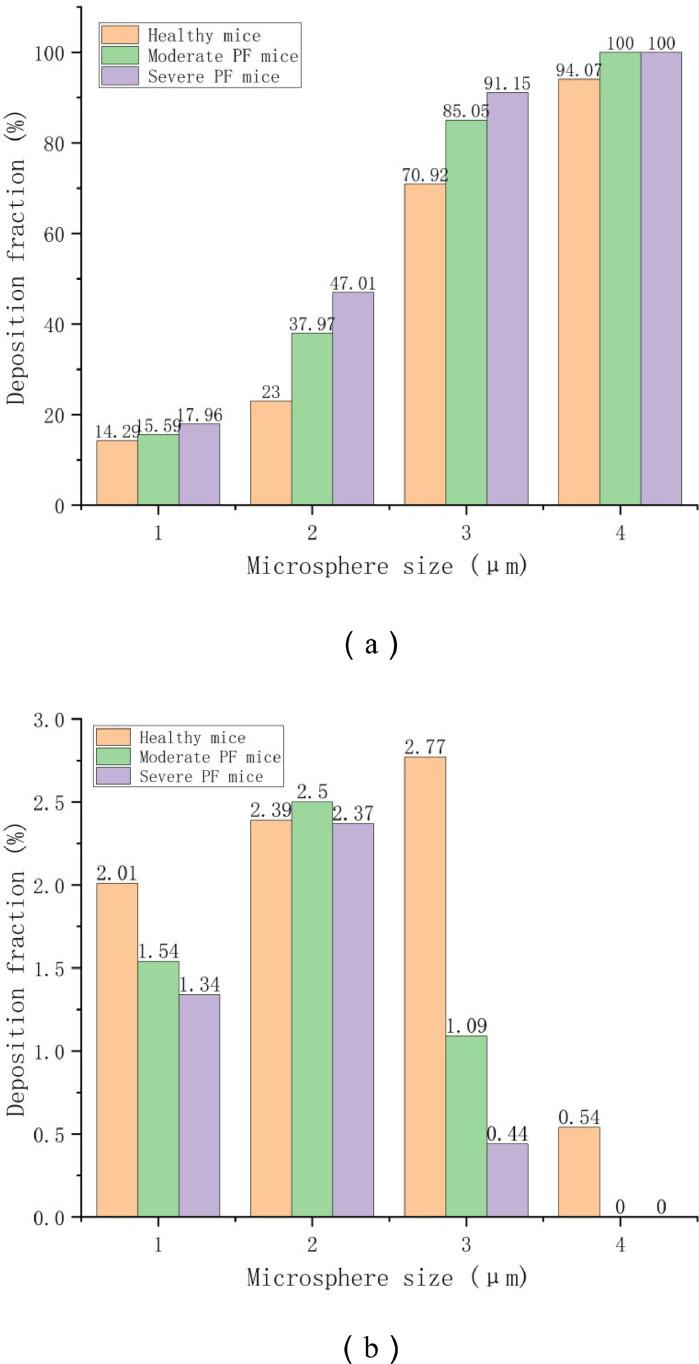
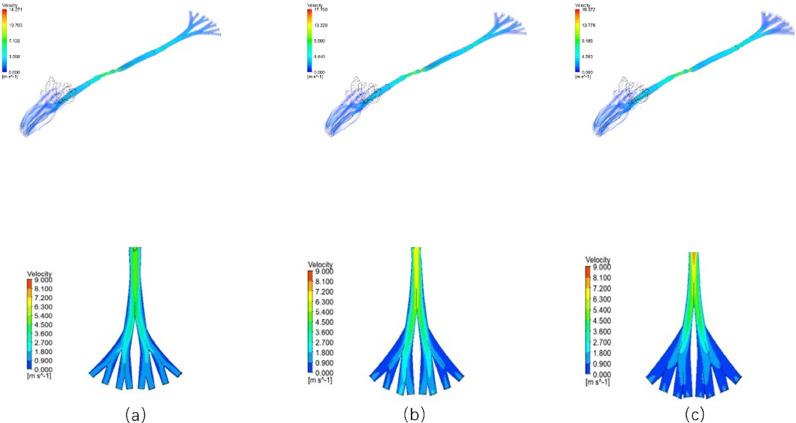
The simulation results showed that PF increases microsphere deposition in the upper respiratory tract and decreases bronchial deposition in both humans and mice. Porous microspheres with low density can ensure deposition in the lower respiratory tract and larger particle size. In healthy and PF humans, porous microspheres of 10 µm with densities of 700 and 400 kg/m³ were deposited most in the bronchi. Unlike in humans, microspheres larger than 4 µm are completely deposited in the upper respiratory tract of mice owing to their high inhalation velocity. For healthy and PF mice, microspheres of 6 µm with densities of and 100 kg/m³ are recommended.
CONCLUSIONS
The results showed that with the exacerbation of PF, it is more difficult for microsphere particles to deposit in the subsequent airway. In addition, there were significant differences in the deposition patterns among the different species. Therefore, it is necessary to process specific microspheres from different individuals. Our study can guide the processing of microspheres and achieve differentiated drug delivery in different subjects to maximize therapeutic effects.
背景与目的
肺纤维化(PF)是一种死亡率极高的慢性进行性疾病,是 COVID-19 的一种并发症。近年来,吸入式微球在 PF 等肺部疾病的治疗中得到了越来越多的应用。与直接吸入药物相比,需要更大的粒径来保证微球的持续释放。然而,PF 的临床症状可能导致微球更容易在上呼吸道沉积。因此,有必要了解 PF 对微球在呼吸道沉积的影响。
方法
本研究建立了不同程度 PF 的人类和小鼠气道模型,利用计算流体动力学模拟微球在气道中的输运和沉积。
结果
模拟结果表明,PF 增加了微球在上呼吸道的沉积,减少了人类和小鼠支气管的沉积。低密度多孔微球可确保在下呼吸道沉积,并具有较大的粒径。在健康和 PF 患者中,密度为 700 和 400kg/m³的 10μm 多孔微球在支气管中沉积最多。与人类不同的是,由于吸入速度较高,粒径大于 4μm 的微球完全沉积在上呼吸道。对于健康和 PF 小鼠,推荐使用密度为和 100kg/m³的 6μm 微球。
结论
结果表明,随着 PF 的加重,微球颗粒在后续气道中沉积更加困难。此外,不同物种的沉积模式存在显著差异。因此,有必要针对不同个体处理特定的微球。我们的研究可以指导微球的加工,实现不同个体的差异化药物输送,最大限度地提高治疗效果。

 Zotero 插件