
探究基于神经影像学的大脑年龄估计的时间模式作为阿尔茨海默病相关神经退行性变的生物标志物。
Investigating the temporal pattern of neuroimaging-based brain age estimation as a biomarker for Alzheimer's Disease related neurodegeneration.
机构信息
Department of Psychological and Brain Sciences, Drexel University, Philadelphia, PA 19104, USA.
Department of Psychological and Brain Sciences, Drexel University, Philadelphia, PA 19104, USA.
出版信息
Neuroimage. 2022 Nov;263:119621. doi: 10.1016/j.neuroimage.2022.119621. Epub 2022 Sep 9.
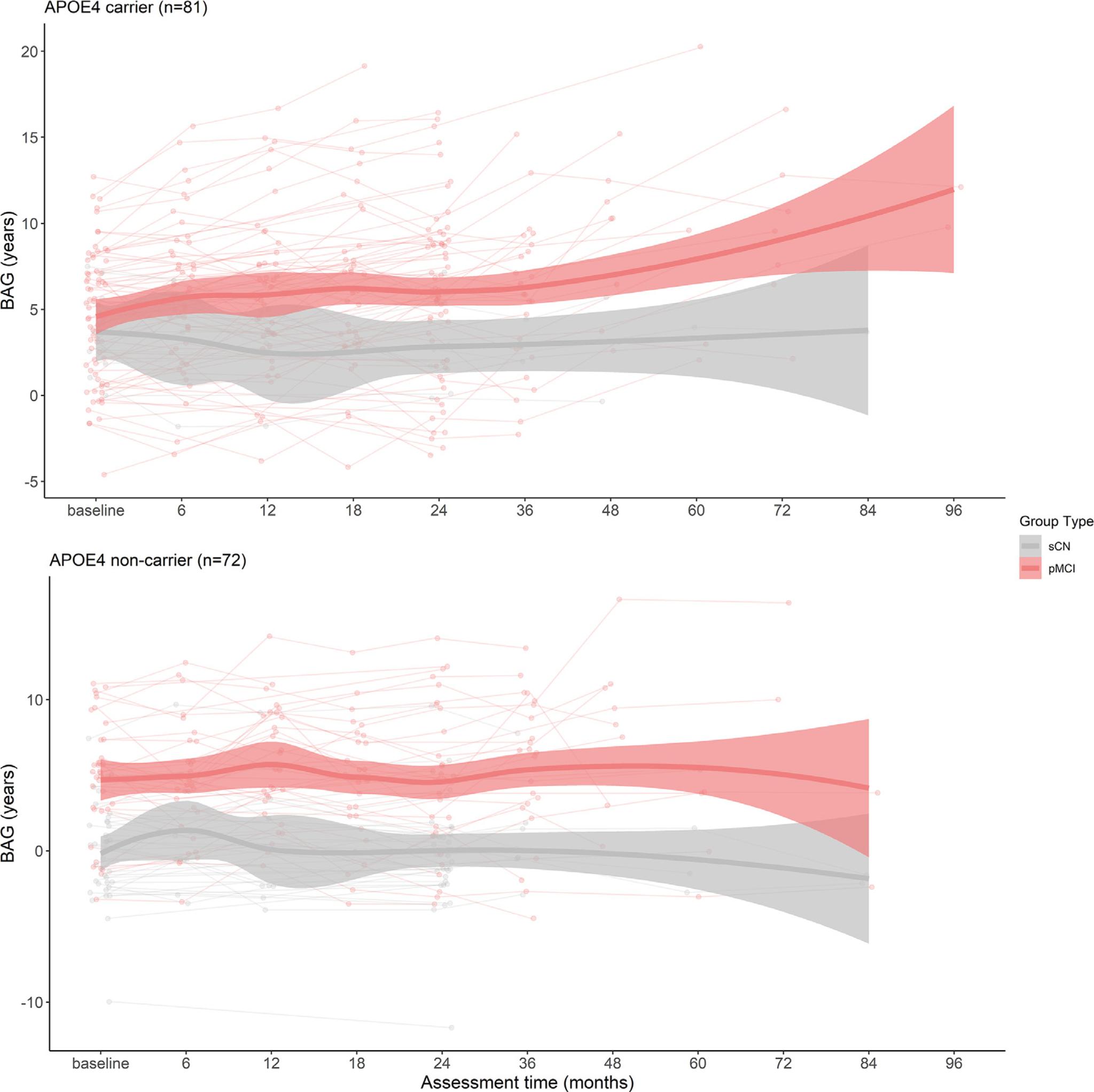
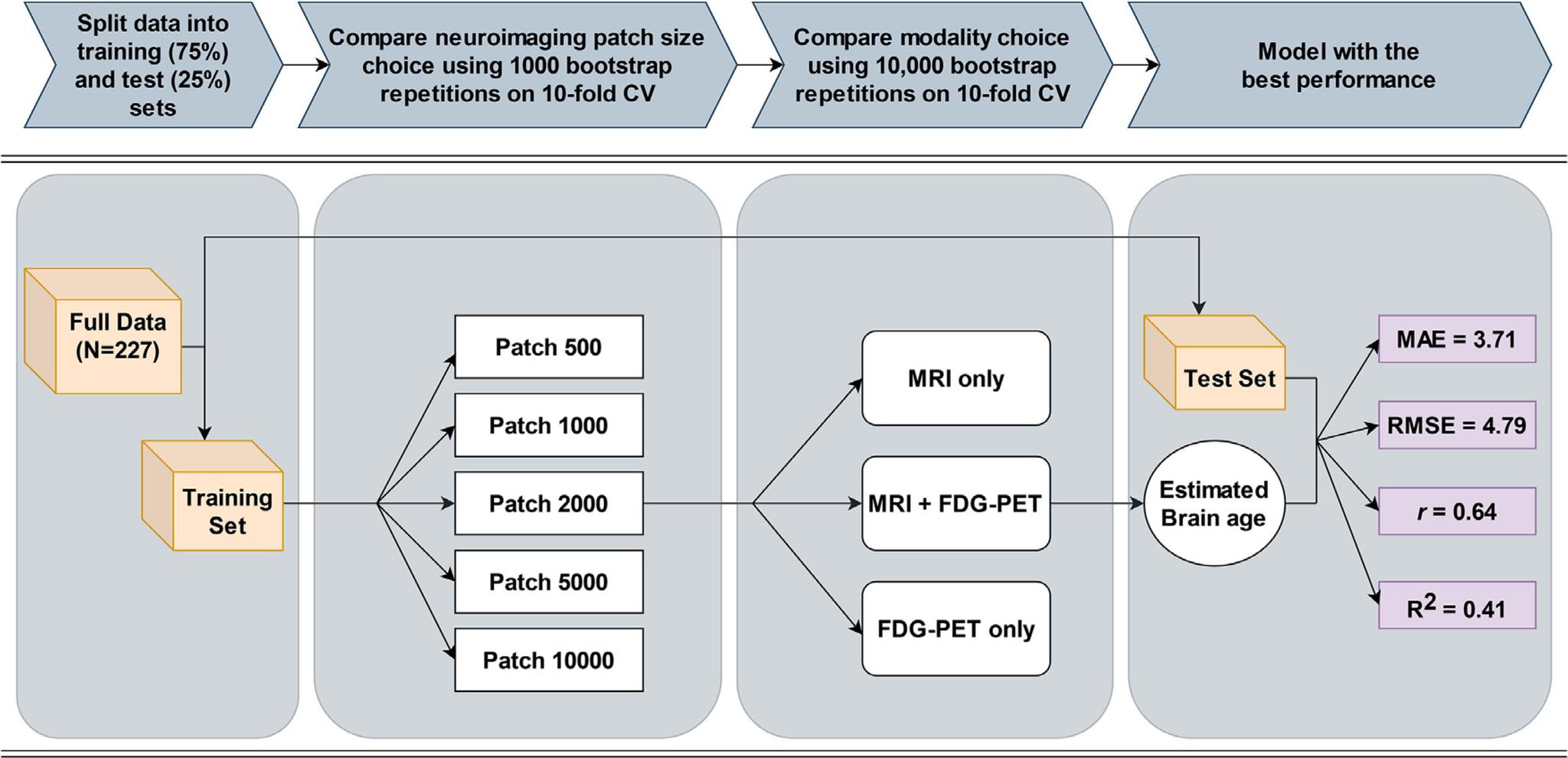
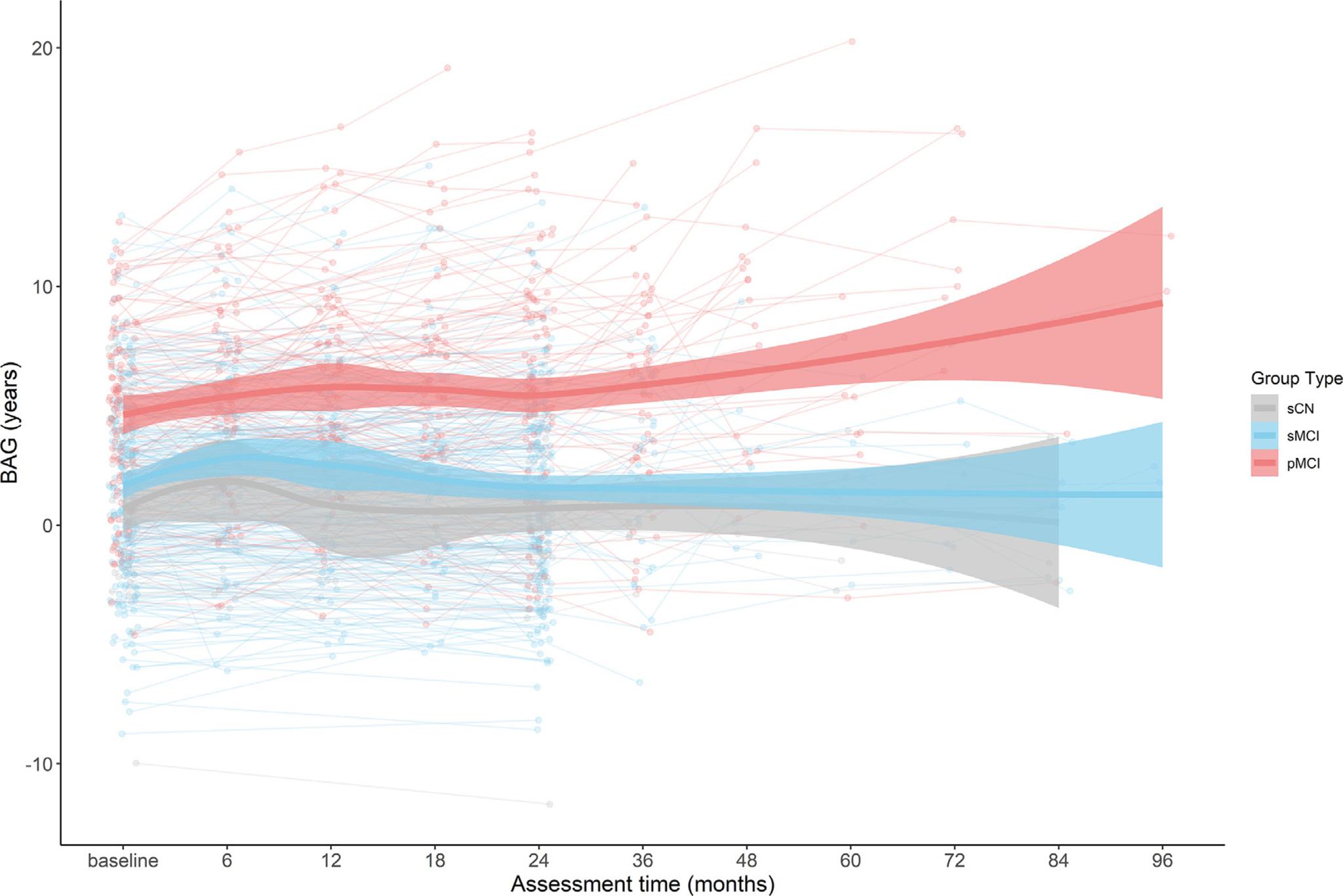
Neuroimaging-based brain-age estimation via machine learning has emerged as an important new approach for studying brain aging. The difference between one's estimated brain age and chronological age, the brain age gap (BAG), has been proposed as an Alzheimer's Disease (AD) biomarker. However, most past studies on the BAG have been cross-sectional. Quantifying longitudinal changes in an individual's BAG temporal pattern would likely improve prediction of AD progression and clinical outcome based on neurophysiological changes. To fill this gap, our study conducted predictive modeling using a large neuroimaging dataset with up to 8 years of follow-up to examine the temporal patterns of the BAG's trajectory and how it varies by subject-level characteristics (sex, APOEɛ4 carriership) and disease status. Specifically, we explored the pattern and rate of change in BAG over time in individuals who remain stable with normal cognition or mild cognitive impairment (MCI), as well as individuals who progress to clinical AD. Combining multimodal imaging data in a support vector regression model to estimate brain age yielded improved performance over single modality. Multilevel modeling results showed the BAG followed a linear increasing trajectory with a significantly faster rate in individuals with MCI who progressed to AD compared to cognitively normal or MCI individuals who did not progress. The dynamic changes in the BAG during AD progression were further moderated by sex and APOEɛ4 carriership. Our findings demonstrate the BAG as a potential biomarker for understanding individual specific temporal patterns related to AD progression.
基于神经影像学的机器学习脑龄估测作为一种研究大脑衰老的新方法已崭露头角。一个人的预估脑龄与实际年龄之间的差异,即脑龄差距(BAG),已被提出作为阿尔茨海默病(AD)的生物标志物。然而,过去大多数关于 BAG 的研究都是横断面的。对个体 BAG 时间模式的纵向变化进行量化,可能会根据神经生理变化改善 AD 进展和临床结局的预测。为了填补这一空白,我们使用具有长达 8 年随访的大型神经影像学数据集进行预测建模,以检查 BAG 轨迹的时间模式以及其如何因个体水平特征(性别、APOEɛ4 携带情况)和疾病状态而变化。具体来说,我们探索了在认知正常或轻度认知障碍(MCI)个体保持稳定以及进展为临床 AD 的个体中,BAG 随时间的变化模式和变化率。在支持向量回归模型中结合多模态成像数据来估计脑龄可以提高性能比单一模态。多层次模型结果表明,与认知正常或 MCI 个体无进展相比,进展为 AD 的 MCI 个体的 BAG 呈线性增加轨迹,且增加速度明显更快。AD 进展过程中 BAG 的动态变化进一步受到性别和 APOEɛ4 携带情况的调节。我们的研究结果表明,BAG 作为一种潜在的生物标志物,可以帮助理解与 AD 进展相关的个体特定时间模式。



 Zotero 插件