
肌肉和脂肪组织的N6-甲基腺苷甲基化组分析揭示了獭兔脂肪沉积中的甲基化酶-mRNA代谢调控网络。
N6-Methyladenosine Methylome Profiling of Muscle and Adipose Tissues Reveals Methylase-mRNA Metabolic Regulatory Networks in Fat Deposition of Rex Rabbits.
作者信息
Luo Gang, Wang Shuhui, Ai Yaotian, Li Jiapeng, Ren Zhanjun
机构信息
College of Animal Science and Technology, Northwest A&F University, Xianyang 712100, China.
出版信息
Biology (Basel). 2022 Jun 21;11(7):944. doi: 10.3390/biology11070944.
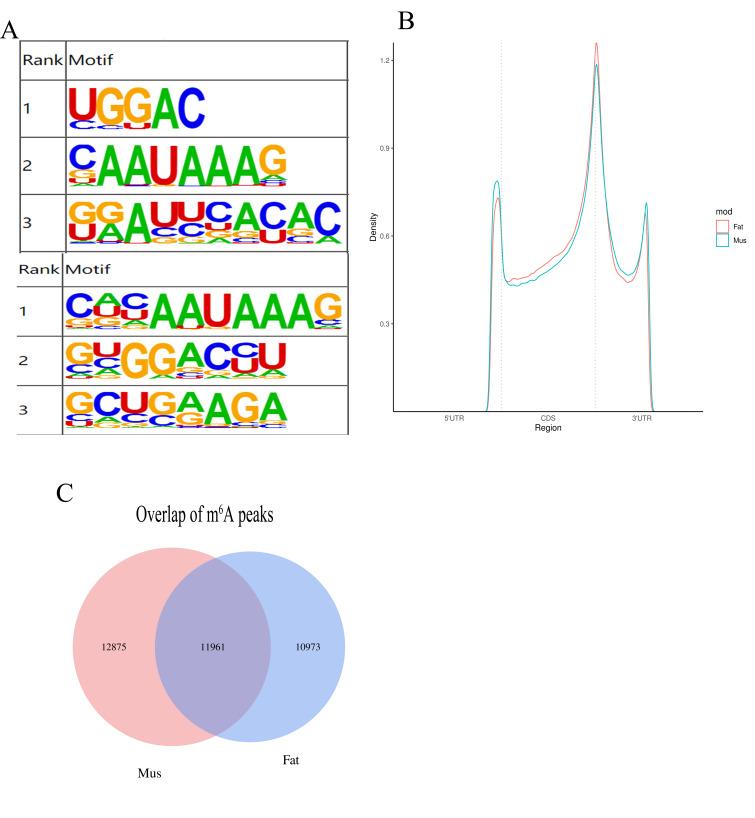
N6-methyladenosine (m6A) is the most prevalent internal form of modification in messenger RNA in higher eukaryotes and plays an important role in cancer, immunity, reproduction, development, and fat deposition. Intramuscular fat is the main factor used to measure the meat quality of an animal. The deposition of intramuscular fat and perirenal fat increases with age. However, there is no data on m6A modification of Rex rabbits and its potential biological roles in adipose deposition and muscle growth. Here, we performed two high-throughput sequencing methods, m6A-modified RNA immunoprecipitation sequence (MeRIP-seq) and RNA sequence (RNA-seq), to identify key genes with m6A modification on fat deposition in the muscle and adipose tissues of Rex rabbits. Then, qRT-PCR was used to identify the differently methylated genes related to fat deposition. Our findings showed that there were 12,876 and 10,973 m6A peaks in the rabbit muscle and adipose tissue transcriptomes, respectively. Stop codons, 3′-untranslated regions, and coding regions were found to be mainly enriched for m6A peaks. In addition, we found 5 differential methylases and 12 key genes of methylation modification related to fat deposition between muscle and adipose tissues samples. The expression levels of six random key genes were significantly higher in the fat than that in the muscle of Rex rabbits at different stages (p < 0.01). Finally, five differential methylases were found to regulate adipogenesis by affecting the expression of screened genes in different ways. These findings provided a theoretical basis for our future research on the function of m6A modification during the growth of fat deposits.
N6-甲基腺苷(m6A)是高等真核生物信使核糖核酸中最普遍的内部修饰形式,在癌症、免疫、生殖、发育和脂肪沉积中发挥重要作用。肌内脂肪是衡量动物肉质的主要因素。肌内脂肪和肾周脂肪的沉积随年龄增长而增加。然而,关于獭兔的m6A修饰及其在脂肪沉积和肌肉生长中的潜在生物学作用尚无数据。在此,我们采用两种高通量测序方法,即m6A修饰的RNA免疫沉淀测序(MeRIP-seq)和RNA测序(RNA-seq),以鉴定獭兔肌肉和脂肪组织中脂肪沉积具有m6A修饰的关键基因。然后,使用qRT-PCR鉴定与脂肪沉积相关的差异甲基化基因。我们的研究结果表明,兔肌肉和脂肪组织转录组中分别有12,876个和10,973个m6A峰。发现终止密码子、3′非翻译区和编码区主要富集m6A峰。此外,我们在肌肉和脂肪组织样本之间发现了5种差异甲基化酶和12个与脂肪沉积相关的甲基化修饰关键基因。在不同阶段,随机选取的6个关键基因在獭兔脂肪中的表达水平显著高于肌肉中的表达水平(p < 0.01)。最后,发现5种差异甲基化酶通过以不同方式影响筛选基因的表达来调节脂肪生成。这些发现为我们未来研究m6A修饰在脂肪沉积生长过程中的功能提供了理论依据。




 Zotero 插件