
中药联合全身治疗对肝癌患者的免疫调节作用:一项系统评价与网络Meta分析
Immunomodulatory Effect of Traditional Chinese Medicine Combined with Systemic Therapy on Patients with Liver Cancer: A Systemic Review and Network Meta-analysis.
作者信息
Pu Qing, Yu Lihua, Wang Xinhui, Yan Huiwen, Xie Yuqing, Jiang Yuyong, Yang Zhiyun
机构信息
Center of Integrative Medicine, Beijing Ditan Hospital, Capital Medical University, Beijing, China.
出版信息
J Cancer. 2022 Sep 6;13(11):3280-3296. doi: 10.7150/jca.74829. eCollection 2022.
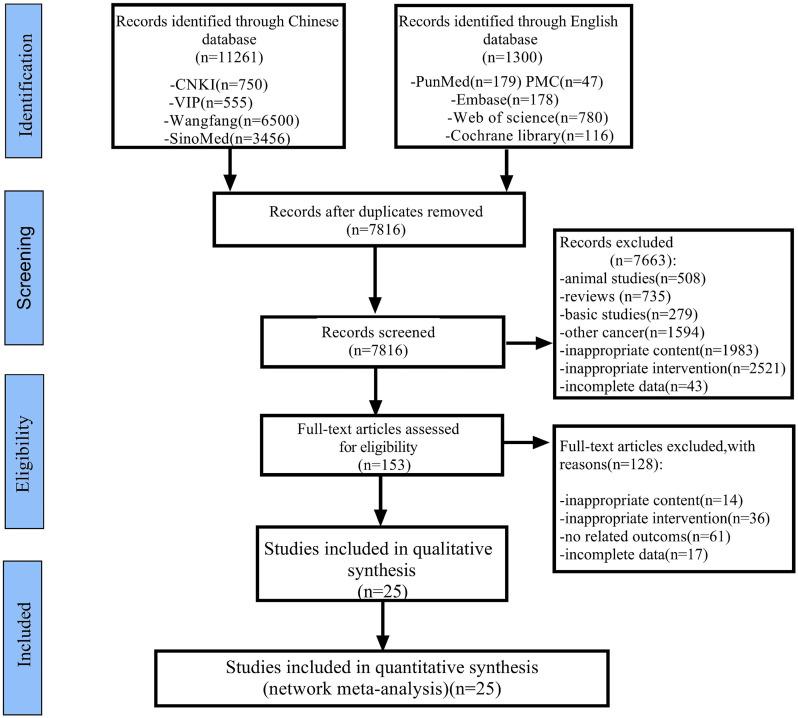
As immune combination therapy in the treatment of liver cancer made significant achievements, and the modulating effect of traditional Chinese medicine (TCM) on immunity gradually appeared. The main purpose of this study was to study the effect of different TCM combined with systemic therapy (ST) on immune regulation in patients with liver cancer, as well as the efficacy and safety of combined therapy, and to find the best combined application scheme by ranking. Nine electronic databases were searched from January 1, 2010, to November 12, 2021, to search for RCTs of TCM combined ST in the field of liver cancer for literature screening, quality evaluation and data extraction. STATA 15.0 and RevMan 5.3 software were used to conduct network meta-analysis to analyze and explore the significance of TCM combined ST in immune regulation, efficacy and safety in clinical application. The probability value of the surface under the cumulative ranking curve was used to rank the processing studied. A total of 25 studies involving 2,152 participants were included in the network meta-analysis, including six traditional Chinese medicine injections and seven proprietary Chinese medicines. The results showed that Dahuang Zhechong Wan and Kangai injection combined with ST were the best choices for immune regulation. Moreover, the Huaier granule was the best choice to reduce vascular endothelial growth factors. For patients with liver cancer, TCM combined with ST was better than that of ST alone and can significantly improve the immune function of patients as well as the efficacy and safety of treatment. However, given the limited sample size and methodological quality of the trials that we included in our study, more centralized and randomized controlled trials with a large sample size are required to verify our findings.
随着免疫联合疗法在肝癌治疗中取得显著成果,中医药对免疫的调节作用也逐渐显现。本研究的主要目的是探讨不同中医药联合全身治疗(ST)对肝癌患者免疫调节的影响以及联合治疗的疗效和安全性,并通过排序找出最佳联合应用方案。检索了9个电子数据库,时间跨度为2010年1月1日至2021年11月12日,以查找肝癌领域中中医药联合ST的随机对照试验,进行文献筛选、质量评估和数据提取。使用STATA 15.0和RevMan 5.3软件进行网络荟萃分析,以分析和探讨中医药联合ST在临床应用中免疫调节、疗效和安全性的意义。使用累积排序曲线下面积的概率值对所研究的处理进行排序。网络荟萃分析共纳入25项研究,涉及2152名参与者,包括6种中药注射剂和7种中成药。结果表明,大黄蛰虫丸和康艾注射液联合ST是免疫调节的最佳选择。此外,槐耳颗粒是降低血管内皮生长因子的最佳选择。对于肝癌患者,中医药联合ST优于单纯ST,可显著提高患者的免疫功能以及治疗的疗效和安全性。然而,鉴于我们纳入研究的试验样本量有限且方法学质量不高,需要更多大样本的集中随机对照试验来验证我们的研究结果。




 Zotero 插件