
为什么母亲们对已故孩子的悲痛永远不会停止?大脑连接性和功能的持久性改变。
Why do mothers never stop grieving for their deceased children? Enduring alterations of brain connectivity and function.
作者信息
Kark Sarah M, Adams Joren G, Sathishkumar Mithra, Granger Steven J, McMillan Liv, Baram Tallie Z, Yassa Michael A
机构信息
Center for the Neurobiology of Learning and Memory, University of California, Irvine, Irvine, CA, United States.
Department of Neurobiology and Behavior, University of California, Irvine, Irvine, CA, United States.
出版信息
Front Hum Neurosci. 2022 Sep 2;16:925242. doi: 10.3389/fnhum.2022.925242. eCollection 2022.
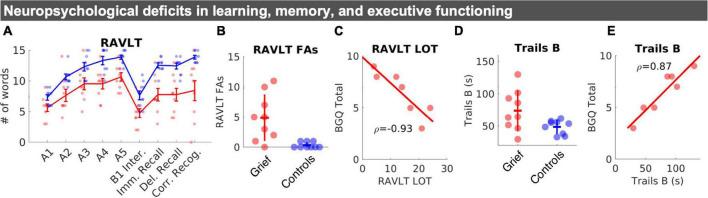
A child's death is a profound loss for mothers and affects hundreds of thousands of women. Mothers report inconsolable and progressive grief that is distinct from depression and impacts daily emotions and functions. The brain mechanisms responsible for this relatively common and profound mental health problem are unclear, hampering its clinical recognition and care. In an initial exploration of this condition, we used resting state functional MRI (fMRI) scans to examine functional connectivity in key circuits, and task-based fMRI to examine brain network activity in grieving mothers in response to pictures of their deceased child and as well as recognizable deceased celebrities and unfamiliar individuals. We compared nine mothers who had lost an adult child and aged-matched control mothers with a living child of a similar age. Additionally, we collected diffusion imaging scans to probe structural connectivity and complemented the imaging studies with neuropsychological assessments. Increased functional activation in Ventral Attention/Salience Networks accompanied by a reduced activation in the medial prefrontal cortex in response to the deceased child's picture robustly distinguished the grieving mothers from controls. Heightened resting-state functional connectivity between the paraventricular thalamic nucleus (PVT) and the amygdala distinguished the grieving mothers from the controls and correlated with subjective grief severity. Structurally, maternal grief and its severity were associated with alterations in corticolimbic white matter tracts. Finally, grieving mothers performed worse than controls on neuropsychological tests of learning, memory, and executive function, linked with grief severity. Reduced activation in cortical regions inhibiting emotions and changes in the PVT circuitry-a region involved in long-term emotional memories and decision making under conflict-distinguish grieving mothers from controls. Notably, the magnitude of neurobiological changes correlates with the subjective severity of grief. Together, these new discoveries delineate a prevalent and under-recognized mental health syndrome and chart a path for its appreciation and care.
儿童死亡对母亲来说是一种巨大的损失,影响着成千上万的女性。母亲们报告称,她们经历着无法慰藉且日益加重的悲痛,这种悲痛不同于抑郁症,会影响日常情绪和功能。导致这种相对常见且严重的心理健康问题的大脑机制尚不清楚,这妨碍了对其的临床识别和治疗。在对这种情况的初步探索中,我们使用静息态功能磁共振成像(fMRI)扫描来检查关键回路中的功能连接,并使用基于任务的fMRI来检查悲伤母亲的大脑网络活动,这些母亲在看到自己已故孩子的照片、知名已故名人的照片以及不熟悉的人的照片时的反应。我们将九位失去成年子女的母亲与年龄匹配的对照母亲进行了比较,对照母亲的孩子年龄相仿且健在。此外,我们收集了扩散成像扫描来探测结构连接,并通过神经心理学评估对成像研究进行补充。与对照组相比,悲伤母亲在看到已故孩子的照片时,腹侧注意/突显网络的功能激活增加,同时内侧前额叶皮质的激活减少,这有力地将她们与对照组区分开来。室旁丘脑核(PVT)与杏仁核之间静息态功能连接增强,这将悲伤母亲与对照组区分开来,并且与主观悲伤严重程度相关。在结构上,母亲的悲伤及其严重程度与皮质边缘白质束的改变有关。最后,在学习、记忆和执行功能的神经心理学测试中,悲伤母亲的表现比对照组差,且与悲伤严重程度相关。抑制情绪的皮质区域激活减少以及PVT回路的变化——该区域参与长期情绪记忆和冲突情境下的决策——将悲伤母亲与对照组区分开来。值得注意的是,神经生物学变化的程度与悲伤的主观严重程度相关。这些新发现共同描绘了一种普遍但未被充分认识的心理健康综合征,并为其评估和治疗指明了方向。

 Zotero 插件