
胶质母细胞瘤的分子生物学最新进展及其治疗的临床意义和进展。
An update on the molecular biology of glioblastoma, with clinical implications and progress in its treatment.
机构信息
Department of Molecular Biology and Biochemistry, University of Málaga, Málaga, Málaga, E-29071, Spain.
Biomedical Research Institute of Málaga (IBIMA-Plataforma Bionand), Málaga, Málaga, E-29071, Spain.
出版信息
Cancer Commun (Lond). 2022 Nov;42(11):1083-1111. doi: 10.1002/cac2.12361. Epub 2022 Sep 21.
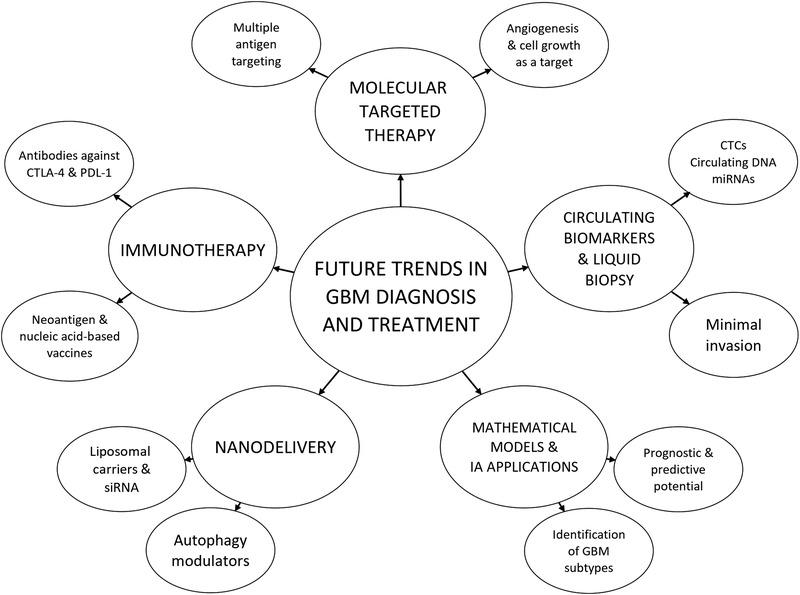
Glioblastoma multiforme (GBM) is the most aggressive and common malignant primary brain tumor. Patients with GBM often have poor prognoses, with a median survival of ∼15 months. Enhanced understanding of the molecular biology of central nervous system tumors has led to modifications in their classifications, the most recent of which classified these tumors into new categories and made some changes in their nomenclature and grading system. This review aims to give a panoramic view of the last 3 years' findings in glioblastoma characterization, its heterogeneity, and current advances in its treatment. Several molecular parameters have been used to achieve an accurate and personalized characterization of glioblastoma in patients, including epigenetic, genetic, transcriptomic and metabolic features, as well as age- and sex-related patterns and the involvement of several noncoding RNAs in glioblastoma progression. Astrocyte-like neural stem cells and outer radial glial-like cells from the subventricular zone have been proposed as agents involved in GBM of IDH-wildtype origin, but this remains controversial. Glioblastoma metabolism is characterized by upregulation of the PI3K/Akt/mTOR signaling pathway, promotion of the glycolytic flux, maintenance of lipid storage, and other features. This metabolism also contributes to glioblastoma's resistance to conventional therapies. Tumor heterogeneity, a hallmark of GBM, has been shown to affect the genetic expression, modulation of metabolic pathways, and immune system evasion. GBM's aggressive invasion potential is modulated by cell-to-cell crosstalk within the tumor microenvironment and altered expressions of specific genes, such as ANXA2, GBP2, FN1, PHIP, and GLUT3. Nevertheless, the rising number of active clinical trials illustrates the efforts to identify new targets and drugs to treat this malignancy. Immunotherapy is still relevant for research purposes, given the amount of ongoing clinical trials based on this strategy to treat GBM, and neoantigen and nucleic acid-based vaccines are gaining importance due to their antitumoral activity by inducing the immune response. Furthermore, there are clinical trials focused on the PI3K/Akt/mTOR axis, angiogenesis, and tumor heterogeneity for developing molecular-targeted therapies against GBM. Other strategies, such as nanodelivery and computational models, may improve the drug pharmacokinetics and the prognosis of patients with GBM.
胶质母细胞瘤(GBM)是最具侵袭性和最常见的恶性原发性脑肿瘤。GBM 患者预后往往较差,中位生存期约为 15 个月。对中枢神经系统肿瘤分子生物学的深入了解导致了其分类的改变,最近的分类将这些肿瘤分为新的类别,并对其命名和分级系统进行了一些更改。本综述旨在全面介绍过去 3 年在胶质母细胞瘤特征描述、异质性以及当前治疗进展方面的发现。已经使用了几个分子参数来实现对患者胶质母细胞瘤的准确和个性化特征描述,包括表观遗传、遗传、转录组和代谢特征,以及年龄和性别相关模式和几种非编码 RNA 在胶质母细胞瘤进展中的作用。星形胶质细胞样神经干细胞和室下区的外放射状胶质样细胞被提出作为 IDH 野生型起源的 GBM 中涉及的因子,但这仍然存在争议。胶质母细胞瘤的代谢特征为 PI3K/Akt/mTOR 信号通路的上调、糖酵解通量的促进、脂质储存的维持和其他特征。这种代谢也有助于胶质母细胞瘤对传统治疗的耐药性。肿瘤异质性是 GBM 的一个标志,已被证明会影响基因表达、代谢途径的调节和免疫系统的逃逸。GBM 的侵袭性入侵潜力是由肿瘤微环境中的细胞间通讯和特定基因表达的改变来调节的,如 ANXA2、GBP2、FN1、PHIP 和 GLUT3。然而,大量正在进行的临床试验表明,人们正在努力寻找新的靶点和药物来治疗这种恶性肿瘤。免疫疗法仍然是研究的重点,因为有大量基于这种策略治疗 GBM 的临床试验正在进行,而基于新抗原和核酸的疫苗由于其通过诱导免疫反应的抗肿瘤活性而变得越来越重要。此外,还有一些临床试验专注于 PI3K/Akt/mTOR 轴、血管生成和肿瘤异质性,以开发针对 GBM 的分子靶向治疗策略。其他策略,如纳米递药和计算模型,可能会改善 GBM 患者的药物药代动力学和预后。


 Zotero 插件