
河流中有毒金属污染对鱼类生理健康的不利影响
Adverse Effects of Toxic Metal Pollution in Rivers on the Physiological Health of Fish.
作者信息
Ngo Huong Thi Thuy, Nguyen Thanh Dinh, Nguyen Tien Thi Hanh, Le Thao Thanh, Nguyen Dinh Quoc
机构信息
Faculty of Biotechnology, Chemistry and Environmental Engineering, Phenikaa University, Hanoi 12116, Vietnam.
Bioresource Center, Phenikaa University, Hanoi 12116, Vietnam.
出版信息
Toxics. 2022 Sep 8;10(9):528. doi: 10.3390/toxics10090528.
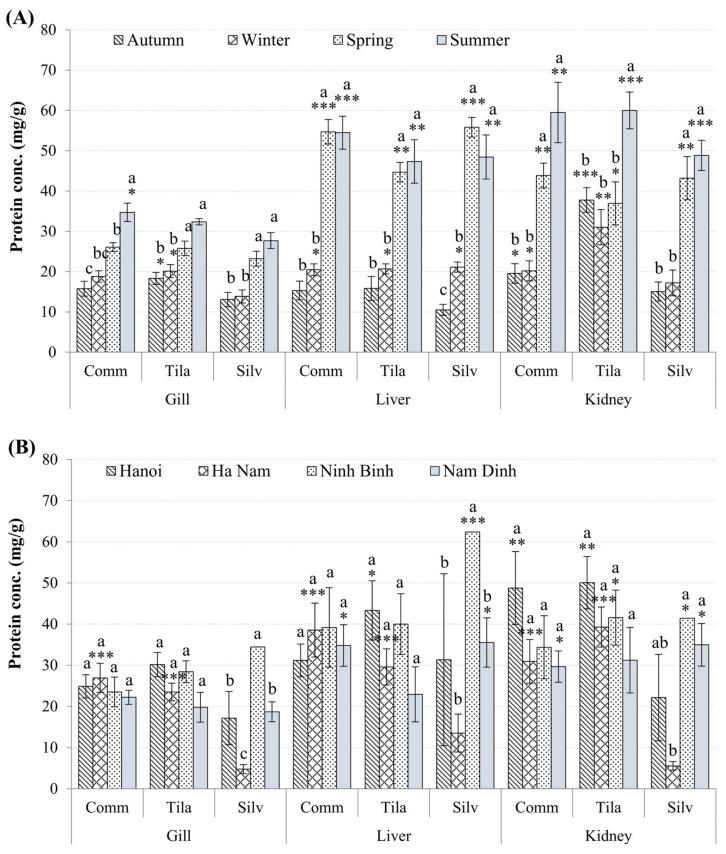
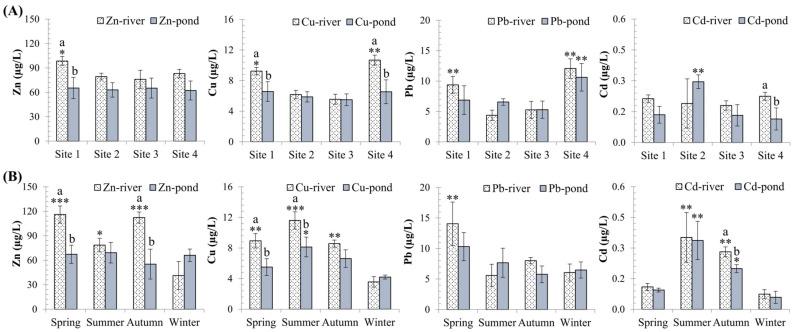
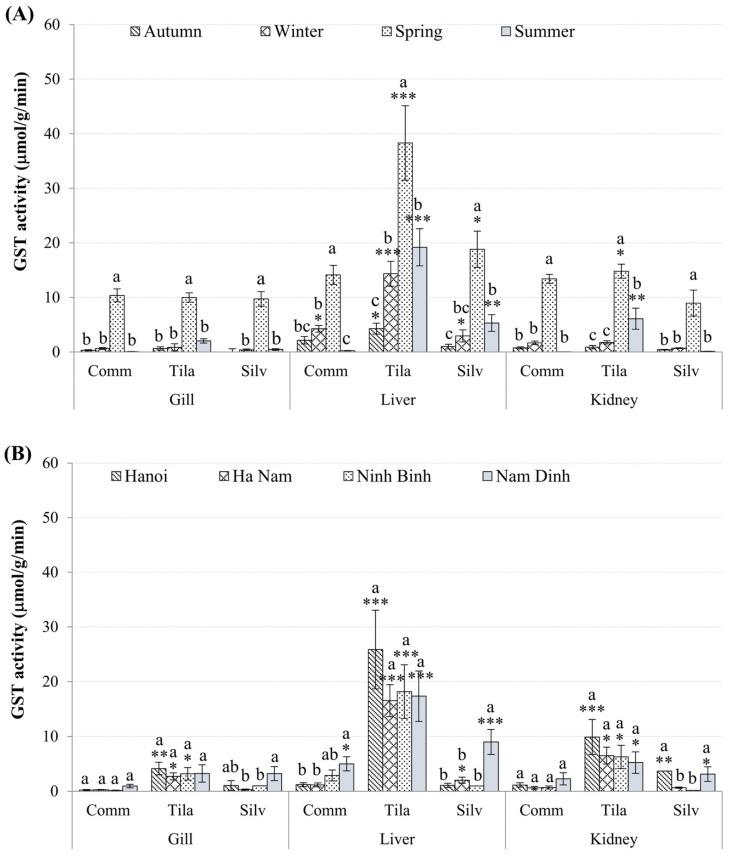
Toxic metal pollution influences the lives of diverse aquatic organisms and humans who consume contaminated aquatic products. However, its potential impacts on aquatic organism health and, thus, ecological health, have been neglected in many regions. This research was carried out to contribute to filling that knowledge gap. Three freshwater fish species in the Nhue−Day River basin, Vietnam, have been chosen to study the bioaccumulation of metals (Zn, Cu, Pb, and Cd) in the tissues (livers, kidneys, gills) and their effects on fish physiological health (changes in the oxidative-GST activity, and physiological biomarkers-energy reserves, respectively) from 2013 to 2017. The extensive results revealed significant spatial and temporal variations in metal concentrations in tissues of common carp (Cyprinus carpio), silver carp (Hypothalmic molitrix), and tilapia (Oreochromis niloticus), and well correlated to their concentration in the water (p < 0.05). Fish bioaccumulated metals in the following order: Zn > Cu > Pb > Cd, with more in the kidneys and livers (spring and summer) than in other tissues. Metal accumulation in O. niloticus and C. carpio was higher than in H. molitrix. Biomarker responses (except for glycogen variation) were also higher during warm seasons. Changes in metal levels in water and fish tissues caused variations in biomarkers in the respective fish tissues, particularly in the livers, as demonstrated by significant correlations of metal concentrations in water and fish tissues to biochemical and physiological responses (p < 0.05). The findings suggest that metal pollution in the river basin adversely impacts the physiological health of both wild and cultured fish. Seasonal shifts in the levels of metal accumulation and biomarkers could be connected to species-specific differences in physiology and the levels of metals in environments. This biomarker set is simple but effective in assessing the impact of metal pollution on fish health and, hence, the aquatic ecosystem. This is one of the first biomonitoring studies to assist in designing better water management strategies for the Nhue−Day River basin.
有毒金属污染影响着各种水生生物以及食用受污染水产品的人类的生活。然而,在许多地区,其对水生生物健康乃至生态健康的潜在影响一直被忽视。开展这项研究是为了填补这一知识空白。2013年至2017年期间,选取了越南泸江 - 红河(Nhue−Day River)流域的三种淡水鱼,研究金属(锌、铜、铅和镉)在其组织(肝脏、肾脏、鳃)中的生物累积情况及其对鱼类生理健康的影响(分别为氧化 - 谷胱甘肽 - S - 转移酶活性变化和生理生物标志物——能量储备)。广泛的研究结果显示,鲤鱼(Cyprinus carpio)、鲢鱼(Hypothalmic molitrix)和罗非鱼(Oreochromis niloticus)组织中的金属浓度存在显著的空间和时间变化,且与水中的金属浓度高度相关(p < 0.05)。鱼类生物累积金属的顺序为:锌>铜>铅>镉,肾脏和肝脏(春季和夏季)中的累积量高于其他组织。尼罗罗非鱼(O. niloticus)和鲤鱼(C. carpio)体内的金属累积量高于鲢鱼(H. molitrix)。在温暖季节,生物标志物反应(糖原变化除外)也更高。水中和鱼组织中金属含量的变化导致了相应鱼组织中生物标志物的变化,尤其是在肝脏中,水和鱼组织中的金属浓度与生化和生理反应之间的显著相关性证明了这一点(p < 0.05)。研究结果表明,该流域的金属污染对野生和养殖鱼类的生理健康均产生了不利影响。金属累积水平和生物标志物的季节性变化可能与物种特定的生理差异以及环境中的金属含量有关。这套生物标志物简单但有效地评估了金属污染对鱼类健康以及水生生态系统的影响。这是首批有助于为泸江 - 红河(Nhue−Day River)流域设计更好的水资源管理策略的生物监测研究之一。


 Zotero 插件