
L. 减轻猪胰腺弹性蛋白酶和香烟烟雾提取物诱导的肺部炎症。
L. Alleviates Pulmonary Inflammation Induced by Porcine Pancreas Elastase and Cigarette Smoke Extract.
作者信息
Shin Dong-Uk, Eom Ji-Eun, Song Hyeon-Ji, Jung Sun Young, Nguyen Thi Van, Lim Kyung Min, Chai Ok Hee, Kim Hyun-Jin, Kim Gun-Dong, Shin Hee Soon, Lee So-Young
机构信息
Department of Food Biotechnology, Korea University of Science and Technology (UST), Daejeon 34113, Korea.
Division of Food Functionality Research, Korea Food Research Institute (KFRI), Wanju 55365, Korea.
出版信息
Antioxidants (Basel). 2022 Aug 28;11(9):1683. doi: 10.3390/antiox11091683.
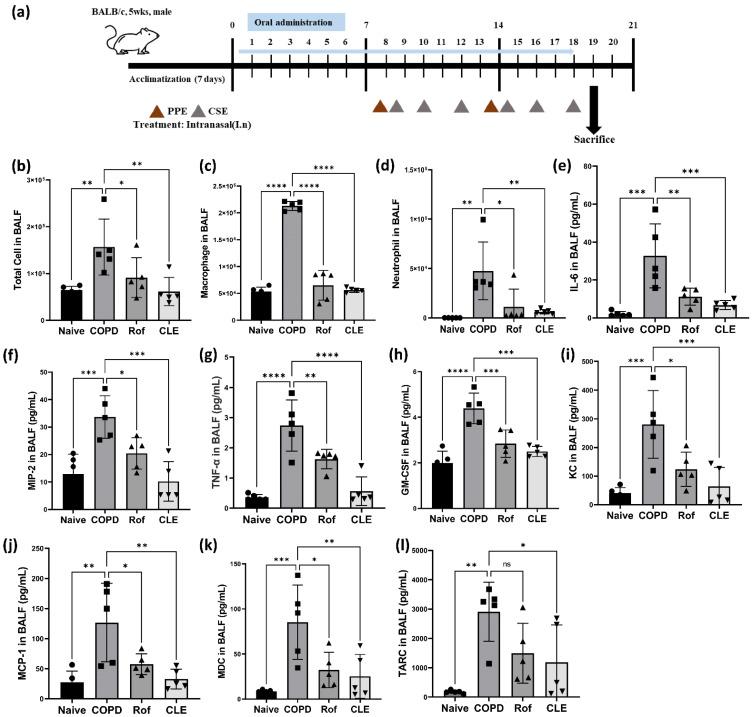
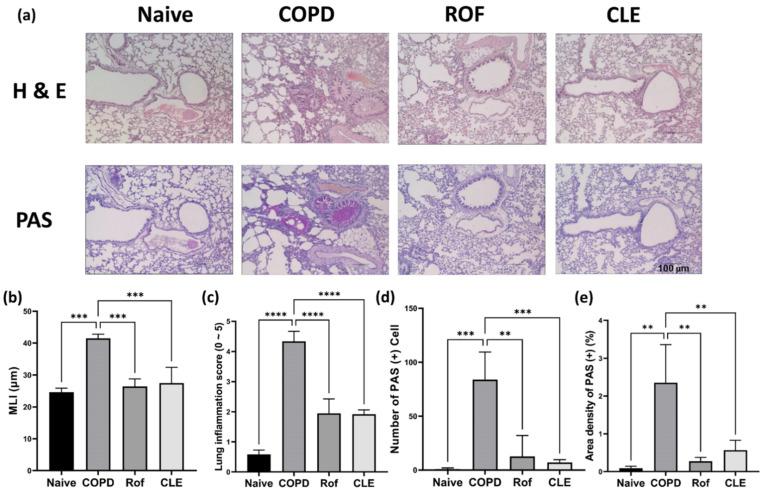
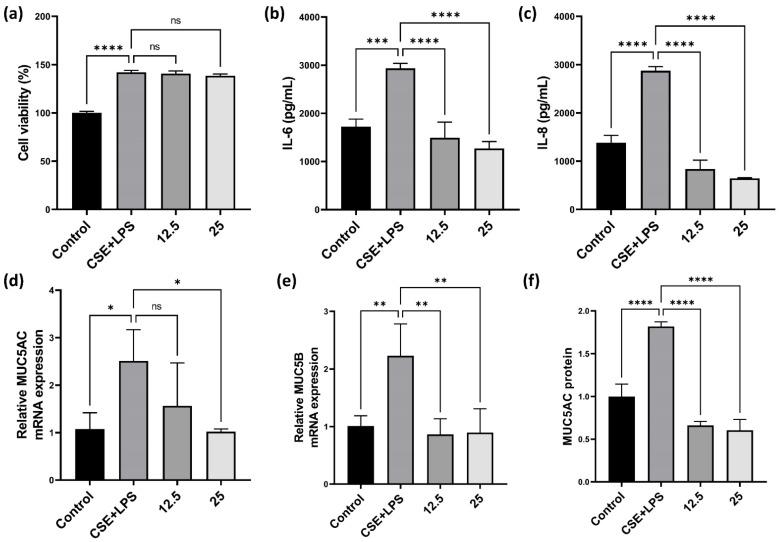
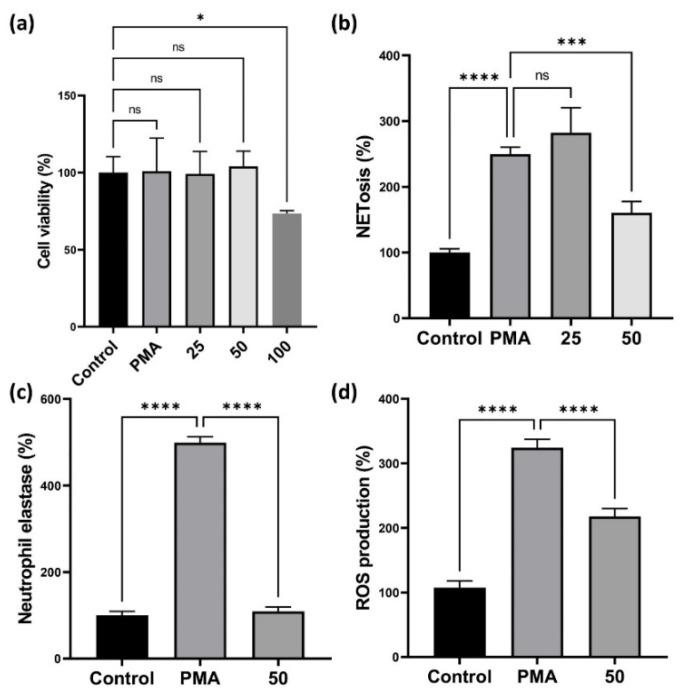
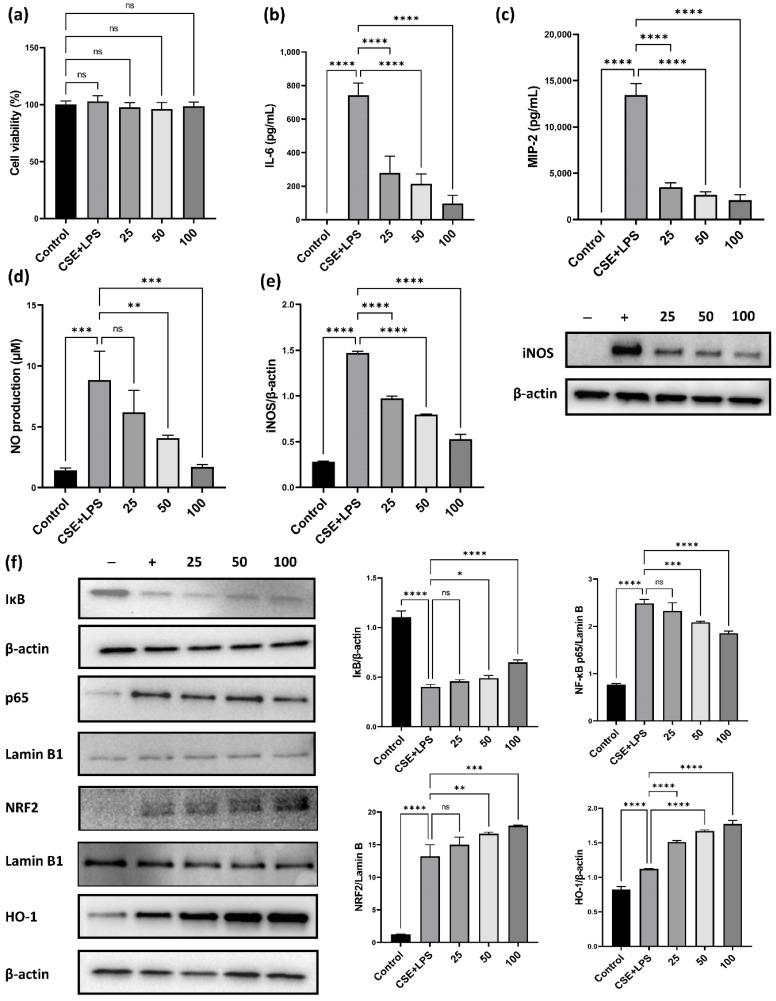
Cigarette smoke (CS) is the major factor in the development of chronic obstructive pulmonary disease (COPD), the third leading cause of death worldwide. Furthermore, although (CN) has been known as an anti-inflammatory material, the effect of CN has not yet been known on pulmonary inflammation in COPD. Thus, we investigated the protective effects of L. extract (CLE) against pulmonary inflammation in porcine pancreas elastase (PPE) and a cigarette smoke extract (CSE)-induced COPD mouse model. Oral administration of CLE suppressed the symptoms such as infiltration of immune cells, cytokines/chemokines secretion, mucus hypersecretion, and injuries of the lung parenchyma. Increased inflammatory responses in COPD are mediated by various immune cells such as airway epithelial cells, neutrophils, and alveolar macrophages. Thus, we investigated the effect and mechanisms of CLE in H292, HL-60, and MH-S cells. The CLE inhibited the expression of IL-6, IL-8, MUC5AC and MUC5B on CSE/LPS-stimulated H292 cells and also suppressed the formation of neutrophil extracellular traps and secretion of neutrophil elastase by inhibiting reactive oxygen species in PMA-induced HL-60 cells. In particular, the CLE suppressed the release of cytokines and chemokines caused by activating the nuclear factor kappa-light-chain-enhancer of activated B via the activation of nuclear factor erythroid-2-related factor 2 and the heme oxygenase-1 pathway in CSE/LPS-stimulated MH-S cells. Therefore, we suggest that the CLE administration be the effective approach for treating or preventing chronic pulmonary diseases such as COPD induced by CS.
香烟烟雾(CS)是慢性阻塞性肺疾病(COPD)发展的主要因素,COPD是全球第三大死因。此外,尽管白藜芦醇(CN)被认为是一种抗炎物质,但其对COPD肺部炎症的影响尚不清楚。因此,我们研究了白藜芦醇提取物(CLE)对猪胰腺弹性蛋白酶(PPE)和香烟烟雾提取物(CSE)诱导的COPD小鼠模型肺部炎症的保护作用。口服CLE可抑制免疫细胞浸润、细胞因子/趋化因子分泌、黏液分泌过多和肺实质损伤等症状。COPD中炎症反应的增加是由多种免疫细胞介导的,如气道上皮细胞、中性粒细胞和肺泡巨噬细胞。因此,我们研究了CLE对H292、HL-60和MH-S细胞的作用及机制。CLE抑制了CSE/LPS刺激的H292细胞中IL-6、IL-8、MUC5AC和MUC5B的表达,还通过抑制PMA诱导的HL-60细胞中的活性氧,抑制了中性粒细胞胞外陷阱的形成和中性粒细胞弹性蛋白酶的分泌。特别是,CLE通过激活核因子红细胞2相关因子2和血红素加氧酶-1途径,抑制了CSE/LPS刺激的MH-S细胞中激活的B细胞核因子κ轻链增强子引起的细胞因子和趋化因子的释放。因此,我们认为给予CLE是治疗或预防由CS引起的慢性肺部疾病如COPD的有效方法。
 Zotero 插件