
姜黄素在慢性疾病炎症反应中的作用。
The Role of Thymoquinone in Inflammatory Response in Chronic Diseases.
机构信息
Department of Integrative Biotechnology, Sungkyunkwan University, Suwon 16419, Korea.
Department of Biocosmetics, Sungkyunkwan University, Suwon 16419, Korea.
出版信息
Int J Mol Sci. 2022 Sep 6;23(18):10246. doi: 10.3390/ijms231810246.
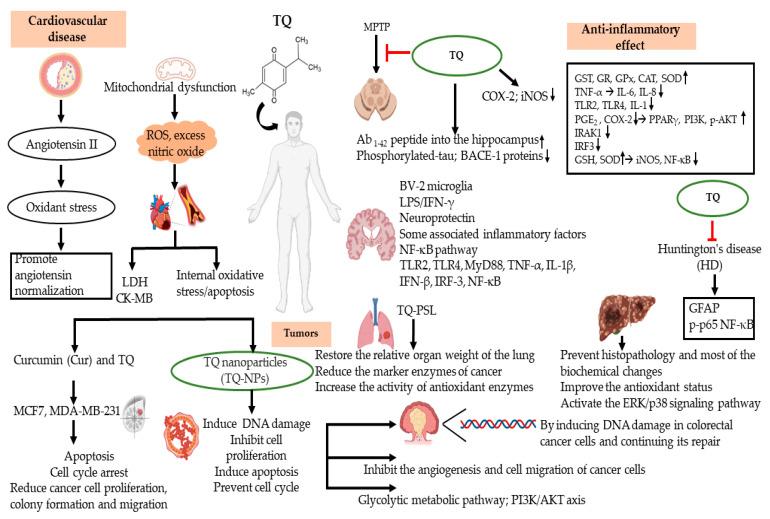
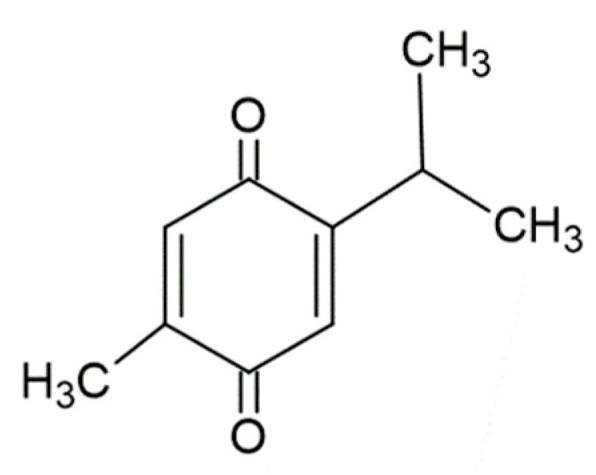
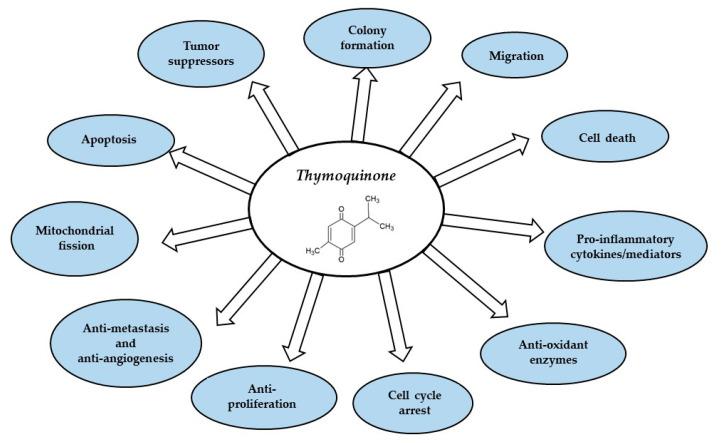
Anti-inflammatory therapies have been shown to be effective in the prevention of various cardiovascular diseases, tumors, and cancer complications. Thymoquinone (TQ), the main active constituent of , has shown promising therapeutic properties in many in vivo and in vitro models. However, TQ has poor bioavailability and is hydrophobic, prohibiting clinical trials with TQ alone. Studies have explored the combination of TQ with biological nanomaterials to improve its bioavailability. The TQ nanoparticle formulation shows better bioavailability than free TQ, and these formulations are ready for clinical trials to determine their potential as therapeutic agents. In this paper, we review current knowledge about the interaction between TQ and the inflammatory response and summarize the research prospects in Korea and abroad. We discuss the different biological activities of TQ and various combination therapies of TQ and nanomaterials in clinical trials.
抗炎疗法已被证明在预防各种心血管疾病、肿瘤和癌症并发症方面有效。姜黄素(TQ)是 的主要活性成分,在许多体内和体外模型中显示出有希望的治疗特性。然而,TQ 的生物利用度差且疏水性强,禁止单独使用 TQ 进行临床试验。研究已经探索了将 TQ 与生物纳米材料结合以提高其生物利用度。TQ 纳米颗粒制剂比游离 TQ 具有更好的生物利用度,这些制剂已准备好进行临床试验,以确定它们作为治疗剂的潜力。本文综述了 TQ 与炎症反应相互作用的现有知识,并总结了国内外的研究进展。我们讨论了 TQ 的不同生物学活性以及 TQ 和纳米材料的各种组合疗法在临床试验中的应用。
 Zotero 插件