
肠道菌群失调与自身免疫性疾病的粪便微生物群移植
Gut Dysbiosis and Fecal Microbiota Transplantation in Autoimmune Diseases.
机构信息
Institute of Molecular Biomedicine, Faculty of Medicine, Comenius University, 811 08 Bratislava, Slovakia.
出版信息
Int J Mol Sci. 2022 Sep 14;23(18):10729. doi: 10.3390/ijms231810729.
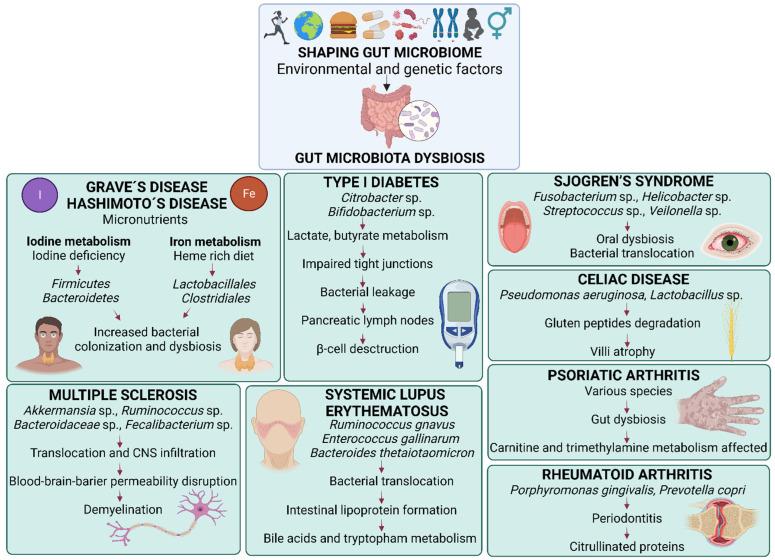
Gut microbiota dysbiosis has recently been reported in a number of clinical states, including neurological, psychiatric, cardiovascular, metabolic and autoimmune disorders. Yet, it is not completely understood how colonizing microorganisms are implicated in their pathophysiology and molecular pathways. There are a number of suggested mechanisms of how gut microbiota dysbiosis triggers or sustains extraintestinal diseases; however, none of these have been widely accepted as part of the disease pathogenesis. Recent studies have proposed that gut microbiota and its metabolites could play a pivotal role in the modulation of immune system responses and the development of autoimmunity in diseases such as rheumatoid arthritis, multiple sclerosis or type 1 diabetes. Fecal microbiota transplantation (FMT) is a valuable tool for uncovering the role of gut microbiota in the pathological processes. This review aims to summarize the current knowledge about gut microbiota dysbiosis and the potential of FMT in studying the pathogeneses and therapies of autoimmune diseases. Herein, we discuss the extraintestinal autoimmune pathologies with at least one published or ongoing FMT study in human or animal models.
肠道微生物失调最近在许多临床状态中被报道,包括神经、精神、心血管、代谢和自身免疫性疾病。然而,肠道定植微生物如何参与其病理生理学和分子途径尚不完全清楚。有许多关于肠道微生物失调如何引发或维持肠外疾病的假说机制;然而,这些机制都没有被广泛接受为疾病发病机制的一部分。最近的研究表明,肠道微生物及其代谢产物可能在调节免疫系统对类风湿关节炎、多发性硬化症或 1 型糖尿病等疾病的反应以及自身免疫的发展中发挥关键作用。粪便微生物移植(FMT)是揭示肠道微生物在病理过程中作用的一种有价值的工具。本综述旨在总结肠道微生物失调的最新知识以及 FMT 在研究自身免疫性疾病发病机制和治疗中的潜力。本文讨论了至少有一项在人类或动物模型中发表或正在进行的 FMT 研究的肠外自身免疫性病理。
 Zotero 插件