
药物制剂增强了通过淋巴递药系统给予的卡铂的治疗反应。
Drug formulation augments the therapeutic response of carboplatin administered through a lymphatic drug delivery system.
机构信息
Laboratory of Biomedical Engineering for Cancer, Graduate School of Biomedical Engineering, Tohoku University, Sendai, Japan.
Biomedical Engineering Cancer Research Center, Graduate School of Biomedical Engineering, Tohoku University, Sendai, Japan.
出版信息
Cancer Sci. 2023 Jan;114(1):259-270. doi: 10.1111/cas.15599. Epub 2022 Oct 14.
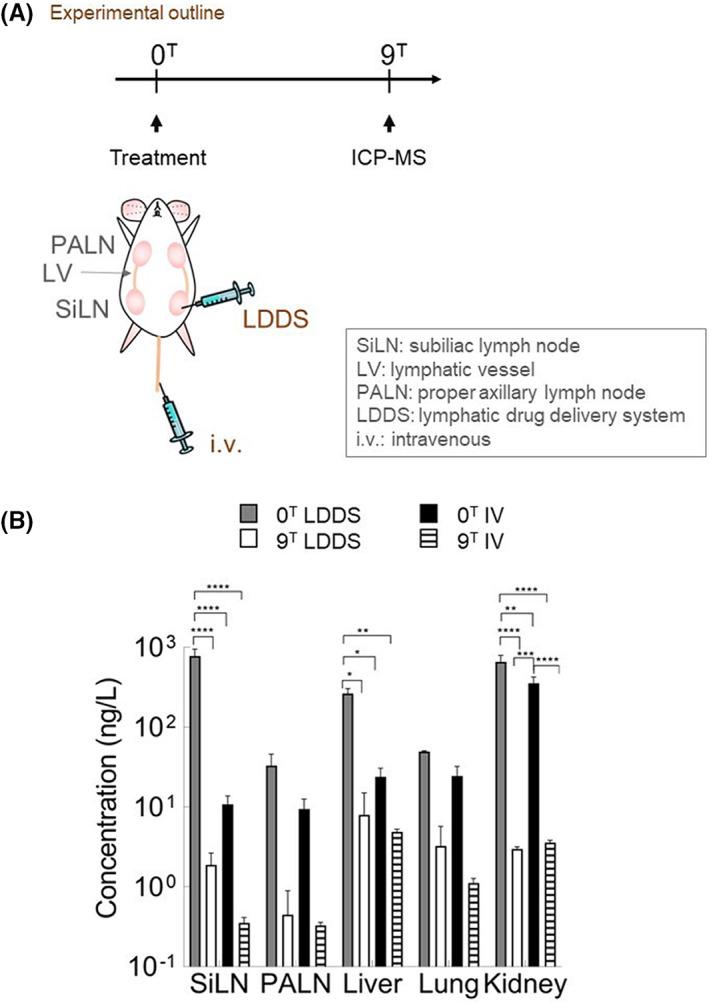
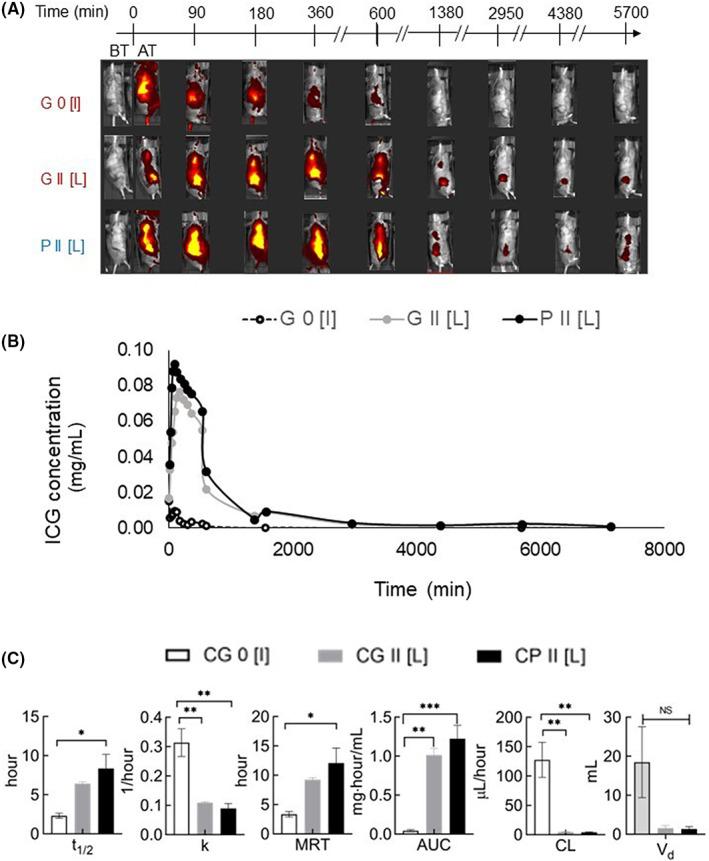
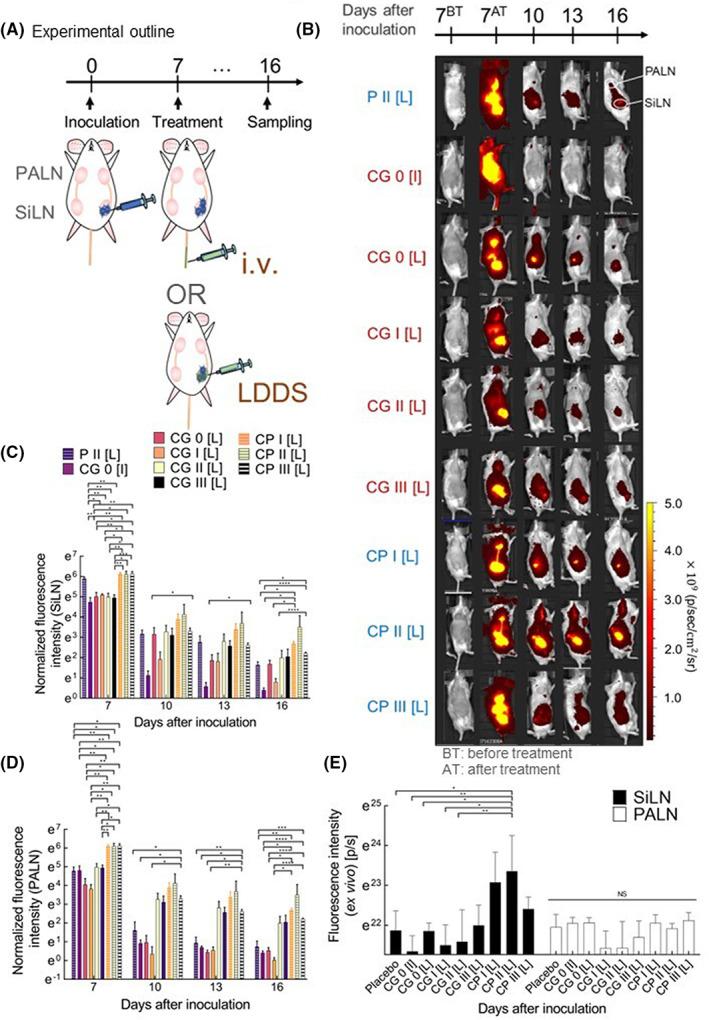
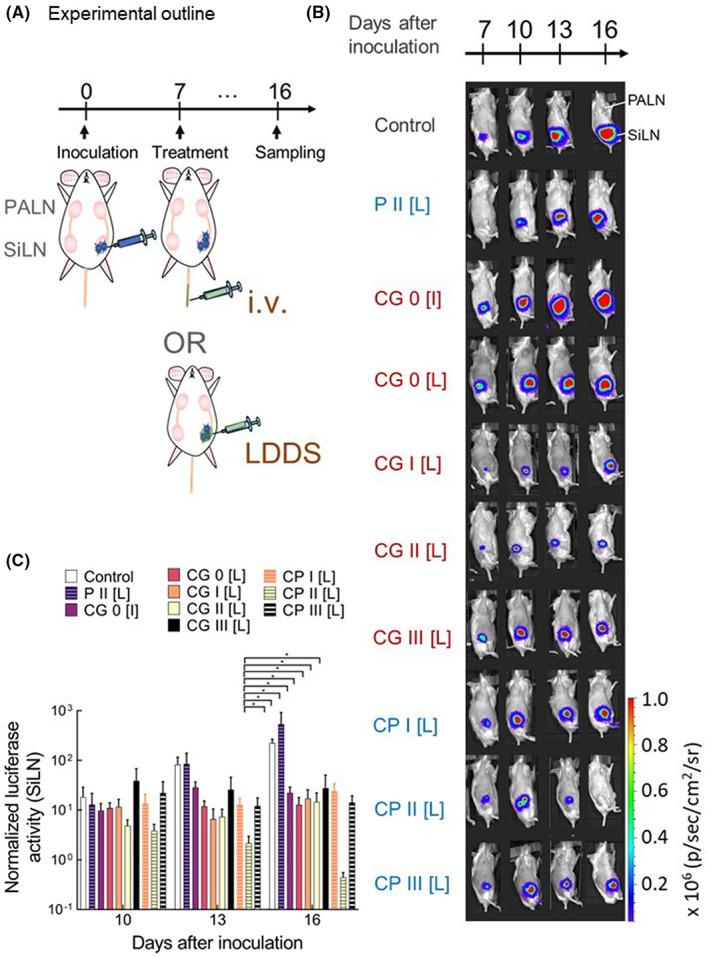
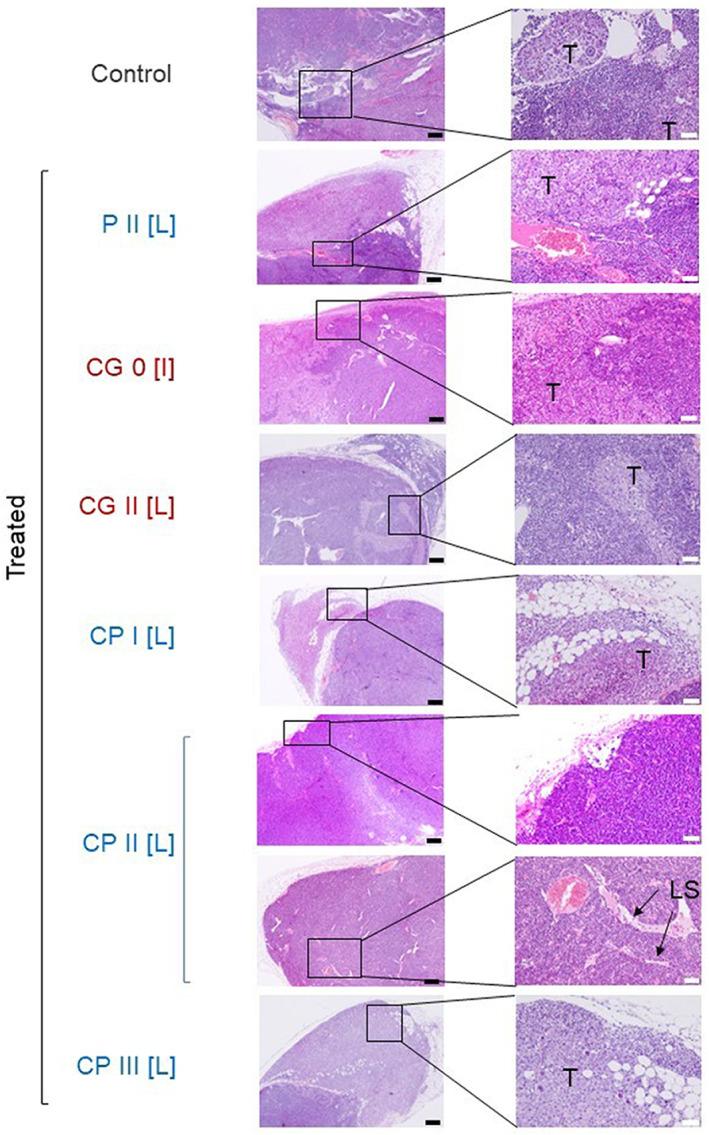
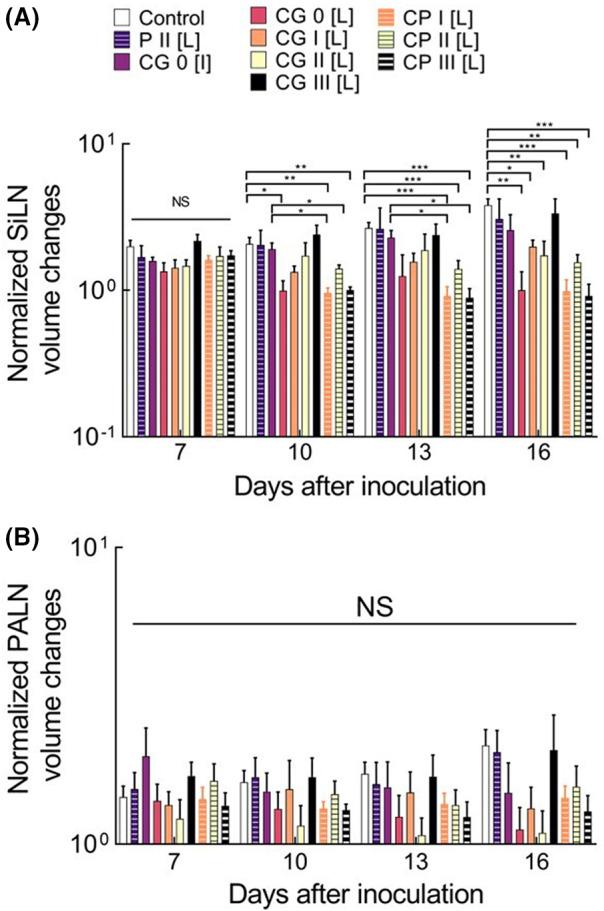
Treatment of metastatic lymph nodes (LNs) is challenging due to their unique architecture and biophysical traits. Systemic chemotherapy fails to impede tumor progression in LNs due to poor drug uptake and retention by LNs, resulting in fatal systemic metastasis. To effectively treat LN metastasis, achieving specific and prolonged retention of chemotherapy drugs in the tumor-draining LNs is essential. The lymphatic drug-delivery system (LDDS) is an ultrasound-guided drug-delivery methodology for administration of drugs to LNs that addresses these requirements. However, early-stage metastatic LNs have an additional set of drug transport barriers, such as elevated intranodal pressure and viscosity, that negatively impact drug diffusion. In the present study, using formulations of elevated osmotic pressure and viscosity relative to saline, we sought to favorably alter the LN's physical environment and study its impact on pharmacokinetics and consequently the therapeutic efficacy of carboplatin delivered using the LDDS. Our study confirmed the capability of a drug formulation with elevated osmotic pressure and viscosity to alter the architecture of LNs, as it caused notable expansion of the lymphatic sinus. Additionally, the study delineated an optimal range of osmotic pressure and viscosity, centered around 1897 kPa and 11.5 mPa·s, above and below which therapeutic efficacy was found to decline markedly. These findings suggest that formulation osmotic pressure and viscosity are parameters that require critical consideration as they can both hinder and promote tumorigenesis. The facile formulation reported here has wide-ranging applicability across cancer spectrums and is thus anticipated to be of great clinical benefit.
治疗转移性淋巴结(LNs)具有挑战性,因为它们具有独特的结构和生物物理特性。由于 LN 摄取和保留药物的能力差,全身化疗无法阻止肿瘤在 LNs 中的进展,导致致命的全身转移。为了有效治疗 LN 转移,必须实现化疗药物在肿瘤引流 LNs 中的特异性和延长保留。淋巴药物递送系统(LDDS)是一种超声引导的药物递送方法,可将药物递送至 LNs,满足这些要求。然而,早期转移性 LNs 具有另一组药物转运屏障,例如升高的腔内压力和粘度,这会对药物扩散产生负面影响。在本研究中,我们使用相对生理盐水升高渗透压和粘度的制剂,试图有利地改变 LN 的物理环境,并研究其对药代动力学的影响,从而影响使用 LDDS 递送的卡铂的治疗效果。我们的研究证实了具有升高渗透压和粘度的药物制剂改变 LNs 结构的能力,因为它导致淋巴窦明显扩张。此外,该研究还描绘了渗透压和粘度的最佳范围,分别在 1897 kPa 和 11.5 mPa·s 左右,高于或低于该范围,发现治疗效果明显下降。这些发现表明,制剂渗透压和粘度是需要仔细考虑的参数,因为它们既可以促进也可以抑制肿瘤发生。这里报道的简便制剂具有广泛的适用性,可以跨越癌症谱,因此预计将具有很大的临床益处。

 Zotero 插件