
BRAF 抑制剂耐药性在黑色素瘤中的机制与治疗策略选择。
BRAF Inhibitor Resistance in Melanoma: Mechanisms and Alternative Therapeutic Strategies.
机构信息
Department of Musculoskeletal Oncology, Fudan University Shanghai Cancer Center, 270 Dongan Road, Xuhui, Shanghai, China.
出版信息
Curr Treat Options Oncol. 2022 Nov;23(11):1503-1521. doi: 10.1007/s11864-022-01006-7. Epub 2022 Oct 1.
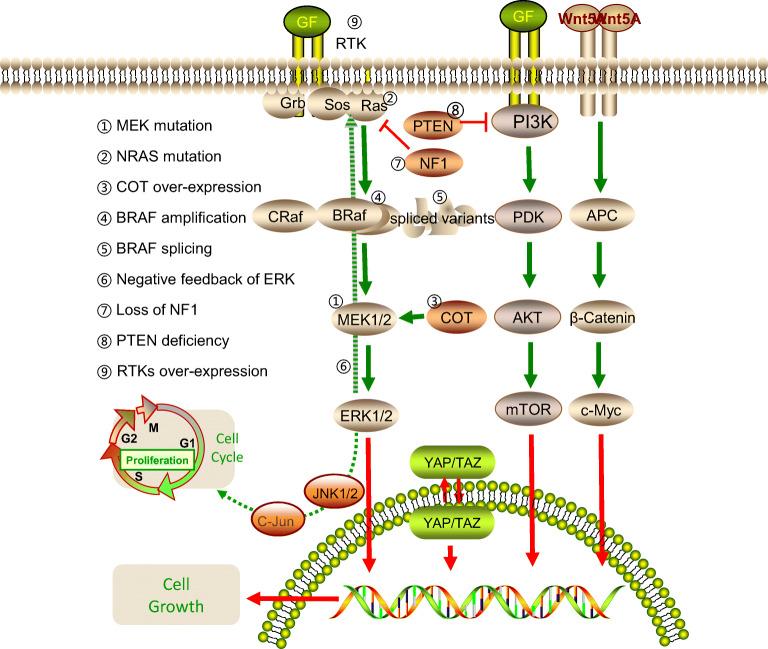
Melanoma is caused by a variety of somatic mutations, and among these mutations, BRAF mutation occurs most frequently and has routinely been evaluated as a critical diagnostic biomarker in clinical practice. The introduction of targeted agents for BRAF-mutant melanoma has significantly improved overall survival in a large proportion of patients. However, there is BRAF inhibitor resistance in most patients, and its mechanisms are complicated and need further clarification. Additionally, treatment approaches to overcome resistance have evolved rapidly, shifting from monotherapy to multimodality treatment, which has dramatically improved patient outcomes in clinical trials and practice. This review highlights the mechanisms of BRAF inhibitor resistance in melanoma and discusses the current state of its therapeutic approaches that can be further explored in clinical practice.
黑色素瘤是由多种体细胞突变引起的,其中 BRAF 突变最为常见,并且已经常规评估为临床实践中的关键诊断生物标志物。针对 BRAF 突变型黑色素瘤的靶向药物的引入显著改善了大多数患者的总体生存率。然而,大多数患者存在 BRAF 抑制剂耐药性,其机制复杂,需要进一步阐明。此外,克服耐药性的治疗方法迅速发展,从单药治疗转变为多模式治疗,这极大地改善了临床试验和实践中的患者结局。本综述强调了黑色素瘤中 BRAF 抑制剂耐药性的机制,并讨论了目前其治疗方法的现状,可以在临床实践中进一步探索。

 Zotero 插件