
T 细胞受体谱分析在 HTLV-1 相关疾病中的应用。
T cell receptor repertoire analysis in HTLV-1-associated diseases.
机构信息
Viral Immunology Section, National Institute of Neurological Disorders and Stroke, National Institutes of Health, Bethesda, MD, United States.
出版信息
Front Immunol. 2022 Sep 15;13:984274. doi: 10.3389/fimmu.2022.984274. eCollection 2022.
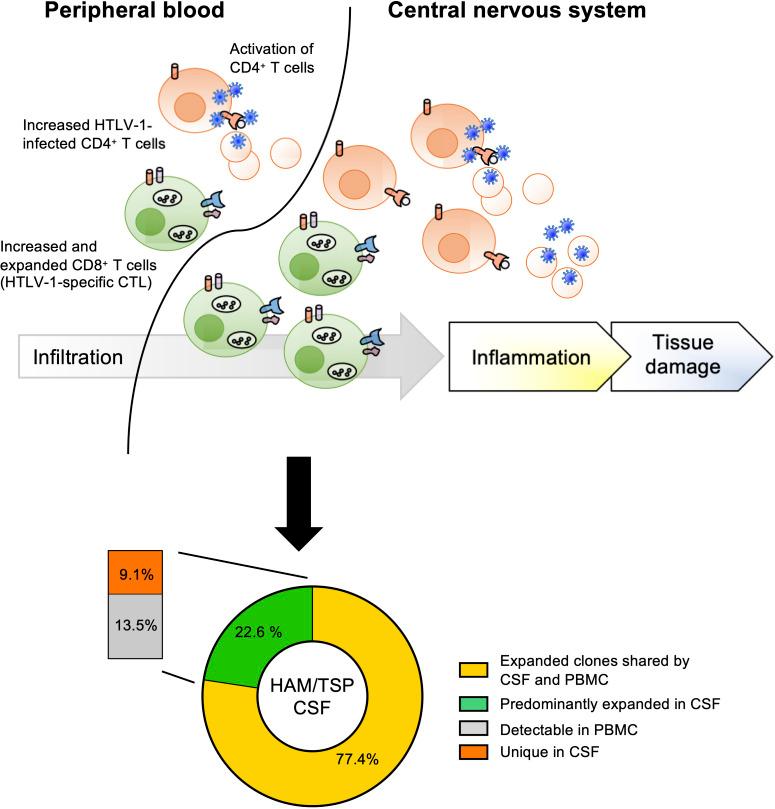
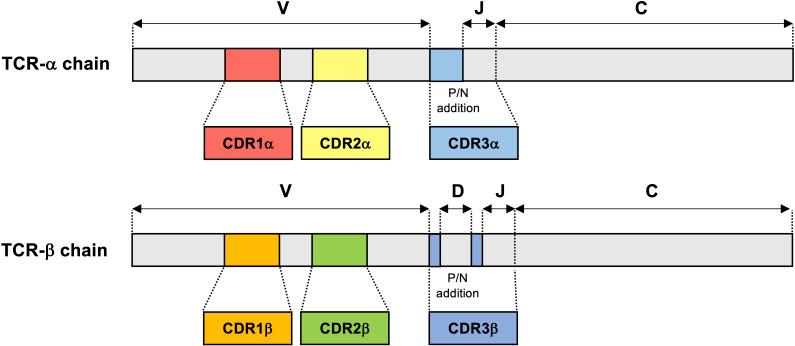
Human T lymphotropic virus 1 (HTLV-1) is a human retrovirus identified as the causative agent in adult T-cell leukemia/lymphoma (ATL) and chronic-progressive neuroinflammatory disorder HTLV-1-associated myelopathy/tropical spastic paraparesis (HAM/TSP). HTLV-1 is estimated to infect between 5-20 million people worldwide, although most infected individuals remain asymptomatic. HTLV-1 infected persons carry an estimated lifetime risk of approximately 5% of developing ATL, and between 0.25% and 1.8% of developing HAM/TSP. Most HTLV-1 infection is detected in CD4 T cells which causes the aggressive malignancy in ATL. In HAM/TSP, the increase of HTLV-1 provirus induces immune dysregulation to alter inflammatory milieu, such as expansion of HTLV-1-specific CD8 T cells, in the central nervous system of the infected subjects, which have been suggested to underlie the pathogenesis of HAM/TSP. Factors contributing to the conversion from asymptomatic carrier to disease state remain poorly understood. As such, the identification and tracking of HTLV-1-specific T cell biomarkers that may be used to monitor the progression from primary infection to immune dysfunction and disease are of great interest. T cell receptor (TCR) repertoires have been extensively investigated as a mechanism of monitoring adaptive T cell immune response to viruses and tumors. Breakthrough technologies such as single-cell RNA sequencing have increased the specificity with which T cell clones may be characterized and continue to improve our understanding of TCR signatures in viral infection, cancer, and associated treatments. In HTLV-1-associated disease, sequencing of TCR repertoires has been used to reveal repertoire patterns, diversity, and clonal expansions of HTLV-1-specific T cells capable of immune evasion and dysregulation in ATL as well as in HAM/TSP. Conserved sequence analysis has further been used to identify CDR3 motif sequences and exploit disease- or patient-specificity and commonality in HTLV-1-associated disease. In this article we review current research on TCR repertoires and HTLV-1-specific clonotypes in HTLV-1-associated diseases ATL and HAM/TSP and discuss the implications of TCR clonal expansions on HTLV-1-associated disease course and treatments.
人类 T 淋巴细胞病毒 1(HTLV-1)是一种人类逆转录病毒,被确定为成人 T 细胞白血病/淋巴瘤(ATL)和慢性进行性神经炎症性疾病 HTLV-1 相关脊髓病/热带痉挛性截瘫(HAM/TSP)的致病因子。HTLV-1 估计在全球感染了 5-2000 万人,尽管大多数感染者仍无症状。HTLV-1 感染者一生中患 ATL 的风险约为 5%,患 HAM/TSP 的风险约为 0.25%-1.8%。大多数 HTLV-1 感染发生在 CD4 T 细胞中,这导致 ATL 中的侵袭性恶性肿瘤。在 HAM/TSP 中,HTLV-1 前病毒的增加诱导免疫失调,改变炎症环境,例如感染患者中枢神经系统中 HTLV-1 特异性 CD8 T 细胞的扩增,这被认为是 HAM/TSP 发病机制的基础。导致从无症状携带者向疾病状态转化的因素仍知之甚少。因此,鉴定和跟踪可能用于监测从原发感染到免疫功能障碍和疾病进展的 HTLV-1 特异性 T 细胞生物标志物具有重要意义。T 细胞受体(TCR)库已被广泛研究,作为监测对病毒和肿瘤的适应性 T 细胞免疫反应的一种机制。单细胞 RNA 测序等突破性技术提高了对 T 细胞克隆进行特征描述的特异性,并继续加深我们对病毒感染、癌症和相关治疗中 TCR 特征的理解。在 HTLV-1 相关疾病中,TCR 库的测序已被用于揭示 HTLV-1 特异性 T 细胞的库模式、多样性和克隆扩增,这些 T 细胞能够在 ATL 以及 HAM/TSP 中逃避免疫和失调。保守序列分析进一步用于识别 CDR3 基序序列,并利用 HTLV-1 相关疾病中的疾病特异性、患者特异性和共性。本文综述了 TCR 库和 HTLV-1 特异性克隆型在 HTLV-1 相关疾病 ATL 和 HAM/TSP 中的最新研究进展,并讨论了 TCR 克隆扩增对 HTLV-1 相关疾病病程和治疗的影响。
 Zotero 插件