
伊朗老年人在新冠疫情期间的医疗服务利用情况:一项横断面研究。
Utilization of health services among the elderly in Iran during the COVID-19 outbreak: A cross-sectional study.
作者信息
Faraji-Khiavi Farzad, Jalilian Habib, Heydari Somayeh, Sadeghi Reza, Saduqi Morteza, Razavinasab Seyed-Ali, Heidari-Jamebozorgi Majid
机构信息
Department of Health Services Management, School of Health Ahvaz Jundishapur University of Medical Sciences Ahvaz Iran.
Department of Public Health Sirjan School of Medical Sciences Sirjan Iran.
出版信息
Health Sci Rep. 2022 Sep 21;5(5):e839. doi: 10.1002/hsr2.839. eCollection 2022 Sep.
BACKGROUND AND AIMS
Elderly people are potentially vulnerable with a higher need for health services, and utilization of Essential Public Health Services (EPHS) among this group is of high importance. This study aimed to examine the utilization of health services among the elderly in Iran during the coronavirus disease 2019 outbreak.
METHODS
This was a cross-sectional study conducted in 21 public health centers in Sirjan, Southern Iran, from May to December 2020. A total of 420 elderly patients were selected through a systematic random sampling method. Data were collected using a questionnaire and were analyzed using SPSS . The binary logistic regression was used to examine the effect of demographic, socioeconomic and morbidity status on inpatient and outpatient healthcare utilization.
RESULTS
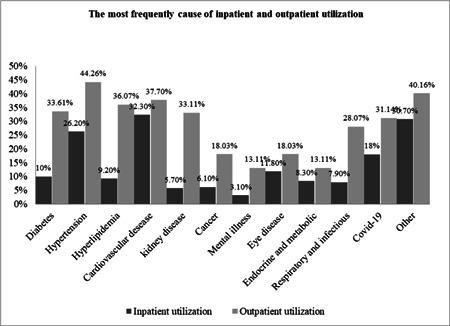
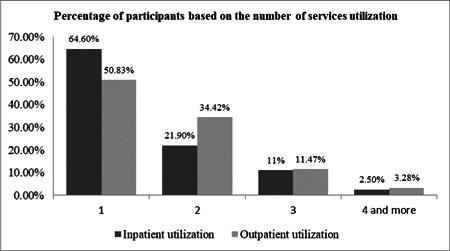
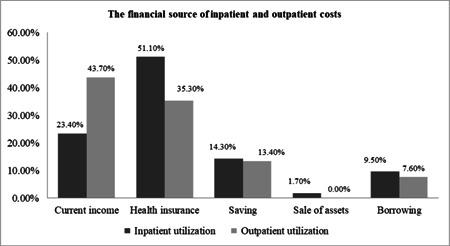
Our results showed that 56% of the elderly had a history of hospitalization during the last year. Although 60% of the elderly reported they had a perceived need for outpatient services, only 49% of them reported that they utilized outpatient services. 51% and 35.5% of the elderly reported that their inpatient and outpatient costs were covered by health insurance, respectively. Others reported their health spending was financed through out-of-pocket payments. Male gender aged 80 and above, urban residents, higher socioeconomic and supplemental insurance coverage were associated with an increase in health services utilization. The elderly with Cancer, mental disorders, kidney disease, and cardiovascular diseases (CVDs) were more likely to be hospitalized.
CONCLUSION
There were demographic and socioeconomic inequalities in health services utilization among the elderly. Therefore, appropriate interventions and strategies are needed to reduce these inequalities in health services utilization among the elderly. In addition, given that the hospitalization rate was significantly higher among the elderly with chronic diseases than those without, it is crucial and necessary to take interventions to reduce the burden of chronic diseases in the future.
背景与目的
老年人可能较为脆弱,对医疗服务的需求更高,该群体对基本公共卫生服务的利用至关重要。本研究旨在调查2019年冠状病毒病疫情期间伊朗老年人的医疗服务利用情况。
方法
这是一项横断面研究,于2020年5月至12月在伊朗南部锡尔詹的21个公共卫生中心进行。通过系统随机抽样方法共选取了420名老年患者。使用问卷收集数据,并使用SPSS进行分析。采用二元逻辑回归分析人口统计学、社会经济和发病状况对住院和门诊医疗服务利用的影响。
结果
我们的结果显示,56%的老年人在过去一年有住院史。尽管60%的老年人表示他们认为需要门诊服务,但只有49%的人报告使用了门诊服务。分别有51%和35.5%的老年人报告其住院和门诊费用由医疗保险支付。其他人报告他们的医疗支出是通过自付费用来支付的。80岁及以上男性、城市居民、较高的社会经济地位和补充保险覆盖与医疗服务利用率的增加有关。患有癌症、精神障碍、肾脏疾病和心血管疾病的老年人更有可能住院。
结论
老年人在医疗服务利用方面存在人口统计学和社会经济不平等。因此,需要采取适当的干预措施和策略来减少老年人在医疗服务利用方面的这些不平等。此外,鉴于慢性病老年人的住院率明显高于无慢性病的老年人,未来采取干预措施减轻慢性病负担至关重要且必要。
 Zotero 插件