
基于骨芯片胶原水凝胶的模型,使用预分化的脂肪来源干细胞进行个性化骨组织工程。
A bone-on-a-chip collagen hydrogel-based model using pre-differentiated adipose-derived stem cells for personalized bone tissue engineering.
机构信息
Multiscale in Mechanical and Biological Engineering, Aragón Institute of Engineering Research (I3A), Aragón Institute of Healthcare Research (IIS Aragón), University of Zaragoza, Zaragoza, Spain.
Division of Biomaterials and Tissue Engineering, UCL Eastman Dental Institute, University College London, London, UK.
出版信息
J Biomed Mater Res A. 2023 Jan;111(1):88-105. doi: 10.1002/jbm.a.37448. Epub 2022 Oct 7.
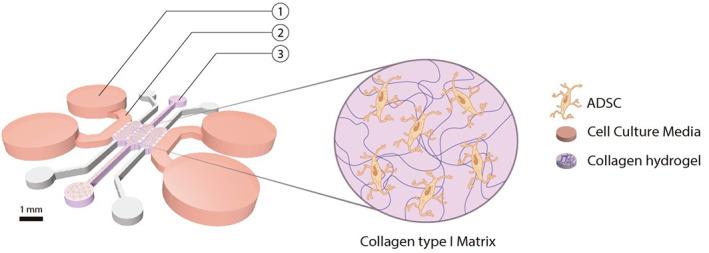
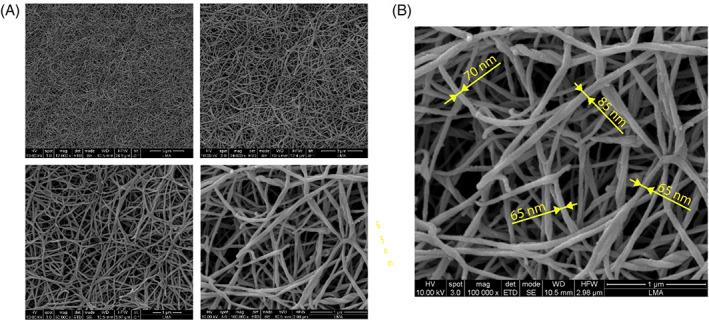
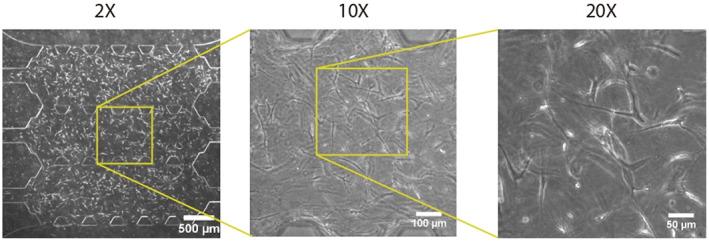
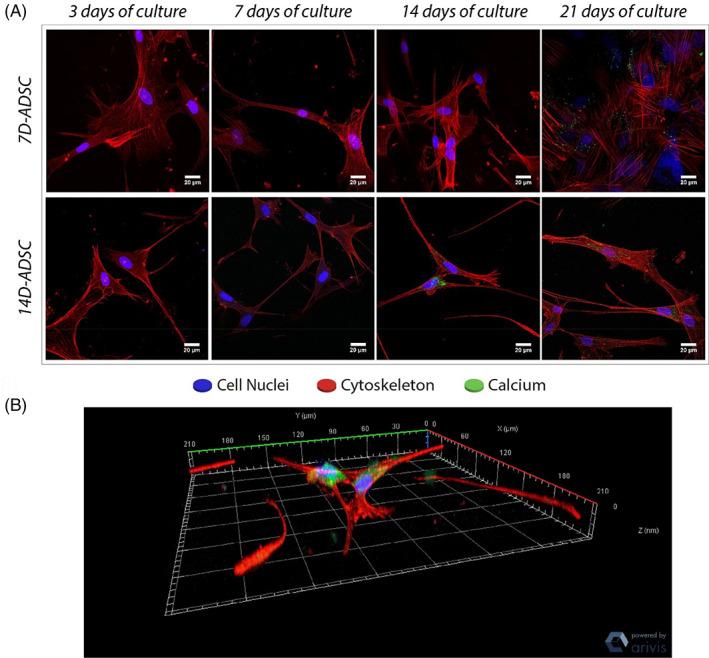
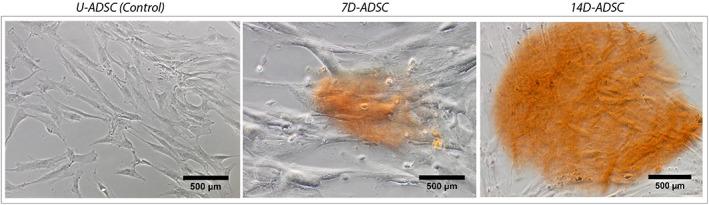
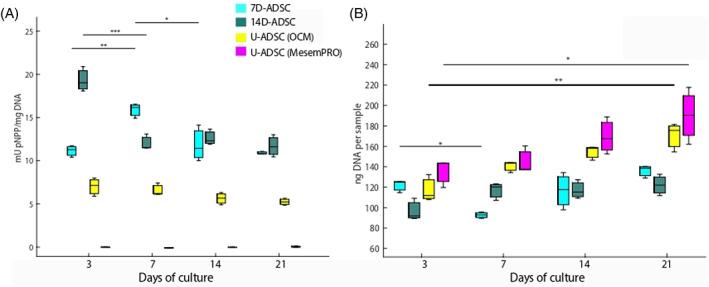
Mesenchymal stem cells have contributed to the continuous progress of tissue engineering and regenerative medicine. Adipose-derived stem cells (ADSC) possess many advantages compared to other origins including easy tissue harvesting, self-renewal potential, and fast population doubling time. As multipotent cells, they can differentiate into osteoblastic cell linages. In vitro bone models are needed to carry out an initial safety assessment in the study of novel bone regeneration therapies. We hypothesized that 3D bone-on-a-chip models containing ADSC could closely recreate the physiological bone microenvironment and promote differentiation. They represent an intermedium step between traditional 2D-in vitro and in vivo experiments facilitating the screening of therapeutic molecules while saving resources. Herein, we have differentiated ADSC for 7 and 14 days and used them to fabricate in vitro bone models by embedding the pre-differentiated cells in a 3D collagen matrix placed in a microfluidic chip. Osteogenic markers such as alkaline phosphatase activity, calcium mineralization, changes on cell morphology, and expression of specific proteins (bone sialoprotein 2, dentin matrix acidic phosphoprotein-1, and osteocalcin) were evaluated to determine cell differentiation potential and evolution. This is the first miniaturized 3D-in vitro bone model created from pre-differentiated ADSC embedded in a hydrogel collagen matrix which could be used for personalized bone tissue engineering.
间充质干细胞为组织工程和再生医学的持续发展做出了贡献。与其他来源相比,脂肪来源的干细胞 (ADSC) 具有许多优势,包括易于组织采集、自我更新潜力和快速的倍增时间。作为多能细胞,它们可以分化为成骨细胞谱系。在研究新型骨再生疗法时,需要体外骨模型来进行初步的安全性评估。我们假设含有 ADSC 的 3D 骨芯片模型可以紧密模拟生理骨微环境并促进分化。它们代表了传统 2D 体外和体内实验之间的中间步骤,有利于筛选治疗分子,同时节省资源。在此,我们将 ADSC 分化 7 和 14 天,并将预分化的细胞嵌入 3D 胶原基质中,然后将其放置在微流控芯片中,以构建体外骨模型。通过评估碱性磷酸酶活性、钙矿化、细胞形态变化和特定蛋白质(骨涎蛋白 2、牙本质基质酸性磷酸蛋白 1 和骨钙素)的表达来评估成骨标志物,以确定细胞分化潜力和演变。这是第一个使用预分化的 ADSC 嵌入水凝胶胶原基质创建的小型化 3D 体外骨模型,可用于个性化骨组织工程。




 Zotero 插件