
pfhrp2 和 pfhrp3 的缺失模式、遗传变异性和蛋白质结构:对埃塞俄比亚阿姆哈拉地区疟疾快速诊断检测的影响。
Deletion patterns, genetic variability and protein structure of pfhrp2 and pfhrp3: implications for malaria rapid diagnostic test in Amhara region, Ethiopia.
机构信息
Department of Biomedicine and Biotechnology, School of Pharmacy, University of Alcalá, Alcalá de Henares, Madrid, Spain.
Malaria and Neglected Diseases Laboratory, National Centre of Tropical Medicine, Institute of Health Carlos III, Madrid, Spain.
出版信息
Malar J. 2022 Oct 8;21(1):287. doi: 10.1186/s12936-022-04306-3.
BACKGROUND
Although rapid diagnostic tests (RDTs) play a key role in malaria-control strategies, their efficacy has been threatened by deletion and genetic variability of the genes pfhrp2/3. This study aims to characterize the deletion, genetic patterns and diversity of these genes and their implication for malaria RDT effectiveness, as well as their genetic evolution in the Amhara region of Ethiopia.
METHODS
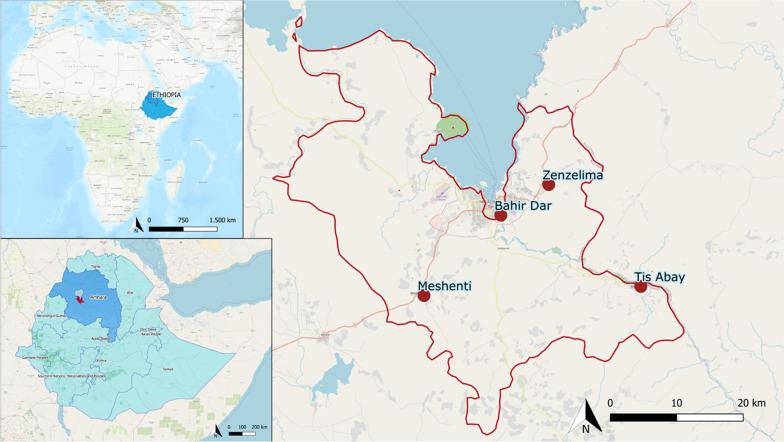
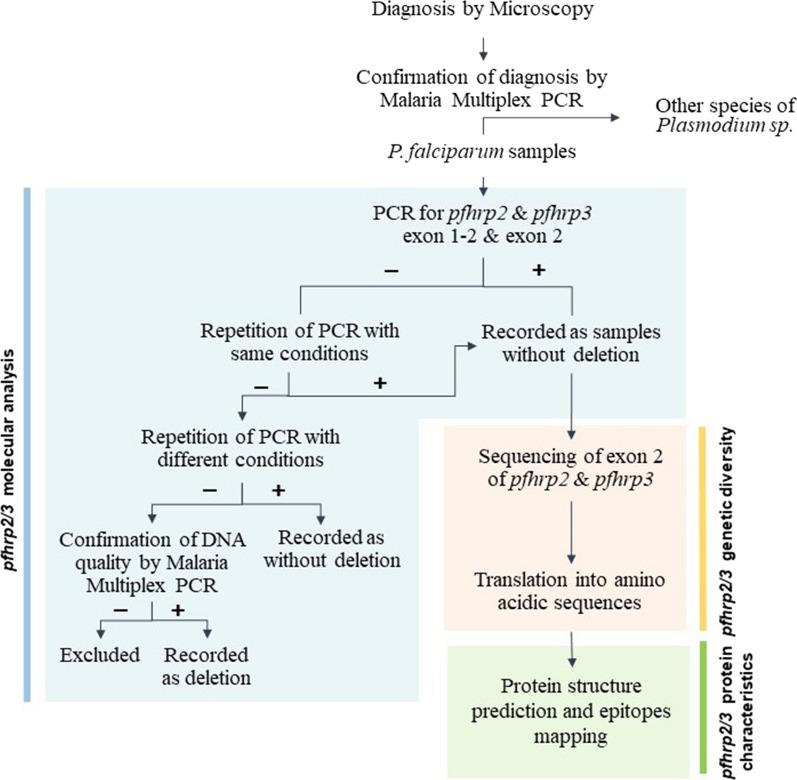
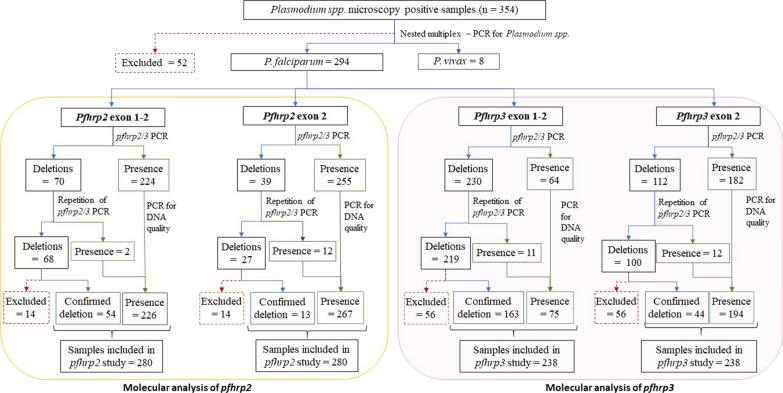
The study included 354 isolates from symptomatic patients from the Amhara region of Ethiopia who tested positive by microscopy. Exon 1-2 and exon 2 of genes pfhrp2 and -3 were amplified, and exon 2 was sequenced to analyse the genetic diversity, phylogenetic relationship and epitope availability.
RESULTS
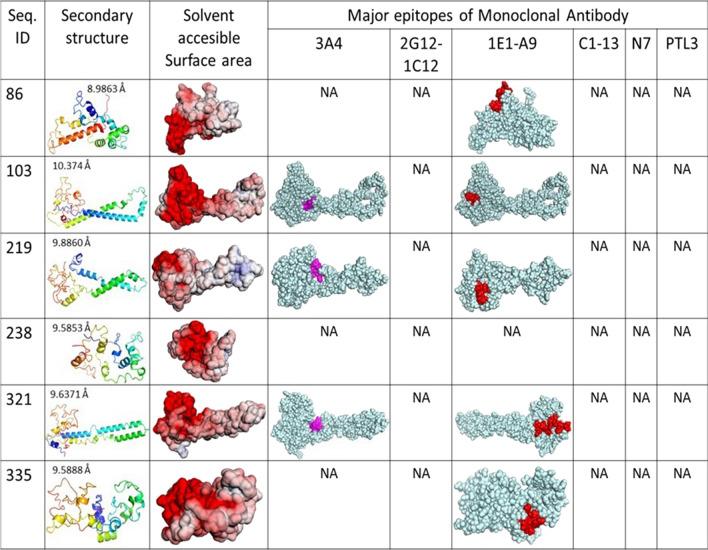
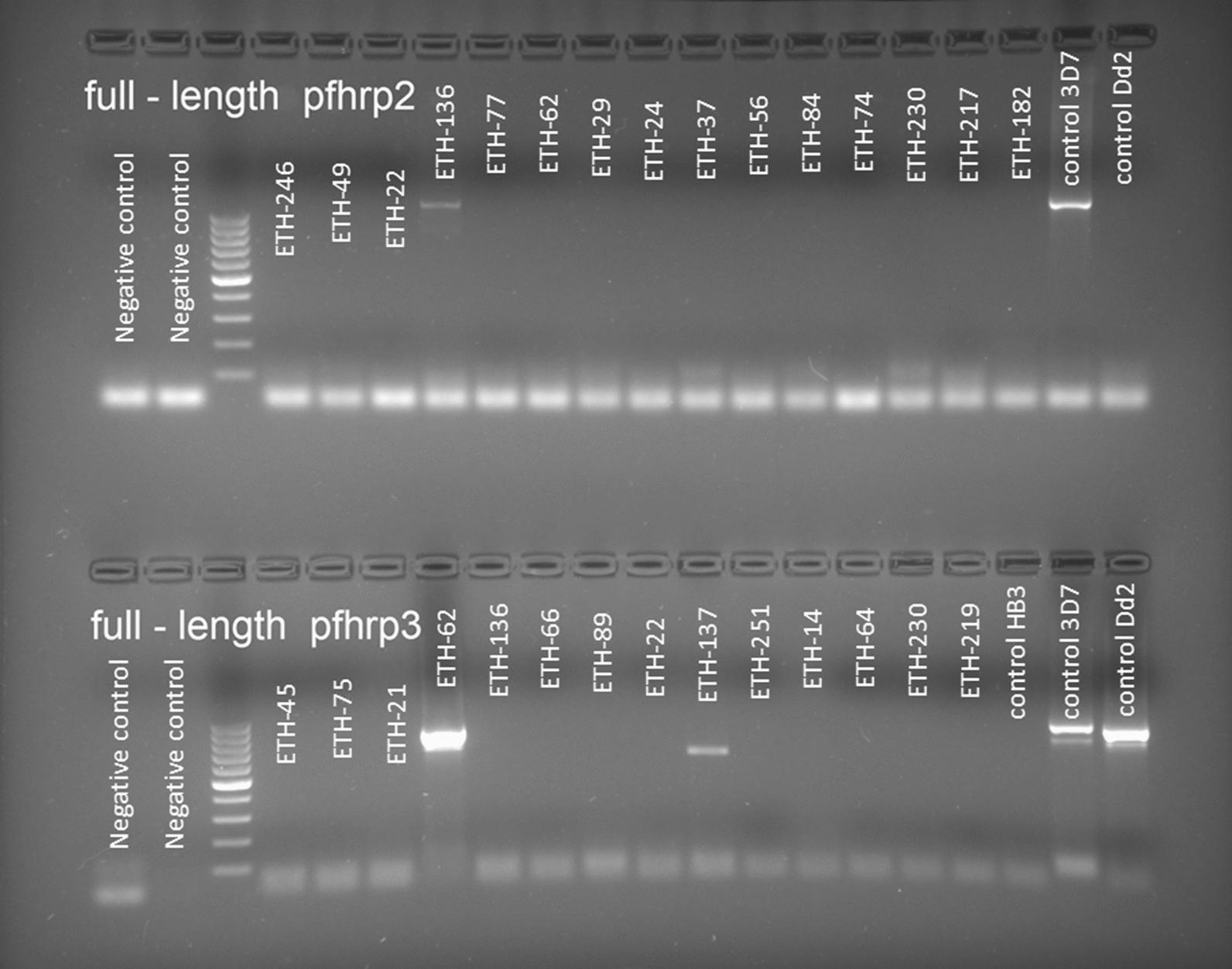
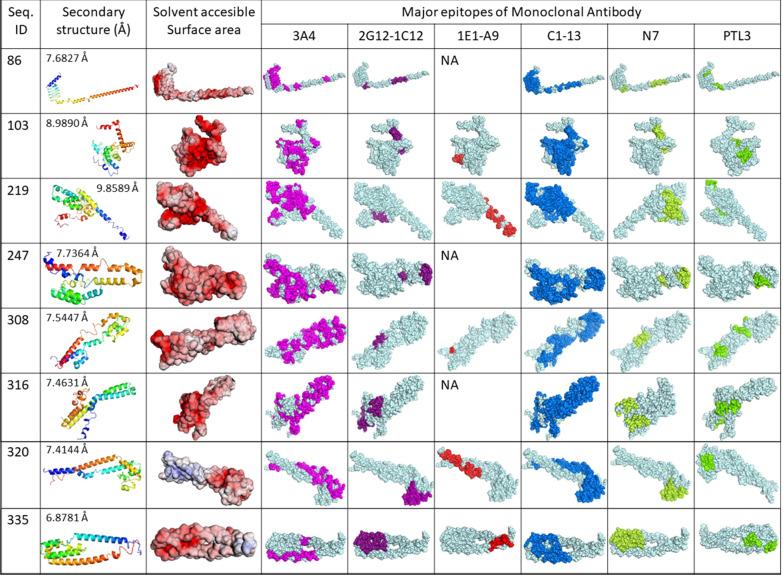
The deletion frequency in exon 1-2 and exon 2 was 22 and 4.6% for pfhrp2, and 68 and 18% for pfhrp3, respectively. Double deletion frequency for pfhrp2 and pfhrp3 was 1.4%. High genetic diversity, lack of clustering by phylogenetic analysis and evidence of positive selection suggested a diversifying selection for both genes. The amino-acid sequences, classified into different haplotypes, varied widely in terms of frequency of repeats, with novel amino-acid changes. Aminoacidic repetition type 2 and type 7 were the most frequent in all the sequences. The most frequent epitopes among protein sequences were those recognized by MAbs 3A4 and C1-13.
CONCLUSION
Deletions and high amino acidic variation in pfhrp2 and pfhrp3 suggest their possible impact on RDT use in the Amhara region, and the high genetic diversity of these genes could be associated with a diversifying selection in Ethiopia. Surveillance of these genes is, therefore, essential to ensure the effectiveness of public health interventions in this region.
背景
尽管快速诊断检测(RDT)在疟疾控制策略中发挥着关键作用,但由于 pfhrp2/3 基因的缺失和遗传变异,其功效受到了威胁。本研究旨在描述这些基因的缺失、遗传模式和多样性,及其对疟疾 RDT 有效性的影响,以及它们在埃塞俄比亚阿姆哈拉地区的遗传进化。
方法
该研究纳入了来自埃塞俄比亚阿姆哈拉地区的 354 例经显微镜检查呈阳性的有症状患者的分离株。扩增基因 pfhrp2 和 -3 的外显子 1-2 和外显子 2,并对exon 2 进行测序,以分析遗传多样性、系统发育关系和表位可用性。
结果
exon 1-2 和 exon 2 中 pfhrp2 的缺失频率分别为 22%和 4.6%,pfhrp3 的缺失频率分别为 68%和 18%。pfhrp2 和 pfhrp3 的双重缺失频率为 1.4%。高遗传多样性、系统发育分析无聚类以及正选择证据表明,这两个基因都受到了多样化选择。氨基酸序列分为不同的单倍型,在重复频率和新的氨基酸变化方面差异很大。所有序列中,重复类型 2 和 7 的氨基酸最为常见。蛋白序列中最常见的表位是被单抗 3A4 和 C1-13 识别的表位。
结论
pfhrp2 和 pfhrp3 的缺失和高氨基酸变异表明它们可能对阿姆哈拉地区 RDT 的使用产生影响,这些基因的高遗传多样性可能与埃塞俄比亚的多样化选择有关。因此,监测这些基因对于确保该地区公共卫生干预措施的有效性至关重要。

 Zotero 插件