
痕量铅的发育不良影响:使用斑马鱼模型进行评估
Developmental adverse effects of trace amounts of lead: Evaluation using zebrafish model.
作者信息
Komoike Yuta, Matsuoka Masato
机构信息
Department of Hygiene and Public Health, Tokyo Women's Medical University, Tokyo, Japan.
出版信息
Front Pharmacol. 2022 Sep 21;13:1014912. doi: 10.3389/fphar.2022.1014912. eCollection 2022.
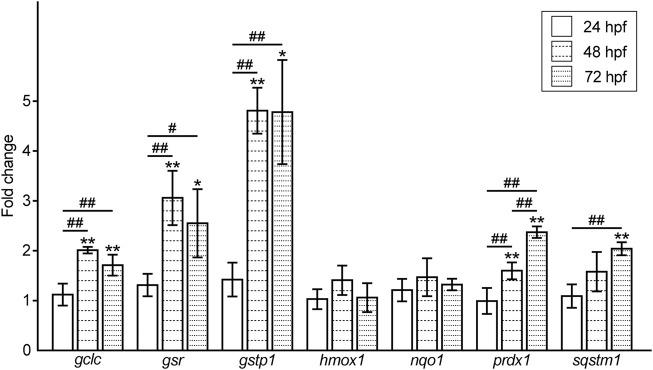
Lead (Pb) is widely used as a raw material for various daily necessities in human civilization. However, Pb is a major toxicant and Pb poisoning has long been a global health concern. A large body of evidence has revealed that exposure to Pb causes a variety of adverse health effects. Meanwhile, experimental studies on the developmental effects caused by trace amounts of Pb remain to be fully conducted. Therefore, we aimed to provide direct experimental evidence of the adverse developmental effects of Pb exposure below the occupational regulatory standard concentrations using a zebrafish model. We also attempted to investigate the cellular stress response caused by such a trace amount of Pb at the individual level. Fertilized zebrafish eggs were exposed to 100 ppb Pb from 6 to 72 h post fertilization (hpf), the developmental period included within the mammalian implantation to birth. The embryos exposed to Pb did not show superficially evident morphological alterations or differences in viability compared with the controls until 72 hpf; however, they hatched earlier and were significantly shorter in body length than the controls at 48 and 72 hpf. Larvae that were exposed to Pb until 72 hpf and then cultured until 7 days post fertilization without Pb exhibited edema and inflation defects in the swim bladder. The reactive oxygen species level in the Pb-exposed embryos was similar at 24 hpf, slightly but significantly higher at 48 hpf, and lower than half that of the control at 72 hpf. Accordingly, the expression levels of oxidative stress response-related genes were analyzed, and five out of seven tested genes were upregulated in Pb-exposed embryos at 48 and 72 hpf. In addition, the endoplasmic reticulum (ER) stress related genes were upregulated at 48 hpf. These results indicate that exposure of embryos to trace amounts of Pb induces a transient increase in oxidative- and ER-stresses and results in weak hypotrophy and subsequent abnormalities later in development. Our findings may be key to understanding the total health effects of Pb exposure, and indicate that the zebrafish model is suitable for the investigation of developmental toxicity of pollutants such as Pb.
铅(Pb)在人类文明中被广泛用作各种日用品的原材料。然而,铅是一种主要的有毒物质,铅中毒长期以来一直是全球关注的健康问题。大量证据表明,接触铅会导致多种不良健康影响。与此同时,关于微量铅对发育影响的实验研究仍有待充分开展。因此,我们旨在使用斑马鱼模型提供职业监管标准浓度以下铅暴露对发育产生不良影响的直接实验证据。我们还试图在个体水平上研究这种微量铅引起的细胞应激反应。受精的斑马鱼卵在受精后6至72小时(hpf)暴露于100 ppb的铅中,该发育阶段涵盖了哺乳动物从着床到出生的时期。直到72 hpf,与对照组相比,暴露于铅的胚胎在表面上没有表现出明显的形态改变或活力差异;然而,它们孵化得更早,在48和72 hpf时体长明显短于对照组。暴露于铅直到72 hpf然后在无铅条件下培养至受精后7天的幼体,鳔出现水肿和膨胀缺陷。在24 hpf时,暴露于铅的胚胎中的活性氧水平相似,在48 hpf时略有但显著升高,在72 hpf时低于对照组的一半。因此,分析了氧化应激反应相关基因的表达水平,在48和72 hpf时,七个测试基因中有五个在暴露于铅的胚胎中上调。此外,内质网(ER)应激相关基因在48 hpf时上调。这些结果表明,胚胎暴露于微量铅会导致氧化应激和内质网应激短暂增加,并导致发育后期出现轻度发育迟缓及随后的异常。我们的发现可能是理解铅暴露对健康总体影响的关键,并表明斑马鱼模型适用于研究铅等污染物的发育毒性。


 Zotero 插件