
针对免疫细胞的胃癌治疗策略:未来方向。
Therapeutic strategies for gastric cancer targeting immune cells: Future directions.
机构信息
Department of Oncology and Hematology, China-Japan Union Hospital of Jilin University, Changchun, China.
Department of Radiation Oncology, China-Japan Union Hospital of Jilin University, Changchun, China.
出版信息
Front Immunol. 2022 Sep 23;13:992762. doi: 10.3389/fimmu.2022.992762. eCollection 2022.
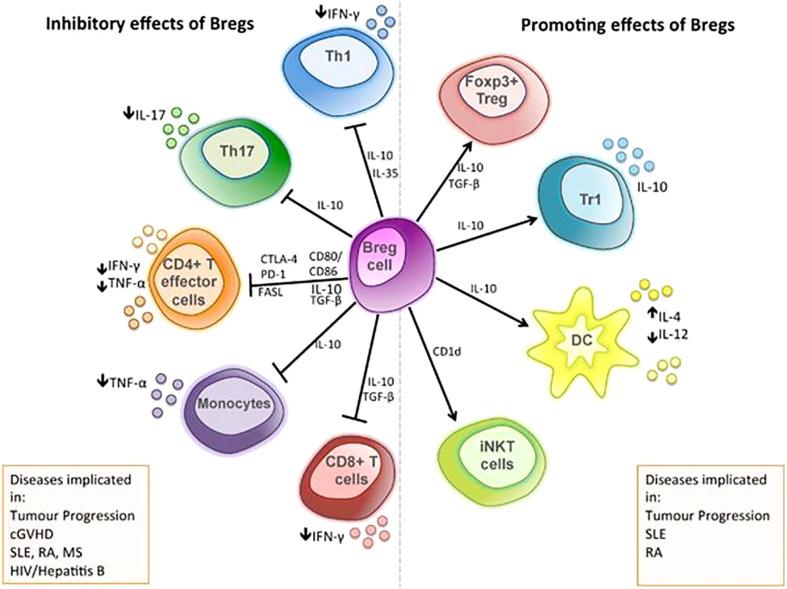
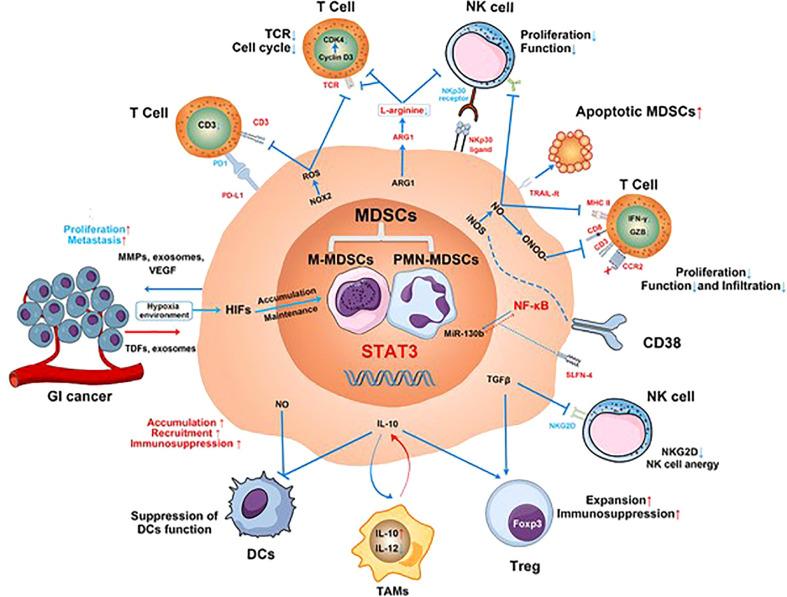
Gastric cancer (GC) is a malignancy with a high incidence and mortality, and the emergence of immunotherapy has brought survival benefits to GC patients. Compared with traditional therapy, immunotherapy has the advantages of durable response, long-term survival benefits, and lower toxicity. Therefore, targeted immune cells are the most promising therapeutic strategy in the field of oncology. In this review, we introduce the role and significance of each immune cell in the tumor microenvironment of GC and summarize the current landscape of immunotherapy in GC, which includes immune checkpoint inhibitors, adoptive cell therapy (ACT), dendritic cell (DC) vaccines, reduction of M2 tumor-associated macrophages (M2 TAMs), N2 tumor-associated neutrophils (N2 TANs), myeloid-derived suppressor cells (MDSCs), effector regulatory T cells (eT), and regulatory B cells (B) in the tumor microenvironment and reprogram TAMs and TANs into tumor killer cells. The most widely used immunotherapy strategies are the immune checkpoint inhibitor programmed cell death 1/programmed death-ligand 1 (PD-1/PD-L1) antibody, cytotoxic T lymphocyte-associated protein 4 (CTLA-4) antibody, and chimeric antigen receptor T (CAR-T) in ACT, and these therapeutic strategies have significant anti-tumor efficacy in solid tumors and hematological tumors. Targeting other immune cells provides a new direction for the immunotherapy of GC despite the relatively weak clinical data, which have been confirmed to restore or enhance anti-tumor immune function in preclinical studies and some treatment strategies have entered the clinical trial stage, and it is expected that more and more effective immune cell-based therapeutic methods will be developed and applied.
胃癌(GC)是一种发病率和死亡率都很高的恶性肿瘤,免疫疗法的出现为 GC 患者带来了生存获益。与传统疗法相比,免疫疗法具有持久应答、长期生存获益和较低毒性的优势。因此,靶向免疫细胞是肿瘤学领域最有前途的治疗策略。在这篇综述中,我们介绍了 GC 肿瘤微环境中每种免疫细胞的作用和意义,并总结了 GC 免疫疗法的现状,包括免疫检查点抑制剂、过继细胞疗法(ACT)、树突状细胞(DC)疫苗、减少 M2 肿瘤相关巨噬细胞(M2 TAMs)、N2 肿瘤相关中性粒细胞(N2 TANs)、髓系来源抑制细胞(MDSCs)、效应调节性 T 细胞(eT)和肿瘤微环境中的调节性 B 细胞(B),以及将 TAMs 和 TANs 重编程为肿瘤杀伤细胞。最广泛使用的免疫疗法策略是免疫检查点抑制剂程序性细胞死亡蛋白 1/程序性死亡配体 1(PD-1/PD-L1)抗体、细胞毒性 T 淋巴细胞相关蛋白 4(CTLA-4)抗体和嵌合抗原受体 T(CAR-T)在 ACT 中的应用,这些治疗策略在实体瘤和血液肿瘤中具有显著的抗肿瘤疗效。尽管临床数据相对较弱,但针对其他免疫细胞的靶向治疗为 GC 的免疫治疗提供了新的方向,已在临床前研究中证实可恢复或增强抗肿瘤免疫功能,并且一些治疗策略已进入临床试验阶段,预计将开发和应用越来越多有效的基于免疫细胞的治疗方法。


 Zotero 插件