
纳武单抗治疗晚期非小细胞肺癌患者的血浆微小RNA表达分析
Plasma-Based microRNA Expression Analysis in Advanced Stage NSCLC Patients Treated with Nivolumab.
作者信息
Monastirioti Alexia, Papadaki Chara, Kalapanida Despoina, Rounis Konstantinos, Michaelidou Kleita, Papadaki Maria A, Mavroudis Dimitrios, Agelaki Sofia
机构信息
Laboratory of Translational Oncology, School of Medicine, University of Crete, Vassilika Vouton, 71003 Heraklion, Crete, Greece.
Department of Medical Oncology, University General Hospital of Heraklion, Vassilika Vouton, 71110 Heraklion, Crete, Greece.
出版信息
Cancers (Basel). 2022 Sep 28;14(19):4739. doi: 10.3390/cancers14194739.
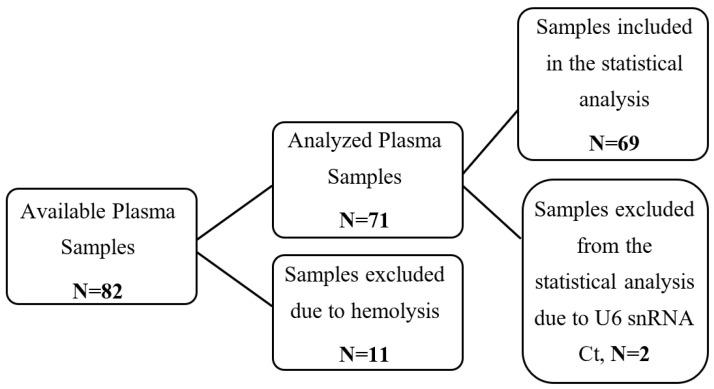
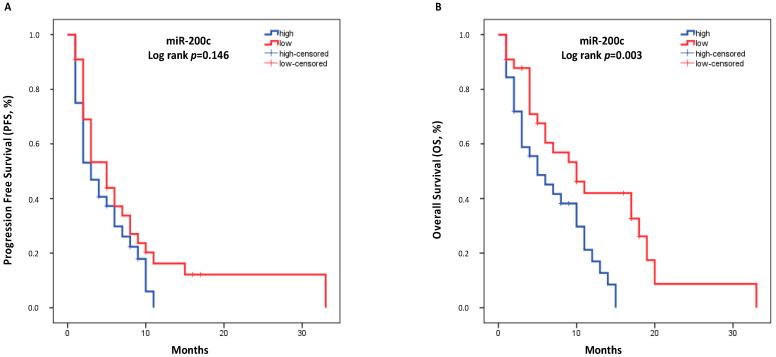
Since circulating microRNAs (miRNAs) are involved in the modulation of the immune response, they are tested as liquid biopsy-based biomarkers in patients with NSCLC treated with immunotherapy. We analyzed the expression levels and examined the clinical significance of immunoregulatory miRNAs involved in immune checkpoint regulation (miR-34a, miR-200b, miR-200c), T-cell activity (miR-155), and the function of myeloid-derived suppressive cells (MDSCs) (miR-223) or regulatory T lymphocytes (Tregs) (miR-146a), in patients with advanced NSCLC (N = 69) treated with anti-PD-1 (Nivolumab) immunotherapy as 2nd or 3rd line of treatment therapy. Plasma levels of circulating miRNAs were analyzed by RT-qPCR before the initiation of immunotherapy. Expression of miR-34a, miR-146a, mir-200c, and miR-223 was found to be associated with response to immunotherapy. High miR-200c expression emerged as an independent prognostic factor for inferior overall survival in all patients with NSCLC (OS, HR: 2.243, 95% CI: 1.208-4.163; = 0.010) and in patients with non-Squamous (non-SqCC) subtype (N = 38) (HR: 2.809, 95% CI: 1.116-7.074; = 0.028). Low miR-34a expression independently predicted for shorter OS (HR: 3.189, 95% CI: 1.193-8.527; = 0.021) in the non-SqCC subgroup. Our findings suggest that alterations in circulating miR-200c and miR-34a expression levels are associated with the response and outcome in patients with advanced NSCLC treated with anti-PD1 immunotherapy.
由于循环微RNA(miRNA)参与免疫反应的调节,因此它们作为基于液体活检的生物标志物,在接受免疫治疗的非小细胞肺癌(NSCLC)患者中进行了检测。我们分析了参与免疫检查点调节(miR-34a、miR-200b、miR-200c)、T细胞活性(miR-155)以及髓源性抑制细胞(MDSC)功能(miR-223)或调节性T淋巴细胞(Treg)功能(miR-146a)的免疫调节miRNA的表达水平,并研究了其临床意义,这些研究对象为69例接受抗PD-1(纳武单抗)免疫治疗作为二线或三线治疗的晚期NSCLC患者。在免疫治疗开始前,通过逆转录定量聚合酶链反应(RT-qPCR)分析循环miRNA的血浆水平。发现miR-34a、miR-146a、mir-200c和miR-223的表达与免疫治疗反应相关。高miR-200c表达是所有NSCLC患者总体生存期较差的独立预后因素(总生存期,风险比:2.243,95%置信区间:1.208 - 4.163;P = 0.010),在非鳞状(非SqCC)亚型患者中(n = 38)也是如此(风险比:2.809,95%置信区间:1.116 - 7.074;P = 0.028)。低miR-34a表达在非SqCC亚组中独立预测较短的总生存期(风险比:3.189,95%置信区间:1.193 - 8.527;P = 0.021)。我们的研究结果表明,循环miR-200c和miR-34a表达水平的改变与接受抗PD1免疫治疗的晚期NSCLC患者的反应和预后相关。

 Zotero 插件