
基因表达下调和膜 CTR1 蛋白的细胞质重定位:Menkes 病小鼠模型中铜肾毒性的一种强大保护机制。
Decreased Expression of the Gene and Cytoplasmic Relocalization of Membrane CTR1 Protein in Renal Epithelial Cells: A Potent Protective Mechanism against Copper Nephrotoxicity in a Mouse Model of Menkes Disease.
机构信息
Laboratory of Genetics and Evolution, Institute of Zoology and Biomedical Research, Jagiellonian University, Gronostajowa 9, 30-387 Kraków, Poland.
Department of Molecular Biology, Institute of Genetics and Animal Biotechnology, Polish Academy of Sciences, Jastrzebiec, Postepu 36A, 05-552 Magdalenka, Poland.
出版信息
Int J Mol Sci. 2022 Sep 28;23(19):11441. doi: 10.3390/ijms231911441.
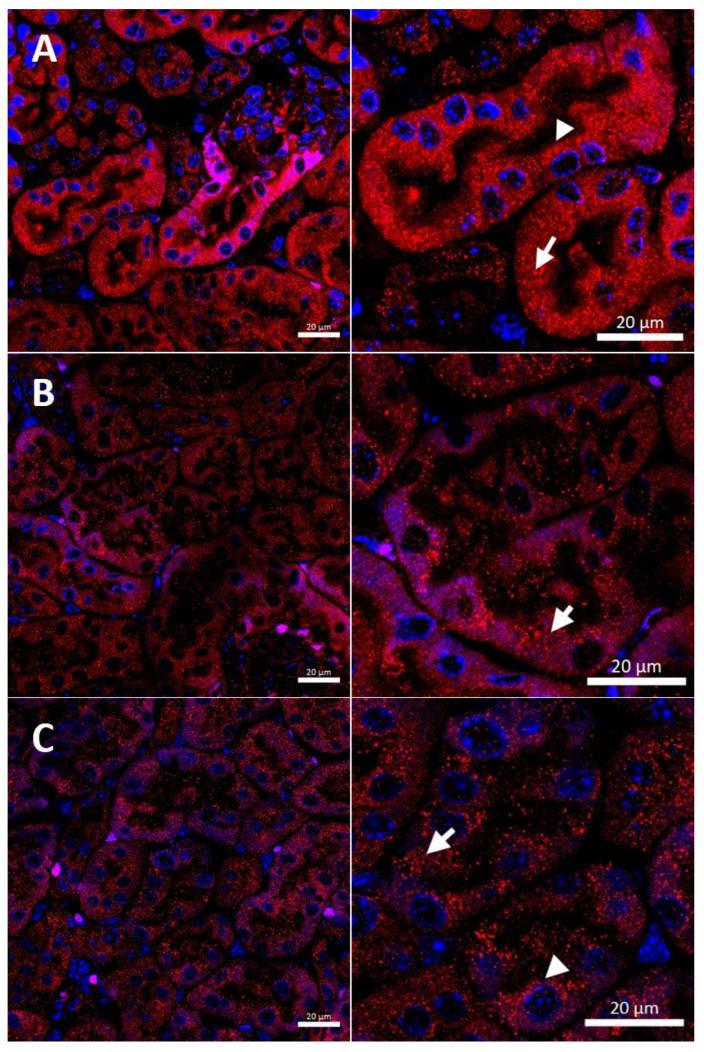
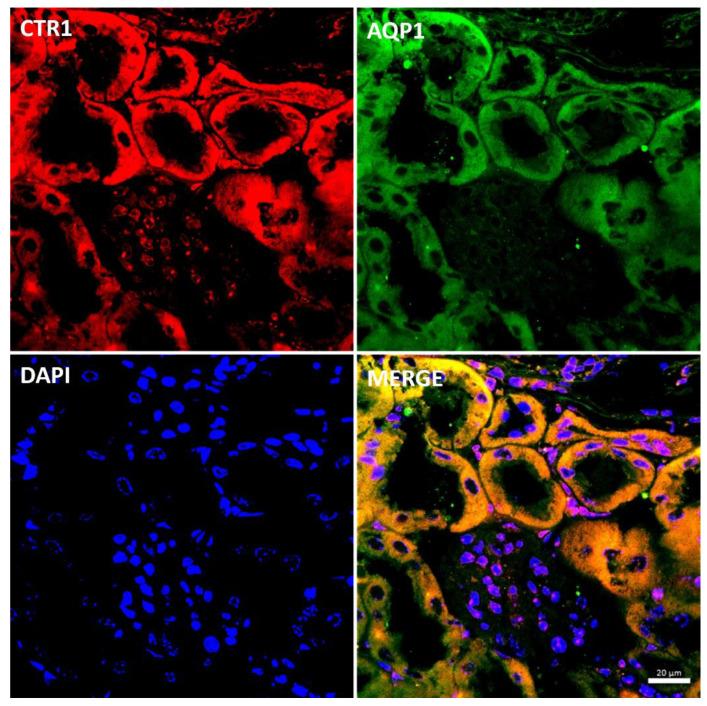
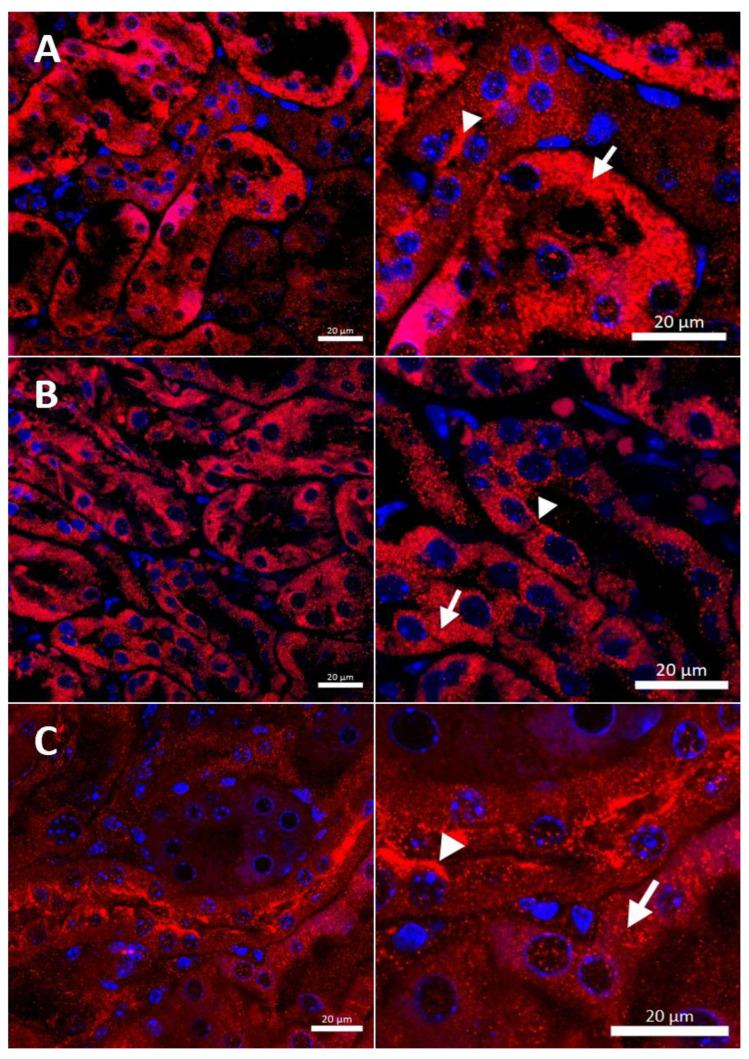
Kidneys play an especial role in copper redistribution in the organism. The epithelial cells of proximal tubules perform the functions of both copper uptake from the primary urine and release to the blood. These cells are equipped on their apical and basal membrane with copper transporters CTR1 and ATP7A. mutant mice displaying a functional dysfunction of ATP7A are an established model of Menkes disease. These mice exhibit systemic copper deficiency despite renal copper overload, enhanced by copper therapy, which is indispensable for their life span extension. The aim of this study was to analyze the expression of and genes (encoding CTR1/CTR2 proteins) and the cellular localization of the CTR1 protein in suckling, young and adult mutants. Our results indicate that in the kidney of both intact and copper-injected 14-day-old mutants showing high renal copper content, CTR1 mRNA level is not up-regulated compared to wild-type mice given a copper injection. The expression of the gene in 45-day-old mice is even reduced compared with intact wild-type animals. In suckling and young copper-injected mutants, the CTR1 protein is relocalized from the apical membrane to the cytoplasm of epithelial cells of proximal tubules, the process which prevents copper transport from the primary urine and, thus, protects cells against copper toxicity.
肾脏在体内铜再分配中起着特殊的作用。近端小管的上皮细胞具有从原尿中摄取铜并释放到血液中的双重功能。这些细胞的顶膜和基底膜上都配备有铜转运蛋白 CTR1 和 ATP7A。表达功能失调的 ATP7A 突变的小鼠是 Menkes 病的一种既定模型。尽管接受了铜治疗(这对延长其寿命是必不可少的),这些小鼠仍表现出全身性铜缺乏,同时伴有肾脏铜过载。本研究的目的是分析 14 日龄未注射铜的野生型和 突变小鼠以及接受铜注射的 45 日龄 突变小鼠的 和 基因(编码 CTR1/CTR2 蛋白)的表达情况和 CTR1 蛋白的细胞定位。我们的结果表明,与接受铜注射的野生型小鼠相比,肾脏铜含量高的未注射铜的 14 日龄 突变型小鼠的肾脏中 CTR1mRNA 水平并未上调。与完整的野生型动物相比,45 日龄 突变型小鼠的 基因表达甚至降低。在哺乳期和幼年期接受铜注射的突变型小鼠中,CTR1 蛋白从近端小管上皮细胞的顶膜重新定位到细胞质,该过程阻止了原尿中的铜转运,从而防止了细胞受到铜毒性的侵害。



 Zotero 插件