
持续但功能失调的黏膜 SARS-CoV-2 特异性 IgA 和低肺内 IL-1β 与 COVID-19 死亡结局相关:一项横断面分析。
Persistent but dysfunctional mucosal SARS-CoV-2-specific IgA and low lung IL-1β associate with COVID-19 fatal outcome: A cross-sectional analysis.
机构信息
Mucosal Entry of HIV and Mucosal Immunity, Institut Cochin, Paris-Descartes University, Paris, France.
INSERM U1016, Paris, France.
出版信息
Front Immunol. 2022 Sep 29;13:842468. doi: 10.3389/fimmu.2022.842468. eCollection 2022.
UNLABELLED
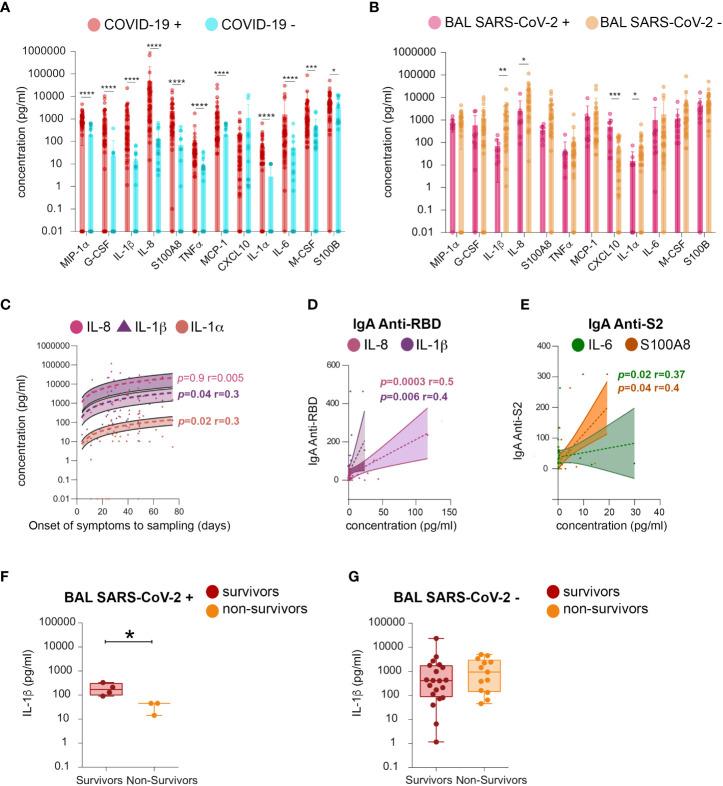
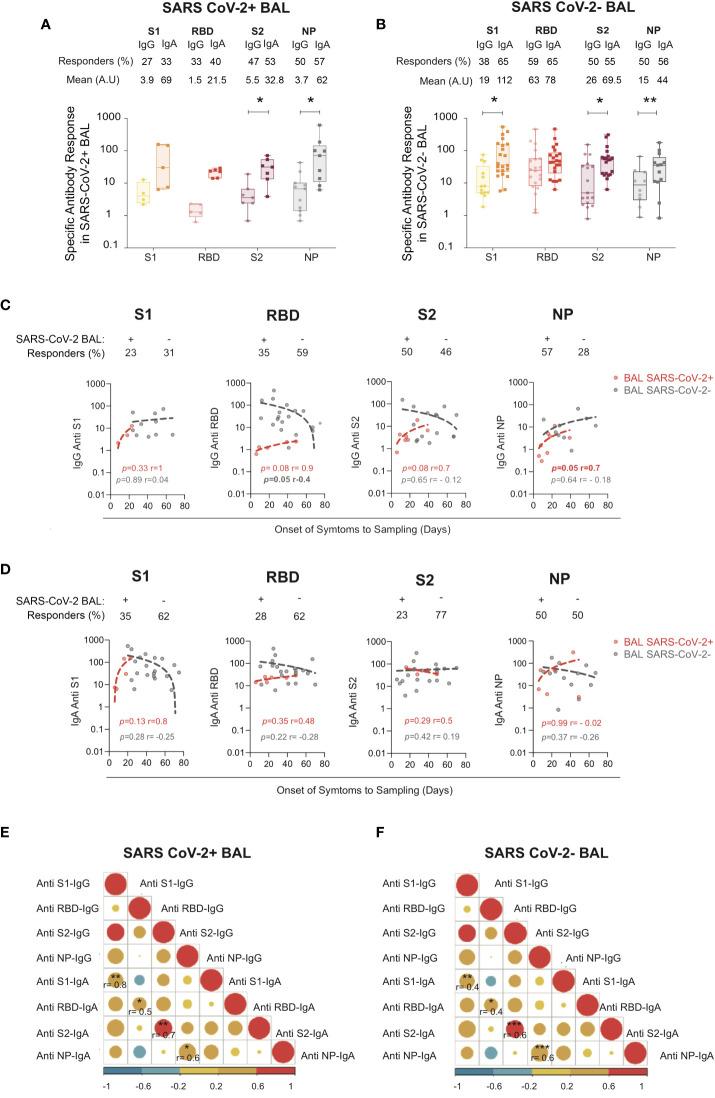
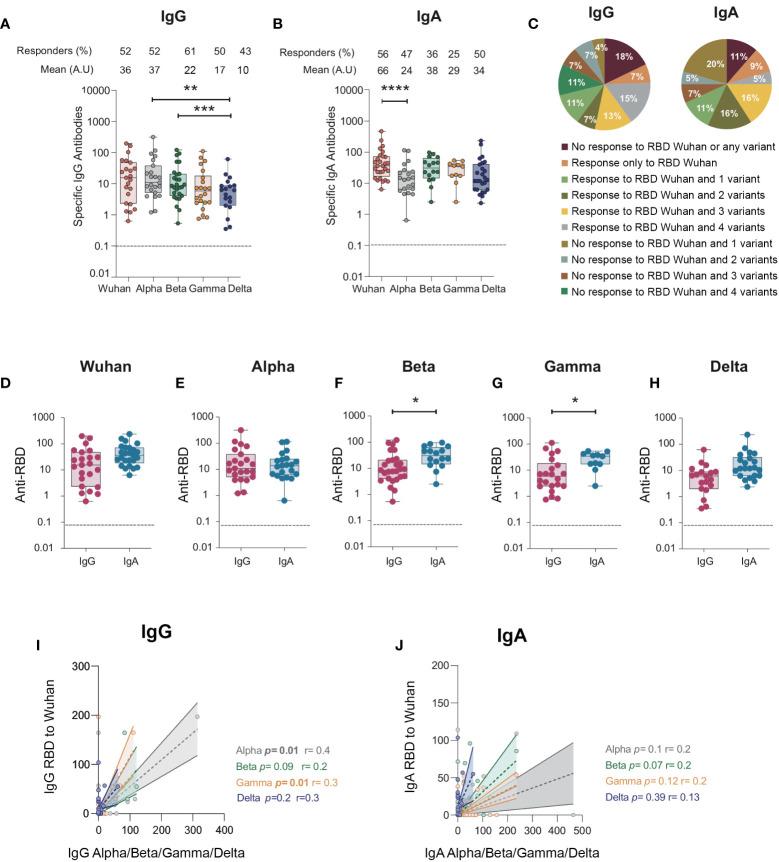
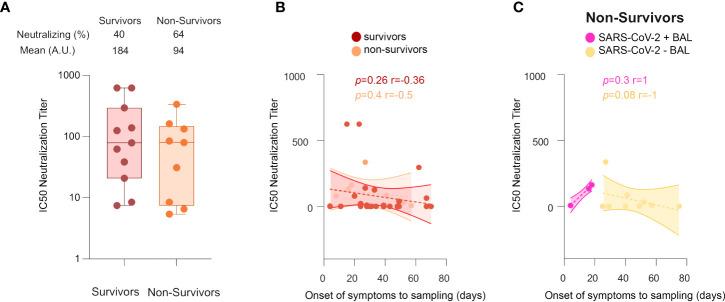
The role of the mucosal pulmonary antibody response in coronavirus disease 2019 (COVID-19) outcome remains unclear. Here, we found that in bronchoalveolar lavage (BAL) samples from 48 patients with severe COVID-19-infected with the ancestral Wuhan virus, mucosal IgG and IgA specific for S1, receptor-binding domain (RBD), S2, and nucleocapsid protein (NP) emerged in BAL containing viruses early in infection and persist after virus elimination, with more IgA than IgG for all antigens tested. Furthermore, spike-IgA and spike-IgG immune complexes were detected in BAL, especially when the lung virus has been cleared. BAL IgG and IgA recognized the four main RBD variants. BAL neutralizing titers were higher early in COVID-19 when virus replicates in the lung than later in infection after viral clearance. Patients with fatal COVID-19, in contrast to survivors, developed higher levels of mucosal spike-specific IgA than IgG but lost neutralizing activities over time and had reduced IL-1β in the lung. Altogether, mucosal spike and NP-specific IgG and S1-specific IgA persisting after lung severe acute respiratory syndrome coronavirus 2 (SARS-CoV-2) clearance and low pulmonary IL-1β correlate with COVID-19 fatal outcome. Thus, mucosal SARS-CoV-2-specific antibodies may have adverse functions in addition to protective neutralization.
HIGHLIGHTS
Mucosal pulmonary antibody response in COVID-19 outcome remains unclear. We show that in severe COVID-19 patients, mucosal pulmonary non-neutralizing SARS-CoV-2 IgA persit after viral clearance in the lung. Furthermore, low lung IL-1β correlate with fatal COVID-19. Altogether, mucosal IgA may exert harmful functions beside protective neutralization.
未加标签
黏膜肺部抗体反应在 2019 年冠状病毒病(COVID-19)结局中的作用仍不清楚。在这里,我们发现,在 48 例严重 COVID-19 感染患者的支气管肺泡灌洗液(BAL)样本中,与原始武汉病毒感染的 BAL 样本中,黏膜 IgG 和 IgA 针对 S1、受体结合域(RBD)、S2 和核衣壳蛋白(NP)的特异性在感染早期的 BAL 中含有病毒,并且在病毒消除后持续存在,所有测试的抗原均为 IgA 多于 IgG。此外,在 BAL 中检测到刺突-IgA 和刺突-IgG 免疫复合物,尤其是当肺部病毒已清除时。BAL IgG 和 IgA 识别四种主要的 RBD 变体。当病毒在肺部复制时,BAL 中和滴度在 COVID-19 早期较高,而在病毒清除后的感染后期较低。与幸存者相比,致命 COVID-19 患者在肺部严重急性呼吸综合征冠状病毒 2(SARS-CoV-2)清除后,黏膜刺突特异性 IgA 比 IgG 水平更高,但随着时间的推移中和活性降低,肺部 IL-1β 减少。总的来说,SARS-CoV-2 特异性黏膜 IgG 和 S1 特异性 IgA 在肺部 SARS-CoV-2 清除后持续存在,肺部 IL-1β 水平较低与 COVID-19 致命结局相关。因此,除了保护性中和之外,黏膜 SARS-CoV-2 特异性抗体可能具有不良功能。
重点
COVID-19 结局中的黏膜肺部抗体反应仍不清楚。我们表明,在严重 COVID-19 患者中,肺部 SARS-CoV-2 清除后,黏膜肺部非中和性 SARS-CoV-2 IgA 持续存在。此外,肺部 IL-1β 水平低与致命 COVID-19 相关。总的来说,黏膜 IgA 可能除了保护性中和之外还发挥有害作用。





 Zotero 插件