
聚焦极低密度脂蛋白作为心血管代谢紊乱的驱动因素:对疾病进展的影响及机制洞察
Spotlight on very-low-density lipoprotein as a driver of cardiometabolic disorders: Implications for disease progression and mechanistic insights.
作者信息
Lee Hsiang-Chun, Akhmedov Alexander, Chen Chu-Huang
机构信息
Department of Internal Medicine, Division of Cardiology, Kaohsiung Medical University Hospital, Kaohsiung Medical University, Kaohsiung, Taiwan.
Department of Internal Medicine, School of Medicine, College of Medicine, Kaohsiung Medical University, Kaohsiung, Taiwan.
出版信息
Front Cardiovasc Med. 2022 Oct 4;9:993633. doi: 10.3389/fcvm.2022.993633. eCollection 2022.
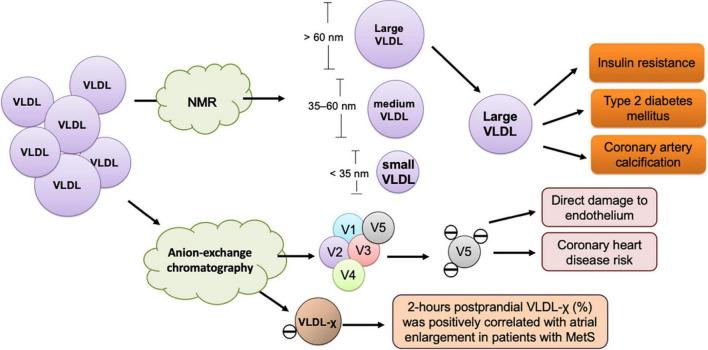
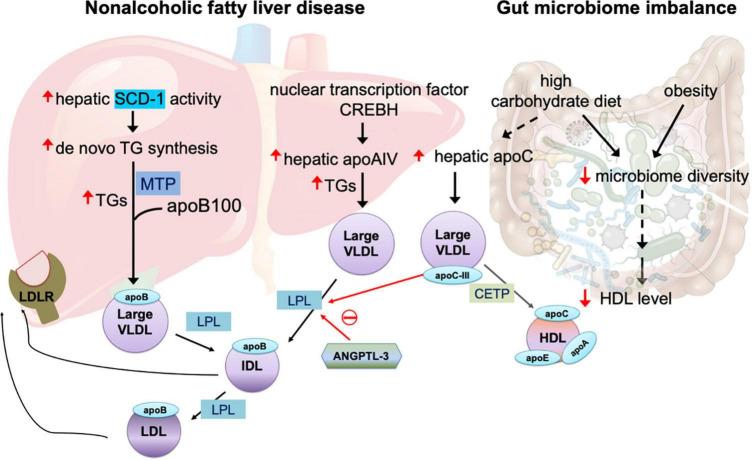
Very-low-density lipoprotein (VLDL) is the only lipoprotein containing apolipoprotein B that is secreted from the liver, where VLDL is assembled from apolipoproteins, cholesterol, and triglycerides. The primary function of VLDL is to transport cholesterol and other lipids to organs and cells for utilization. Apart from its role in normal biologic processes, VLDL is also known to contribute to the development of atherosclerotic cardiovascular disease. Large VLDL particles, which are subclassified according to their size by nuclear magnetic resonance spectrometry, are significantly correlated not only with atherosclerosis, but also with insulin resistance and diabetes incidence. VLDL can also be subclassified according to surface electrical charge by using anion-exchange chromatography. The most electronegative VLDL subclass is highly cytotoxic to endothelial cells and may contribute to coronary heart disease. In addition, electronegative VLDL contributes to the development of atrial remodeling, especially in patients with metabolic syndrome, which is an established risk factor for atrial fibrillation. In this review, we focus on the VLDL subclasses that are associated with apolipoprotein alterations and are involved in cardiometabolic disease. The postprandial enhancement of VLDL's pathogenicity is a critical medical issue, especially in patients with metabolic syndrome. Therefore, the significance of the postprandial modification of VLDL's chemical and functional properties is extensively discussed.
极低密度脂蛋白(VLDL)是肝脏分泌的唯一含有载脂蛋白B的脂蛋白,VLDL在肝脏中由载脂蛋白、胆固醇和甘油三酯组装而成。VLDL的主要功能是将胆固醇和其他脂质转运到器官和细胞以供利用。除了在正常生物过程中的作用外,VLDL还已知会促进动脉粥样硬化性心血管疾病的发展。通过核磁共振光谱法根据大小对大VLDL颗粒进行亚分类,其不仅与动脉粥样硬化显著相关,还与胰岛素抵抗和糖尿病发病率显著相关。VLDL也可以通过使用阴离子交换色谱法根据表面电荷进行亚分类。电负性最强的VLDL亚类对内皮细胞具有高度细胞毒性,可能会导致冠心病。此外,电负性VLDL会促进心房重构的发展,尤其是在代谢综合征患者中,代谢综合征是心房颤动的既定危险因素。在本综述中,我们重点关注与载脂蛋白改变相关且参与心脏代谢疾病的VLDL亚类。餐后VLDL致病性的增强是一个关键的医学问题,尤其是在代谢综合征患者中。因此,本文广泛讨论了餐后VLDL化学和功能特性改变的意义。
 Zotero 插件