
抗生素治疗前进行长期反复的粪便微生物群移植可改善肠易激综合征患者的症状和生活质量:一项澳大利亚观察性临床经验。
Pre-Antibiotic Treatment Followed by Prolonged Repeated Faecal Microbiota Transplantation Improves Symptoms and Quality of Life in Patients with Irritable Bowel Syndrome: An Observational Australian Clinical Experience.
作者信息
Hamblin Harrison, Gunaratne Anoja W, Clancy Annabel, Pilarinos Denise, LeBusque Antoinette, Dawson Marie Vic M, Borody Thomas J
机构信息
Centre for Digestive Diseases, Five Dock, NSW, Australia.
出版信息
Gastroenterol Res Pract. 2022 Oct 13;2022:6083896. doi: 10.1155/2022/6083896. eCollection 2022.
BACKGROUND
The use of faecal microbiota transplantation (FMT) in irritable bowel syndrome (IBS) has frequently failed to induce long-term symptomatic improvement. The use of multiple FMT infusions is one proposed mechanism through which the efficacy of FMT can be amplified.
AIMS
To evaluate the safety and efficacy of a novel six-month FMT treatment protocol in IBS.
METHODS
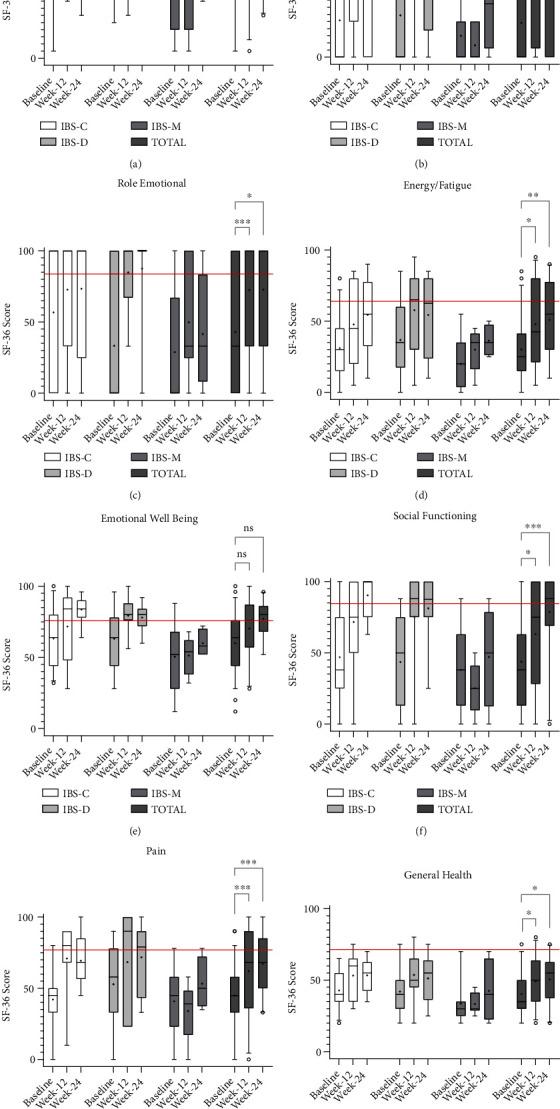
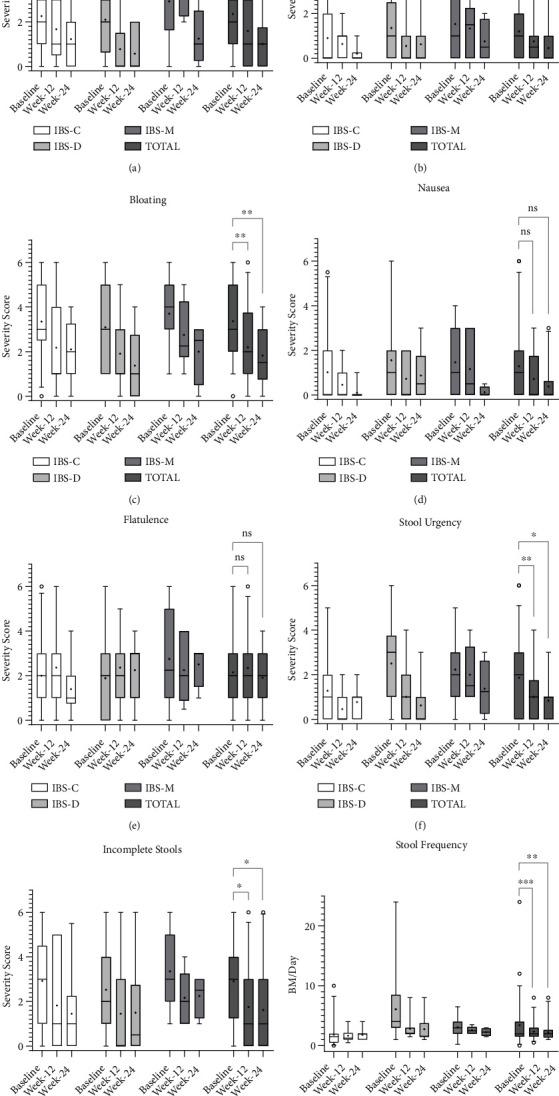
Patients diagnosed with IBS confirmed by Rome IV Criteria were recruited for single-centre, single-arm, prospective clinical observational study. Participants received one colonoscopically delivered FMT followed by 36 rectal enemas across a six-month period. Validated abdominal symptoms and Short-Form (SF-36) Quality of Life (QOL) questionnaires were collected at baseline, week-12, week-24, and week-56, respectively. Wilcoxon matched-pairs signed-rank tests were conducted to compare differences in abdominal symptom and SF-36 QOL scores over the follow-up timepoints. Statistical significance was set at 5%.
RESULTS
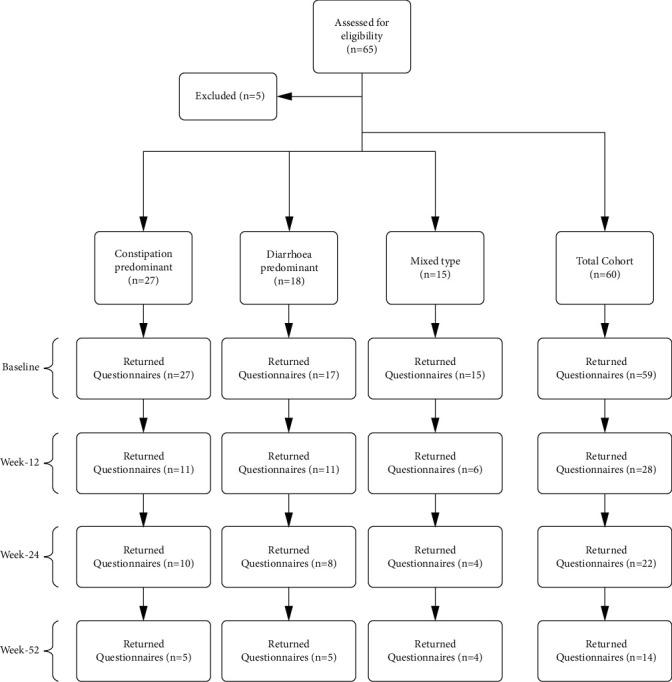
Sixty participants diagnosed with IBS [IBS-constipation ( = 27), IBS-diarrhoea ( = 18), and IBS-mixed ( = 15)] received the six-month FMT treatment. IBS symptom severity reduction was achieved in up to 61% of respondents at week-12, 64% of respondents at week-24, and maintained in up to 75% of respondents at week-52. Long-term reduction in symptom severity was associated with an increase in QOL, achieved in up to 64% of respondents at week-52 when compared to baseline. Adverse events were experienced in 28% of participants, though they were both transient and mild in nature.
CONCLUSIONS
Six-month sustained FMT appears to be both safe and effective in the short- and long-term alleviation of IBS associated symptoms as well as improving participant QOL.
背景
粪便微生物群移植(FMT)用于治疗肠易激综合征(IBS)时,常常无法带来长期的症状改善。多次FMT输注是一种被提出的可增强FMT疗效的机制。
目的
评估一种全新的为期六个月的FMT治疗方案用于IBS的安全性和疗效。
方法
招募经罗马IV标准确诊为IBS的患者,进行单中心、单臂、前瞻性临床观察研究。参与者接受一次结肠镜下FMT,随后在六个月内进行36次直肠灌肠。分别在基线、第12周、第24周和第56周收集经过验证的腹部症状和简短健康调查问卷(SF-36)生活质量(QOL)问卷。采用Wilcoxon配对符号秩检验比较随访时间点腹部症状和SF-36 QOL评分的差异。设定统计学显著性水平为5%。
结果
60名诊断为IBS的参与者[便秘型IBS(n = 27)、腹泻型IBS(n = 18)和混合型IBS(n = 15)]接受了为期六个月的FMT治疗。在第12周时,高达61%的受访者IBS症状严重程度降低,第24周时为64%,到第52周时,高达75%的受访者症状严重程度得以维持。症状严重程度的长期降低与生活质量的提高相关,与基线相比,在第52周时,高达64%的受访者实现了生活质量的提高。28%的参与者经历了不良事件,不过这些事件均为短暂且轻微的。
结论
为期六个月的持续FMT似乎在短期和长期缓解IBS相关症状以及改善参与者生活质量方面均安全有效。
 Zotero 插件