
病例报告:一名男性青少年侧脑室非典型畸胎样/横纹肌样瘤(基于病例的综述及发展中国家的诊断挑战)
Case report: Atypical teratoid/rhabdoid tumor of the lateral ventricle in a male adolescent (case-based review and diagnostic challenges in developing countries).
作者信息
Karim Akzhol, Shaikhyzada Kundyz, Suleimenova Assel, Ibraimov Bakytkali, Nurgaliev Dair, Poddighe Dimitri
机构信息
Clinical Academic Department of Pediatrics, Pediatric Oncology Section, National Research Center for Maternal and Child Health, University Medical Center (UMC), Nur-Sultan, Kazakhstan.
Clinical Academic Department of Laboratory Medicine, Pathology Section, University Medical Center (UMC), Nur-Sultan, Kazakhstan.
出版信息
Front Oncol. 2022 Oct 6;12:985862. doi: 10.3389/fonc.2022.985862. eCollection 2022.
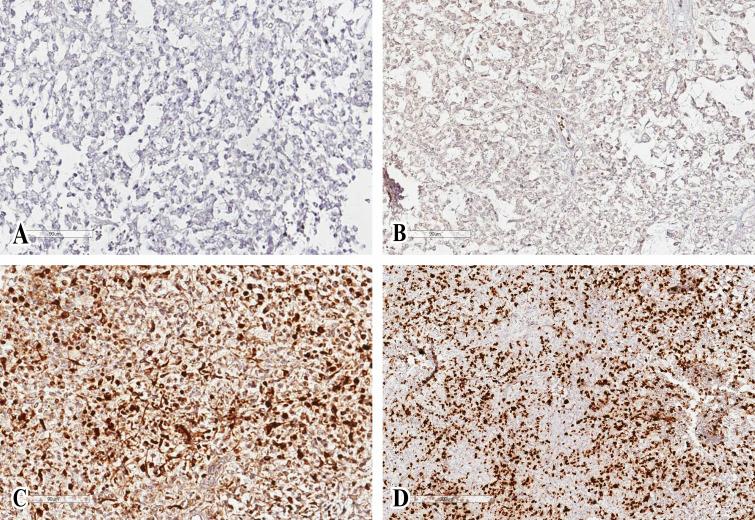
Atypical teratoid/rhabdoid tumor (AT/RT) is a rare and highly malignant central nervous system (CNS) embryonal neoplasm: it accounts for <2% of all pediatric CNS tumors and occurs mainly in infants and young children. The primary site of this tumor is usually the posterior cranial fossa. Supratentorial and, in detail, latero-ventricular location is extremely uncommon, especially in adolescents. This tumor is characterized by rapid growth and spread in cerebrospinal fluid and, therefore, it is characterized by a poor prognosis. Neurological signs and symptoms are related the location of the tumor. The radiological features of AT/RT are nonspecific. Immunohistochemical staining for loss of nuclear integrase interactor 1 (INI1) expression is considered a reliable criterion for the diagnosis of this type of tumor. AT/RT has been linked to mutations of SMARCB1 or, rarely, SMARCA4 genes, which function as tumor suppressor genes. Currently, there is no validated protocol of treatment for children with AT/RT, and multimodality treatment (consisting of surgery, chemotherapy, and radiation therapy) is considered. In this case report, we describe a 15-year-old adolescent with an AT/RT of the left lateral ventricle. Despite the late diagnosis, the multimodal therapeutic approach provided a good outcome for our patient at 21 months' follow-up. Based on our case-based review, early diagnosis and a multimodal approach to treatment play a key role in improving the survival of patients with this diagnosis. Implementing a system supporting pathological and molecular analyses for developing countries and, in general, for non-academic centers is of primary importance to timely diagnose and treat rare tumors, such as AT/RT.
非典型畸胎样/横纹肌样瘤(AT/RT)是一种罕见且高度恶性的中枢神经系统(CNS)胚胎性肿瘤:它占所有儿童CNS肿瘤的比例不到2%,主要发生于婴幼儿。该肿瘤的原发部位通常是后颅窝。幕上,尤其是侧脑室部位极为罕见,在青少年中尤为如此。这种肿瘤的特点是生长迅速并在脑脊液中扩散,因此预后较差。神经体征和症状与肿瘤的位置有关。AT/RT的放射学特征不具有特异性。核整合酶相互作用因子1(INI1)表达缺失的免疫组化染色被认为是诊断此类肿瘤的可靠标准。AT/RT与SMARCB1基因的突变有关,极少数情况下与SMARCA4基因的突变有关,这两个基因起肿瘤抑制基因的作用。目前,尚无针对AT/RT患儿的有效治疗方案,考虑采用多模式治疗(包括手术、化疗和放疗)。在本病例报告中,我们描述了一名15岁青少年,患有左侧脑室AT/RT。尽管诊断较晚,但多模式治疗方法在21个月的随访中为我们的患者带来了良好的结果。基于我们的病例回顾,早期诊断和多模式治疗方法在提高此类诊断患者的生存率方面起着关键作用。为发展中国家以及一般非学术中心实施一个支持病理和分子分析的系统对于及时诊断和治疗罕见肿瘤,如AT/RT至关重要。

 Zotero 插件