
水提取物对变应性鼻炎小鼠炎症及肠道微生物群的影响。
The Effects of Aqueous Extracts on the Inflammation and Intestinal Microflora in Allergic Rhinitis Mice.
作者信息
Chen Yanchun, Chen Zhiling, Wang Gan, Xu Shiying
机构信息
Department of Otolaryngology, Hangzhou Hospital of Traditional Chinese Medicine, Hangzhou 310007, China.
出版信息
Evid Based Complement Alternat Med. 2022 Oct 14;2022:1052359. doi: 10.1155/2022/1052359. eCollection 2022.
BACKGROUND
Allergic rhinitis (AR) is a type I allergic disease induced by IgE. Traditional Chinese medicine (Turcz.) Schischk (SD) has anti-inflammatory and antiallergic effects.
MATERIALS AND METHODS
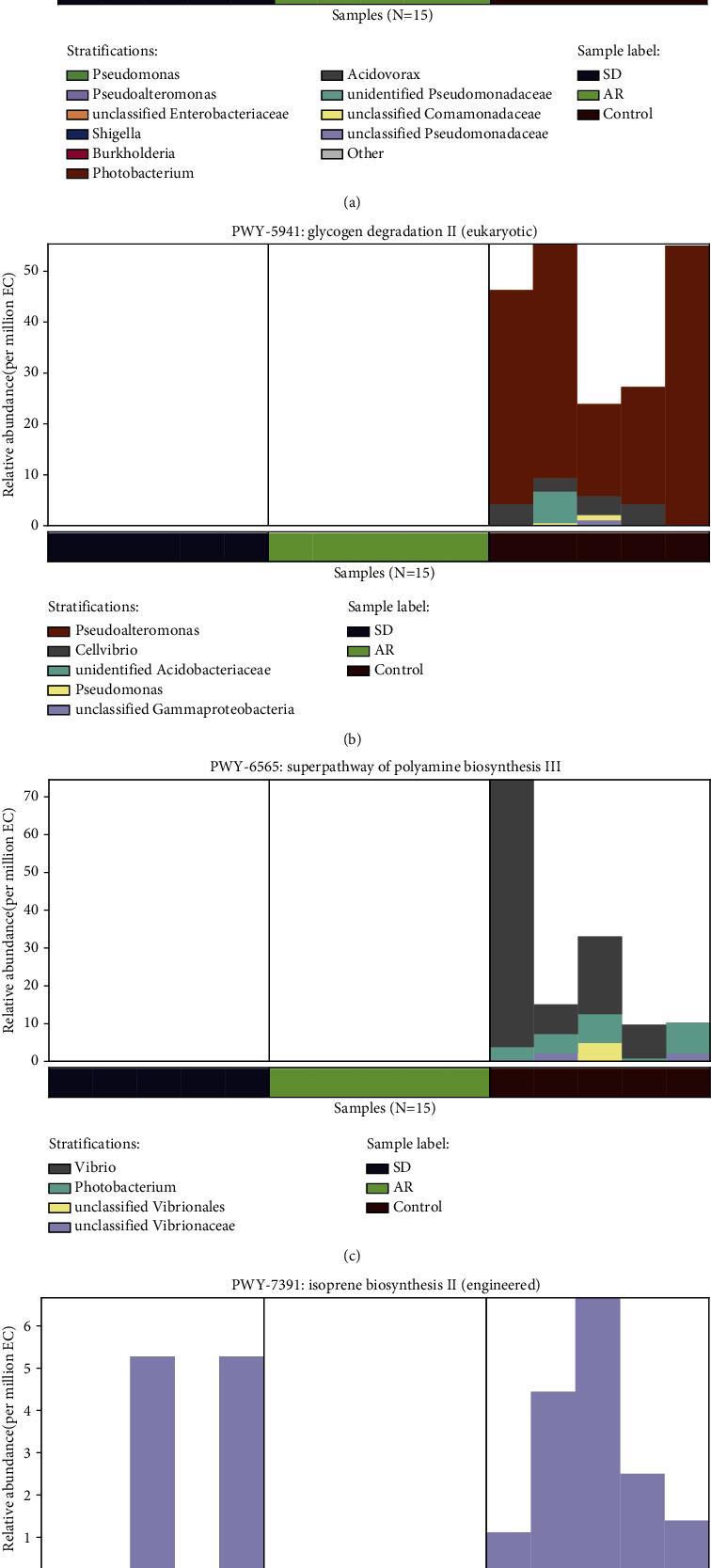
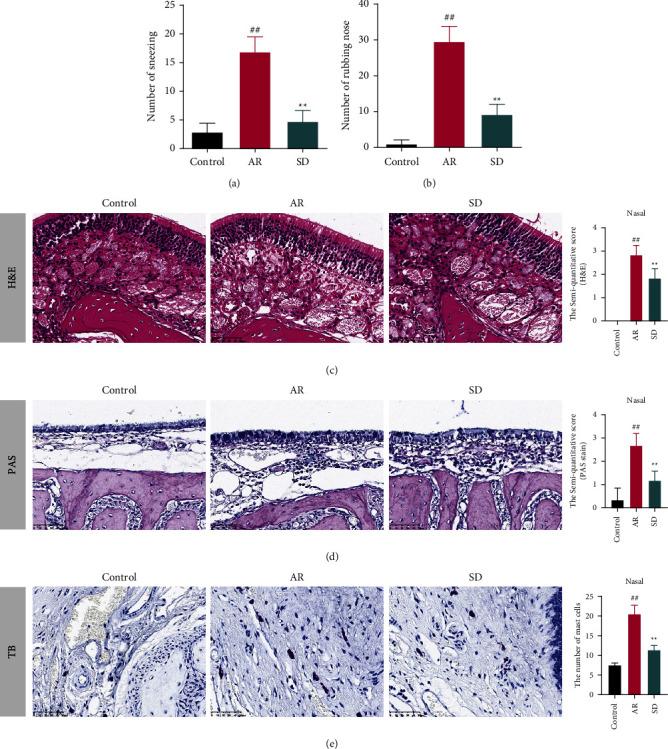
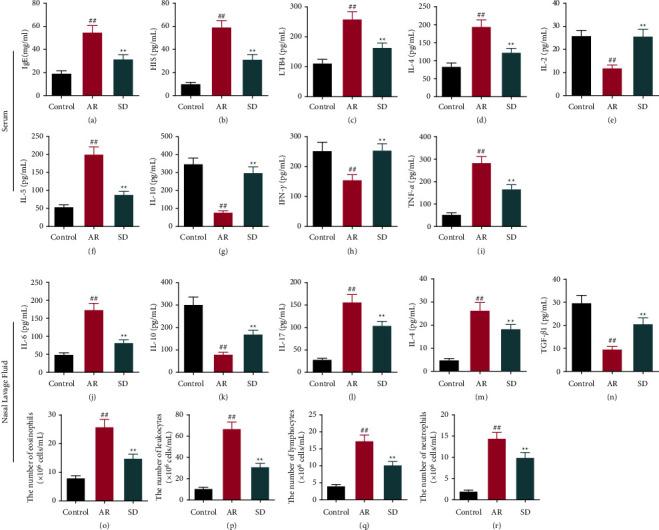
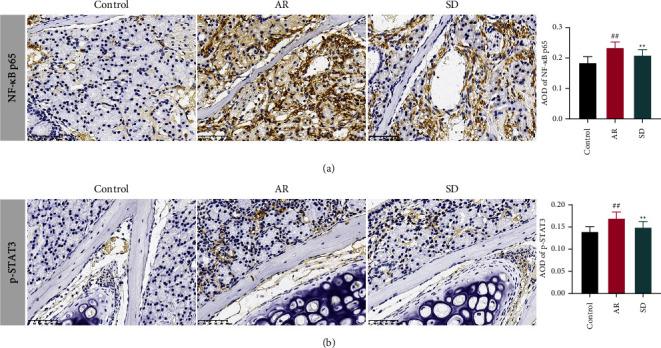
AR model mice were constructed with ovalbumin (OVA) sensitization to observe the improving effect of SD treatment on AR by counting the number of sneezing and rubbing the nose, hematoxylin-eosin, periodic acid-Schiff, and toluidine blue stains. In addition, the allergy and inflammatory cytokines levels and inflammatory cells were observed by ELISA and Wright's-Giemsa stain. The protein levels of the TLR4/TRAF6/NF-B and IL-6/ROR-t/STAT3 pathways were measured by immunohistochemistry, quantitative real-time PCR, and western blot. The intestinal microflora abundance in mice was observed by 16S rDNA high-throughput sequencing.
RESULTS
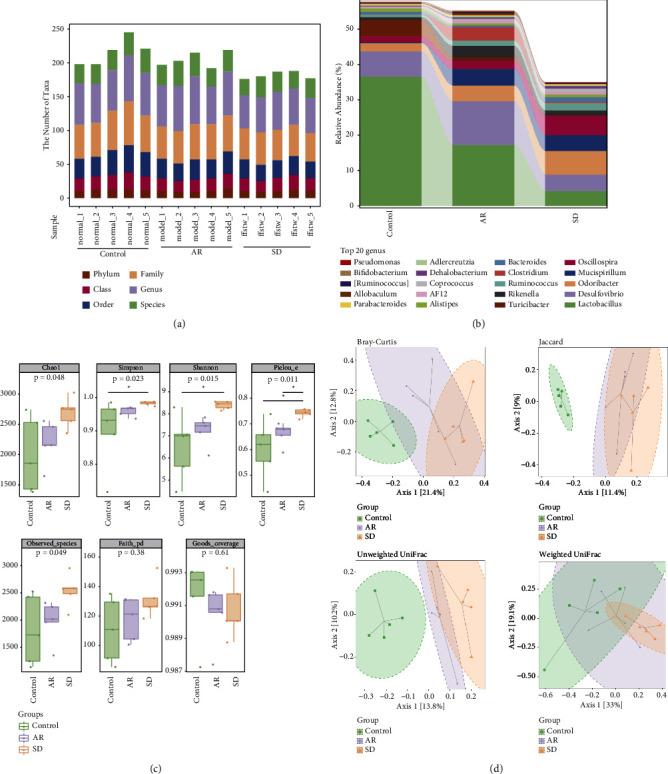
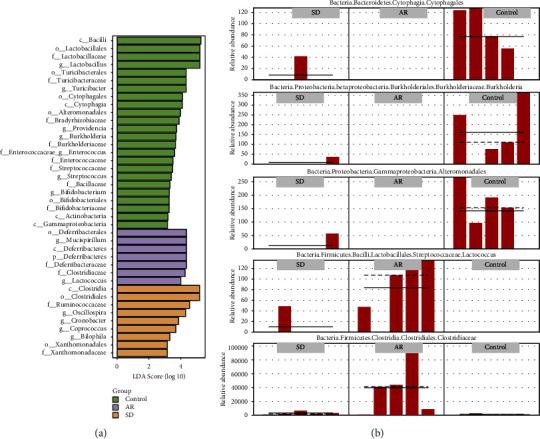
SD treatment inhibited the sneezing and rubbing times of the nose, decreased the degree of a dense arrangement of cells and mucosal swelling and the number of goblet and mast cells of nasal lavage fluid, reduced the levels of IgE, histamine, Leukotriene B4, IL-4, IL-5, TNF-, IL-6, and IL-17, the eosinophils, neutrophils, and lymphocytes number, the LR4, TRAF6, IL-6, ROR-t, and STAT3 mRNA levels, respectively, while, it increased the IL-2, IL-10, IFN-, and TGF-1 proteins. SD treatment inhibited the NF-B, p-STAT3, TLR4, TRAF6, and p-IB/IB proteins. Besides, the effects of OVA and SD treatments were significantly correlated with the abundance of intestinal microflora. The abundances of and were changed in SD treatment on AR mice.
CONCLUSIONS
This study provides a possibility that the improvement effect of SD treatment on allergies and inflammation in AR mice may be related to the TLR4/TRAF6/NF-B and IL-6/ROR-t/STAT3 pathways and intestinal microflora modulation.
背景
变应性鼻炎(AR)是一种由IgE介导的I型变态反应性疾病。中药荆芥(SD)具有抗炎和抗过敏作用。
材料与方法
用卵清蛋白(OVA)致敏构建AR模型小鼠,通过计数喷嚏和擦鼻次数、苏木精-伊红染色、过碘酸-希夫染色和甲苯胺蓝染色观察SD治疗对AR的改善作用。此外,通过酶联免疫吸附测定(ELISA)和瑞氏-吉姆萨染色观察过敏和炎性细胞因子水平及炎性细胞。通过免疫组织化学、定量实时聚合酶链反应(PCR)和蛋白质印迹法检测Toll样受体4(TLR4)/肿瘤坏死因子受体相关因子6(TRAF6)/核因子κB(NF-κB)和白细胞介素6(IL-6)/维甲酸相关孤儿受体t(ROR-γt)/信号转导子和转录激活子3(STAT3)通路的蛋白水平。通过16S核糖体DNA(rDNA)高通量测序观察小鼠肠道微生物群丰度。
结果
SD治疗可抑制喷嚏和擦鼻次数,减轻细胞密集排列程度和黏膜肿胀程度,减少鼻灌洗液中杯状细胞和肥大细胞数量,降低免疫球蛋白E(IgE)、组胺、白三烯B4、IL-4、IL-5、肿瘤坏死因子α(TNF-α)、IL-6和IL-17水平,以及嗜酸性粒细胞、中性粒细胞和淋巴细胞数量,降低TLR4、TRAF6、IL-6、ROR-γt和STAT3信使核糖核酸(mRNA)水平,同时增加IL-2、IL-10、干扰素γ(IFN-γ)和转化生长因子β1(TGF-β1)蛋白。SD治疗可抑制NF-κB、磷酸化STAT3(p-STAT3)、TLR4、TRAF6和磷酸化IκBα/IκBα蛋白。此外,OVA和SD治疗的效果与肠道微生物群丰度显著相关。SD治疗AR小鼠时,拟杆菌属和双歧杆菌属的丰度发生了变化。
结论
本研究提示SD治疗对AR小鼠过敏和炎症的改善作用可能与TLR4/TRAF6/NF-κB和IL-6/ROR-γt/STAT3通路及肠道微生物群调节有关。


 Zotero 插件