
实体瘤在免疫检查点抑制剂治疗下的寡进展:局部消融放疗的影响
Oligoprogression of Solid Tumors on Immune Checkpoint Inhibitors: The Impact of Local Ablative Radiation Therapy.
作者信息
Sindhu Kunal K, Nehlsen Anthony D, Lehrer Eric J, Rowley Jared P, Stock Richard G, Galsky Matthew D, Buckstein Michael
机构信息
Department of Radiation Oncology, Icahn School of Medicine at Mount Sinai, New York, NY 10029, USA.
Department of Radiation Oncology, Maimonides Medical Center, Brooklyn, NY 11220, USA.
出版信息
Biomedicines. 2022 Oct 5;10(10):2481. doi: 10.3390/biomedicines10102481.
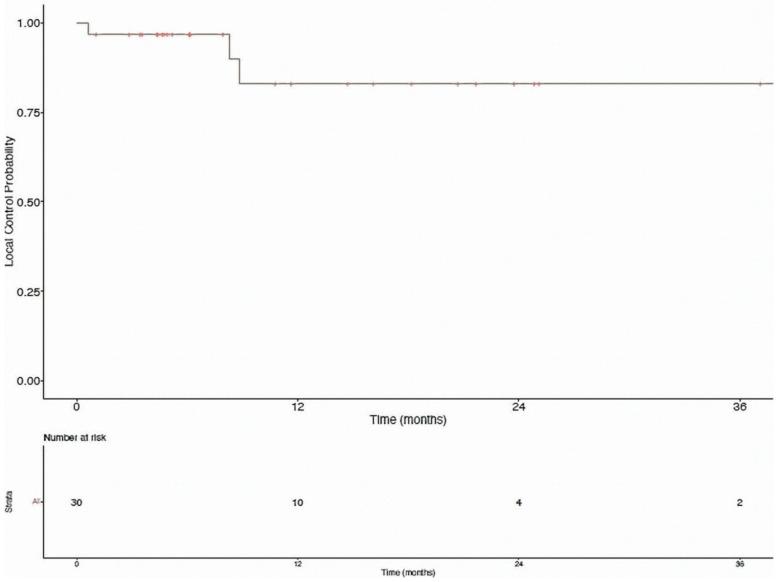
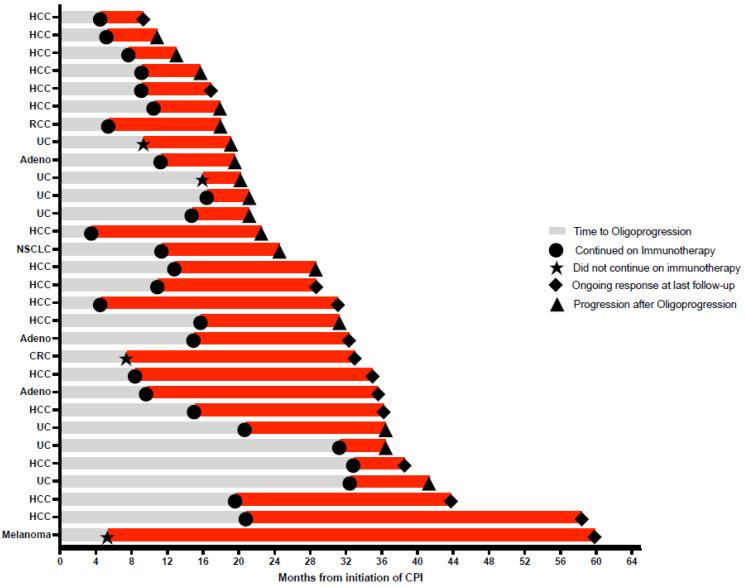
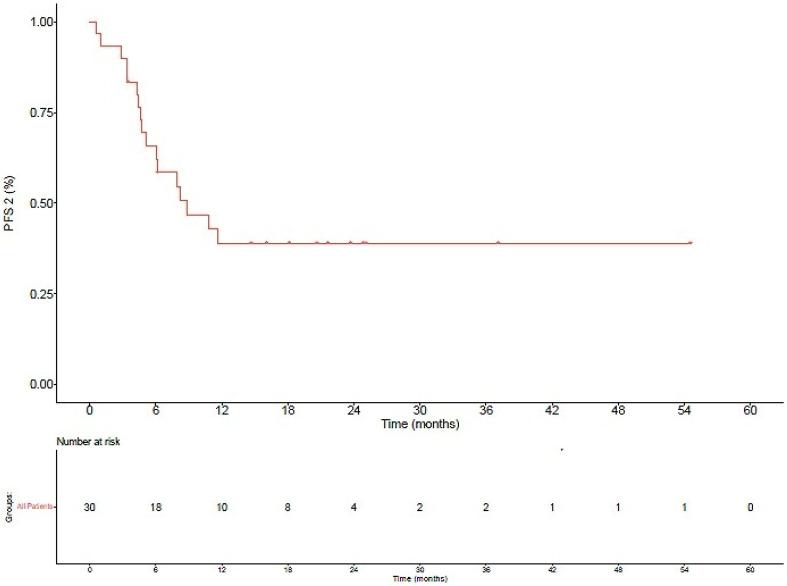
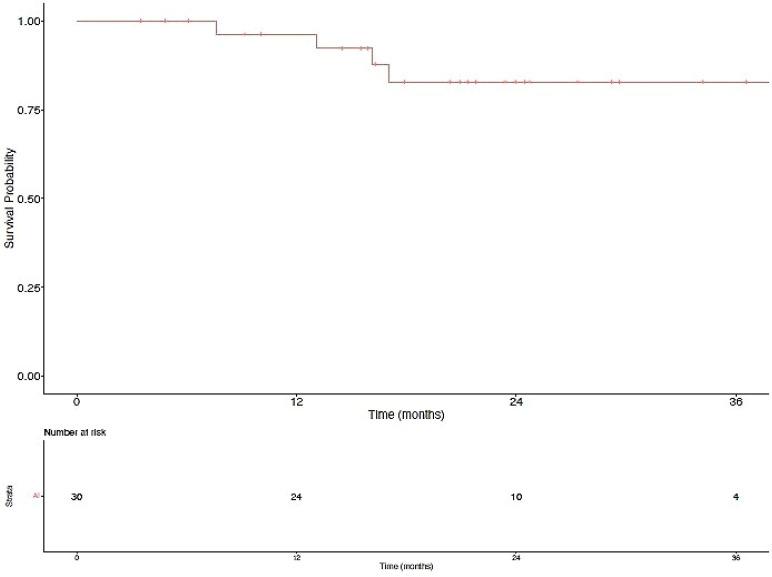
The breakthrough of a limited number of clones while on immune checkpoint inhibitors (ICIs), known as oligoprogression, has been previously described. The benefit of ablative radiation therapy (RT) directed at these clones, as opposed to changing systemic therapy, is unclear. We analyzed 30 patients with advanced solid tumors, the majority of whom (23/30, 86.7%) had either hepatocellular or urothelial carcinoma, who experienced oligoprogression on ICIs and were referred for RT. In this study, oligoprogression was defined as having experienced progression at three or fewer metastatic sites outside of the brain after achieving at least stable disease on ICIs for a minimum of three months. The median time to oligoprogression was 11.1 months from the initiation of immunotherapy. 24 patients had one oligoprogressive lesion and six had two. The median radiation dose delivered was 4650 cGy in a median of five fractions. The median progression-free survival (PFS) after RT was 7.1 months, and the time to oligoprogression was not a significant predictor of PFS2. 26 patients continued on ICIs after RT. While 17 patients subsequently progressed, 15 did so at three or fewer metastatic sites and could have theoretically stood to benefit from an additional course of salvage RT to further extend the lifespan of their ICIs. Overall survival at 6, 12, and 24 months was 100.0%, 96.3%, and 82.8%, respectively. These results suggest that RT may provide a PFS benefit and extend the lifespan of ICIs in patients who experience oligoprogression. Regardless of PFS, however, overall survival in this population appears to be excellent.
先前已描述过,在接受免疫检查点抑制剂(ICI)治疗时出现有限数量克隆的进展,即寡进展。与改变全身治疗相反,针对这些克隆进行消融性放射治疗(RT)的益处尚不清楚。我们分析了30例晚期实体瘤患者,其中大多数(23/30,86.7%)患有肝细胞癌或尿路上皮癌,这些患者在ICI治疗中出现寡进展并被转诊接受RT治疗。在本研究中,寡进展被定义为在ICI治疗至少三个月达到至少疾病稳定后,在脑外三个或更少转移部位出现进展。从免疫治疗开始到寡进展的中位时间为11.1个月。24例患者有一个寡进展病灶,6例有两个。给予的中位放射剂量为4650 cGy,中位分五次给予。RT后的中位无进展生存期(PFS)为7.1个月,寡进展时间不是PFS2的显著预测因素。26例患者在RT后继续接受ICI治疗。虽然17例患者随后出现进展,但15例在三个或更少转移部位出现进展,理论上可能从额外的挽救性RT疗程中获益,以进一步延长其ICI的使用寿命。6个月、12个月和24个月时的总生存率分别为100.0%、96.3%和82.8%。这些结果表明,RT可能为出现寡进展的患者提供PFS益处并延长ICI的使用寿命。然而,无论PFS如何,该人群的总生存率似乎都很好。
 Zotero 插件