
利用磁性茶生物炭去除饮用水中氟化物的纳米结构设计和动力学见解。
Nanoarchitectonics and Kinetics Insights into Fluoride Removal from Drinking Water Using Magnetic Tea Biochar.
机构信息
School of Chemical Engineering, Northwest University, Xi'an 710069, China.
Department of Civil, Environmental and Natural Resources Engineering, Luleå University of Technology, 97187 Luleå, Sweden.
出版信息
Int J Environ Res Public Health. 2022 Oct 12;19(20):13092. doi: 10.3390/ijerph192013092.
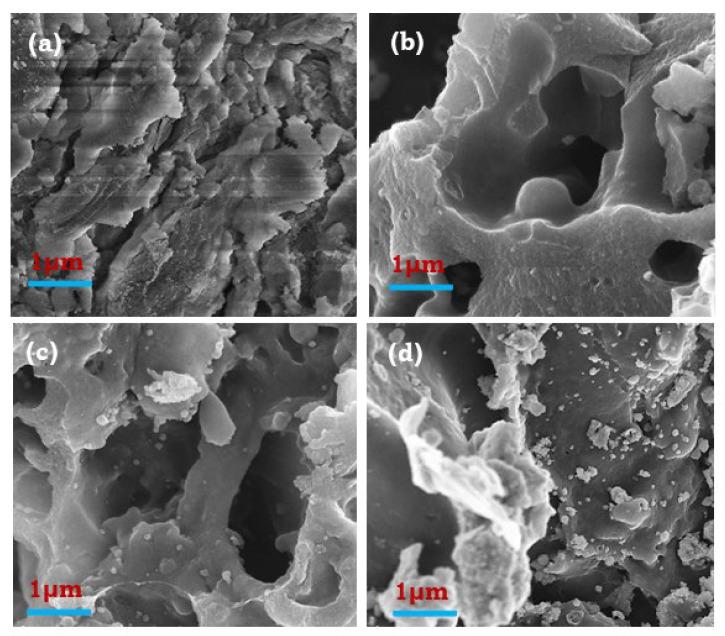
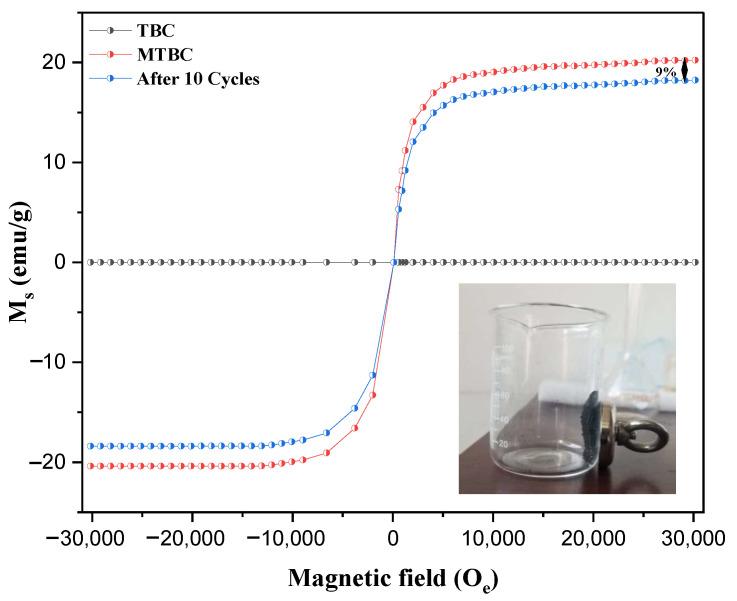
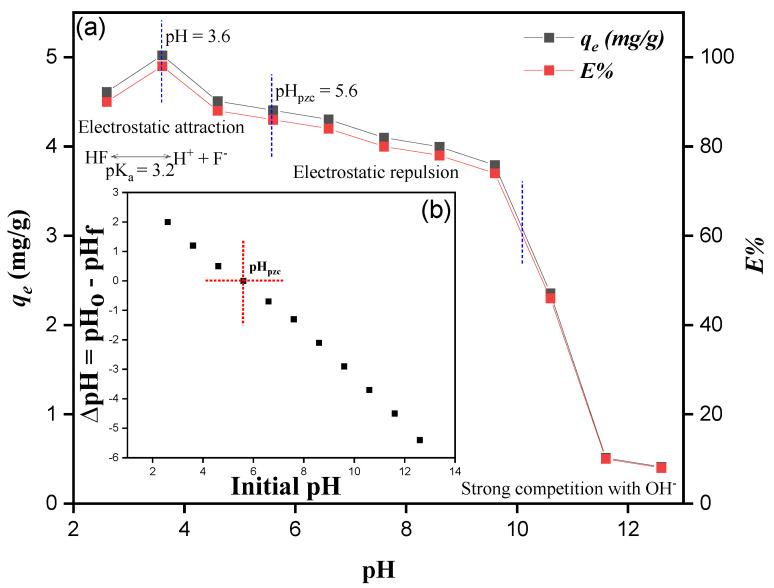
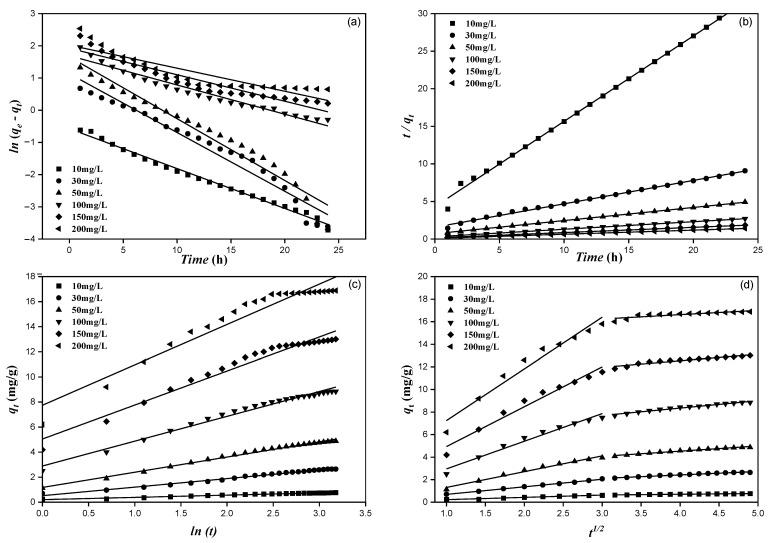
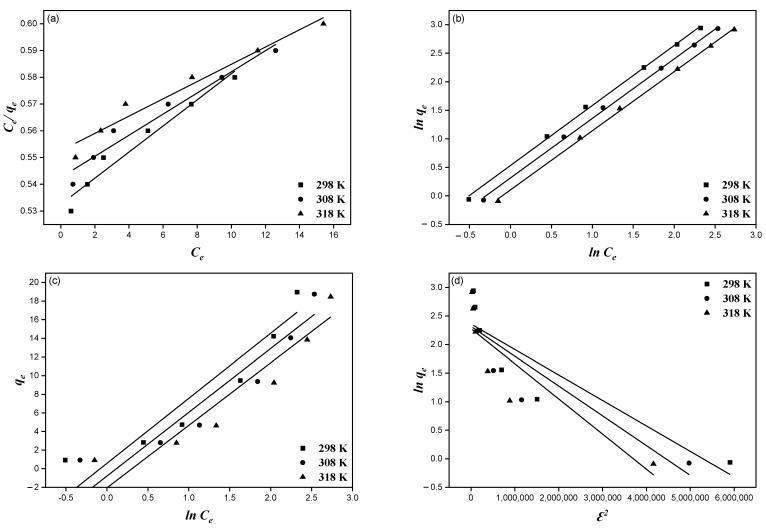
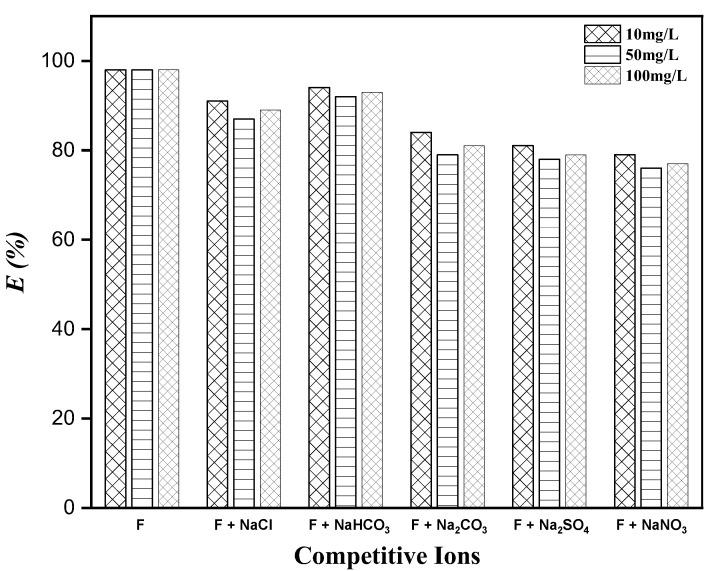
Fluoride contamination in water is a key problem facing the world, leading to health problems such as dental and skeletal fluorosis. So, we used low-cost multifunctional tea biochar (TBC) and magnetic tea biochar (MTBC) prepared by facile one-step pyrolysis of waste tea leaves. The TBC and MTBC were characterized by XRD, SEM, FTIR, and VSM. Both TBC and MTBC contain high carbon contents of 63.45 and 63.75%, respectively. The surface area of MTBC (115.65 m/g) was higher than TBC (81.64 m/g). The modified biochar MTBC was further used to remediate the fluoride-contaminated water. The fluoride adsorption testing was conducted using the batch method at 298, 308, and 318 K. The maximum fluoride removal efficiency (%) using MTBC was 98% when the adsorbent dosage was 0.5 g/L and the fluoride concentration was 50 mg/L. The experiment data for fluoride adsorption on MTBC best fit the pseudo 2nd order, rather than the pseudo 1st order. In addition, the intraparticle diffusion model predicts the boundary diffusion. Langmuir, Freundlich, Temkin, and Dubnin-Radushkevich isotherm models were fitted to explain the fluoride adsorption on MTBC. The Langmuir adsorption capacity of MTBC = 18.78 mg/g was recorded at 298 K and decreased as the temperature increased. The MTBC biochar was reused in ten cycles, and the % was still 85%. The obtained biochar with a large pore size and high removal efficiency may be an effective and low-cost adsorbent for treating fluoride-containing water.
水中氟化物污染是全球面临的一个关键问题,导致氟斑牙和氟骨症等健康问题。因此,我们使用低成本多功能茶生物炭(TBC)和通过简便的一步热解废茶叶制备的磁性茶生物炭(MTBC)。TBC 和 MTBC 通过 XRD、SEM、FTIR 和 VSM 进行了表征。TBC 和 MTBC 都含有较高的碳含量,分别为 63.45%和 63.75%。MTBC 的比表面积(115.65 m/g)高于 TBC(81.64 m/g)。进一步用改性生物炭 MTBC 修复含氟污染水。在 298、308 和 318 K 下采用间歇法进行氟吸附测试。当吸附剂用量为 0.5 g/L,氟浓度为 50 mg/L 时,MTBC 的最大氟去除效率(%)为 98%。MTBC 对氟吸附的实验数据最符合准二级动力学模型,而不是准一级动力学模型。此外,内扩散模型预测边界扩散。Langmuir、Freundlich、Temkin 和 Dubnin-Radushkevich 等温模型被拟合来解释 MTBC 上的氟吸附。在 298 K 下,MTBC 的 Langmuir 吸附容量为 18.78 mg/g,随着温度升高而降低。MTBC 生物炭在十个循环中重复使用,%仍为 85%。这种具有大孔径和高去除效率的生物炭可能是处理含氟水的一种有效且低成本的吸附剂。




 Zotero 插件