
一项在晚期实体瘤患者中开展的抗 OX40 激动剂 INCAGN01949 的首次人体 I/II 期、开放性研究。
First-in-human phase I/II, open-label study of the anti-OX40 agonist INCAGN01949 in patients with advanced solid tumors.
机构信息
Vanderbilt University Medical Center, Nashville, Tennessee, USA.
Vall d'Hebron Institute of Oncology (VHIO), Barcelona, Spain.
出版信息
J Immunother Cancer. 2022 Oct;10(10). doi: 10.1136/jitc-2021-004235.
BACKGROUND
OX40 is a costimulatory receptor upregulated on antigen-activated T cells and constitutively expressed on regulatory T cells (Tregs). INCAGN01949, a fully human immunoglobulin G1κ anti-OX40 agonist monoclonal antibody, was designed to promote tumor-specific immunity by effector T-cell activation and Fcγ receptor-mediated Treg depletion. This first-in-human study was conducted to determine the safety, tolerability, and preliminary efficacy of INCAGN01949.
METHODS
Phase I/II, open-label, non-randomized, dose-escalation and dose-expansion study conducted in patients with advanced or metastatic solid tumors. Patients received INCAGN01949 monotherapy (7-1400 mg) in 14-day cycles while deriving benefit. Safety measures, clinical activity, pharmacokinetics, and pharmacodynamic effects were assessed and summarized with descriptive statistics.
RESULTS
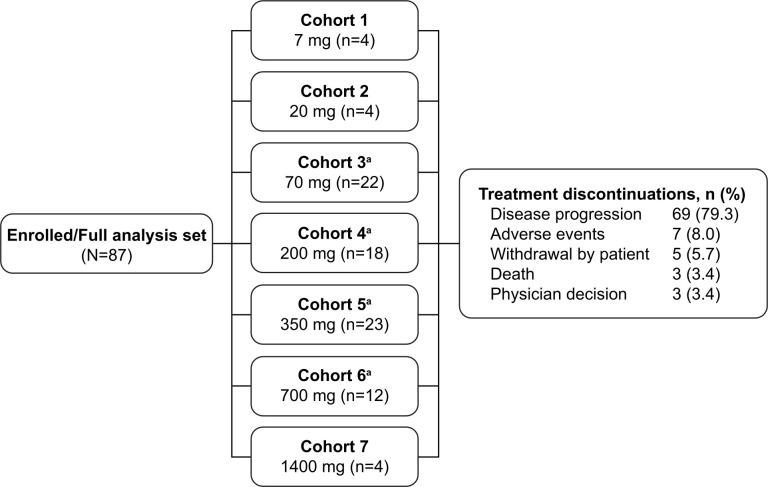
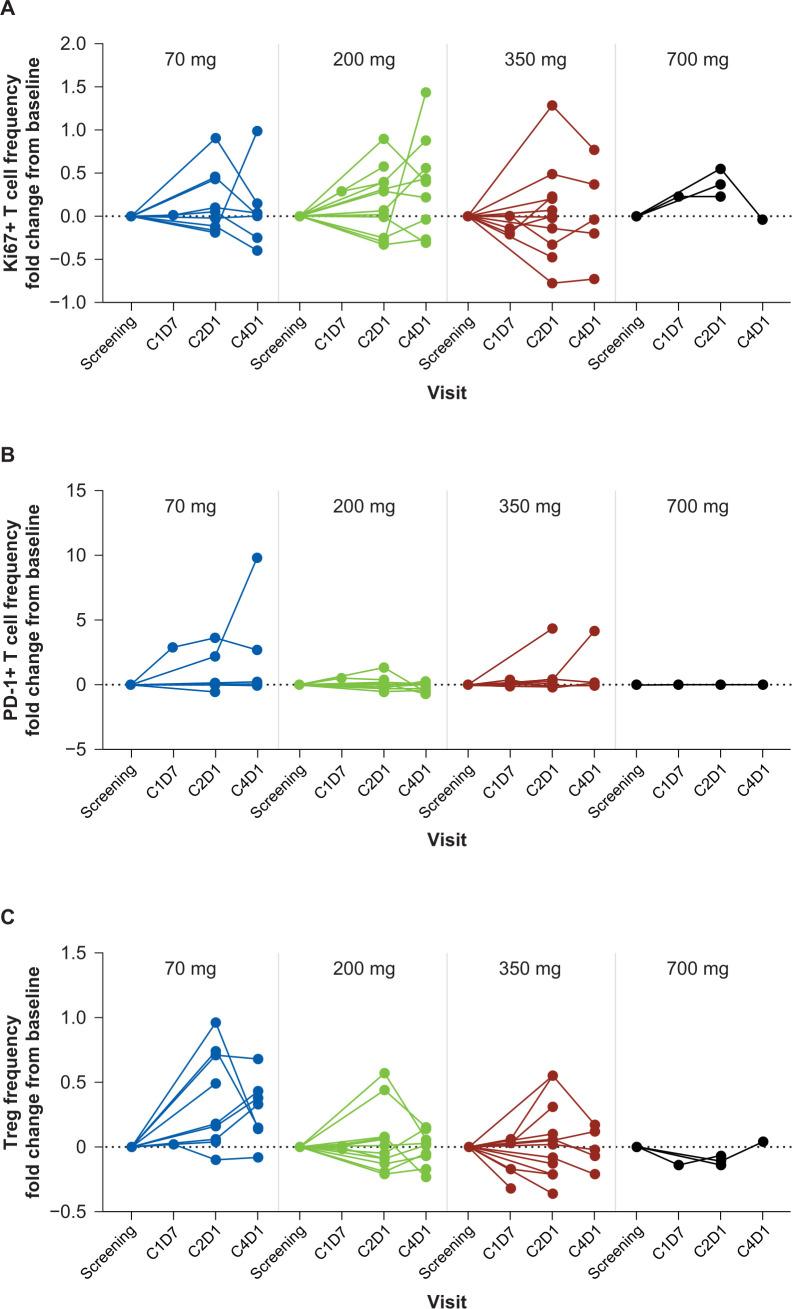
Eighty-seven patients were enrolled; most common tumor types were colorectal (17.2%), ovarian (8.0%), and non-small cell lung (6.9%) cancers. Patients received a median three (range 1-9) prior therapies, including immunotherapy in 24 patients (27.6%). Maximum tolerated dose was not reached; one patient (1.1%) receiving 350 mg dose reported dose-limiting toxicity of grade 3 colitis. Treatment-related adverse events were reported in 45 patients (51.7%), with fatigue (16 (18.4%)), rash (6 (6.9%)), and diarrhea (6 (6.9%)) being most frequent. One patient (1.1%) with metastatic gallbladder cancer achieved a partial response (duration of 6.3 months), and 23 patients (26.4%) achieved stable disease (lasting >6 months in one patient). OX40 receptor occupancy was maintained over 90% among all patients receiving doses of ≥200 mg, while no treatment-emergent antidrug antibodies were detected across all dose levels. Pharmacodynamic results demonstrated that treatment with INCAGN01949 did not enhance proliferation or activation of T cells in peripheral blood or reduce circulating Tregs, and analyses of tumor biopsies did not demonstrate any consistent increase in effector T-cell infiltration or function, or decrease in infiltrating Tregs.
CONCLUSION
No safety concerns were observed with INCAGN01949 monotherapy in patients with metastatic or advanced solid tumors. However, tumor responses and pharmacodynamic effects on T cells in peripheral blood and post-therapy tumor biopsies were limited. Studies evaluating INCAGN01949 in combination with other therapies are needed to further evaluate the potential of OX40 agonism as a therapeutic approach in patients with advanced solid tumors.
TRIAL REGISTRATION NUMBER
NCT02923349.
背景
OX40 是一种抗原激活 T 细胞上调的共刺激受体,在调节性 T 细胞(Tregs)中持续表达。INCAGN01949 是一种完全人源化 IgG1κ 抗 OX40 激动剂单克隆抗体,旨在通过效应 T 细胞激活和 Fcγ 受体介导的 Treg 耗竭来促进肿瘤特异性免疫。这项首次人体研究旨在确定 INCAGN01949 的安全性、耐受性和初步疗效。
方法
一项 I/II 期、开放性、非随机、剂量递增和剂量扩展研究,在晚期或转移性实体瘤患者中进行。患者在受益的情况下接受 INCAGN01949 单药治疗(7-1400mg),每 14 天一个周期。采用描述性统计学方法评估安全性、临床活性、药代动力学和药效学效应。
结果
共纳入 87 例患者;最常见的肿瘤类型为结直肠癌(17.2%)、卵巢癌(8.0%)和非小细胞肺癌(6.9%)。患者接受了中位数为 3 次(范围 1-9 次)的既往治疗,包括 24 例患者(27.6%)的免疫治疗。未达到最大耐受剂量;1 例(1.1%)接受 350mg 剂量的患者报告了 3 级结肠炎的剂量限制毒性。45 例(51.7%)患者发生了治疗相关不良事件,最常见的是疲劳(16 例[18.4%])、皮疹(6 例[6.9%])和腹泻(6 例[6.9%])。1 例(1.1%)转移性胆囊癌患者获得部分缓解(持续 6.3 个月),23 例(26.4%)患者获得稳定疾病(1 例持续 >6 个月)。所有接受≥200mg 剂量的患者中,OX40 受体占有率均保持在 90%以上,而所有剂量水平均未检测到治疗相关的抗药物抗体。药效学结果表明,INCAGN01949 治疗并未增强外周血 T 细胞的增殖或激活,也未降低循环 Tregs,对肿瘤活检的分析也未显示效应 T 细胞浸润或功能的任何一致增加,或浸润 Tregs 的减少。
结论
在转移性或晚期实体瘤患者中,单独使用 INCAGN01949 无安全性问题。然而,外周血和治疗后肿瘤活检中 T 细胞的肿瘤反应和药效学效应有限。需要评估 INCAGN01949 与其他疗法联合应用的研究,以进一步评估 OX40 激动剂作为晚期实体瘤治疗方法的潜力。
临床试验注册号
NCT02923349。


 Zotero 插件