
利用 H&E 图像的深度学习预测横纹肌肉瘤患者的分子亚型和生存情况:来自儿童肿瘤学组的报告。
Predicting Molecular Subtype and Survival of Rhabdomyosarcoma Patients Using Deep Learning of H&E Images: A Report from the Children's Oncology Group.
机构信息
Genetics Branch, NCI, NIH, Bethesda, Maryland.
Advanced Biomedical Computational Science, Frederick National Laboratory for Cancer Research, Frederick, Maryland.
出版信息
Clin Cancer Res. 2023 Jan 17;29(2):364-378. doi: 10.1158/1078-0432.CCR-22-1663.
PURPOSE
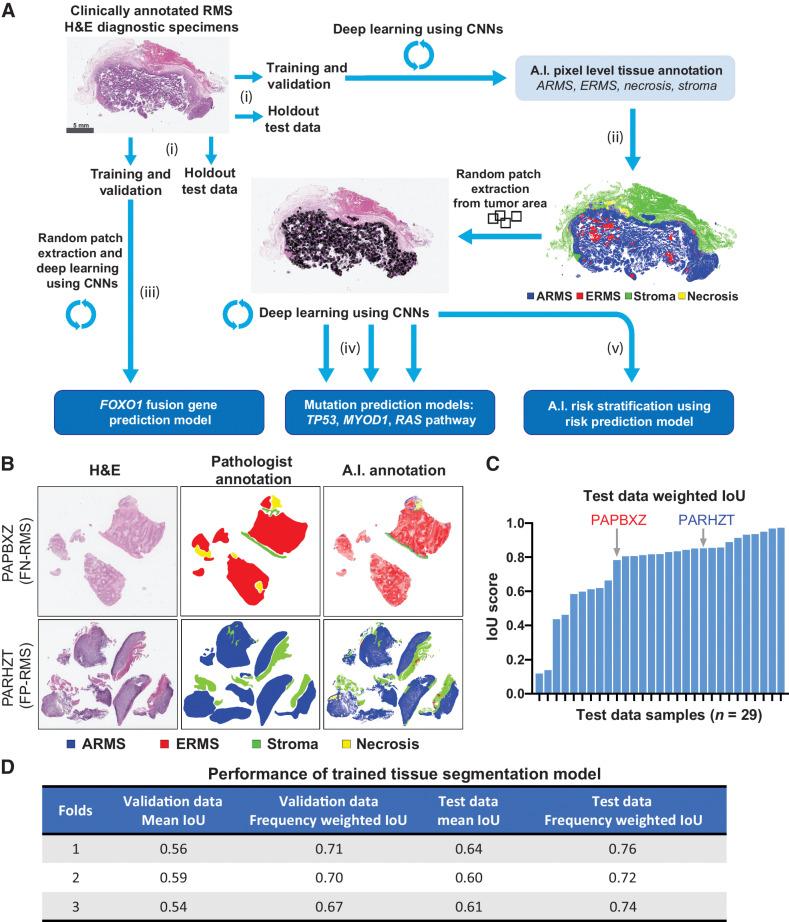
Rhabdomyosarcoma (RMS) is an aggressive soft-tissue sarcoma, which primarily occurs in children and young adults. We previously reported specific genomic alterations in RMS, which strongly correlated with survival; however, predicting these mutations or high-risk disease at diagnosis remains a significant challenge. In this study, we utilized convolutional neural networks (CNN) to learn histologic features associated with driver mutations and outcome using hematoxylin and eosin (H&E) images of RMS.
EXPERIMENTAL DESIGN
Digital whole slide H&E images were collected from clinically annotated diagnostic tumor samples from 321 patients with RMS enrolled in Children's Oncology Group (COG) trials (1998-2017). Patches were extracted and fed into deep learning CNNs to learn features associated with mutations and relative event-free survival risk. The performance of the trained models was evaluated against independent test sample data (n = 136) or holdout test data.
RESULTS
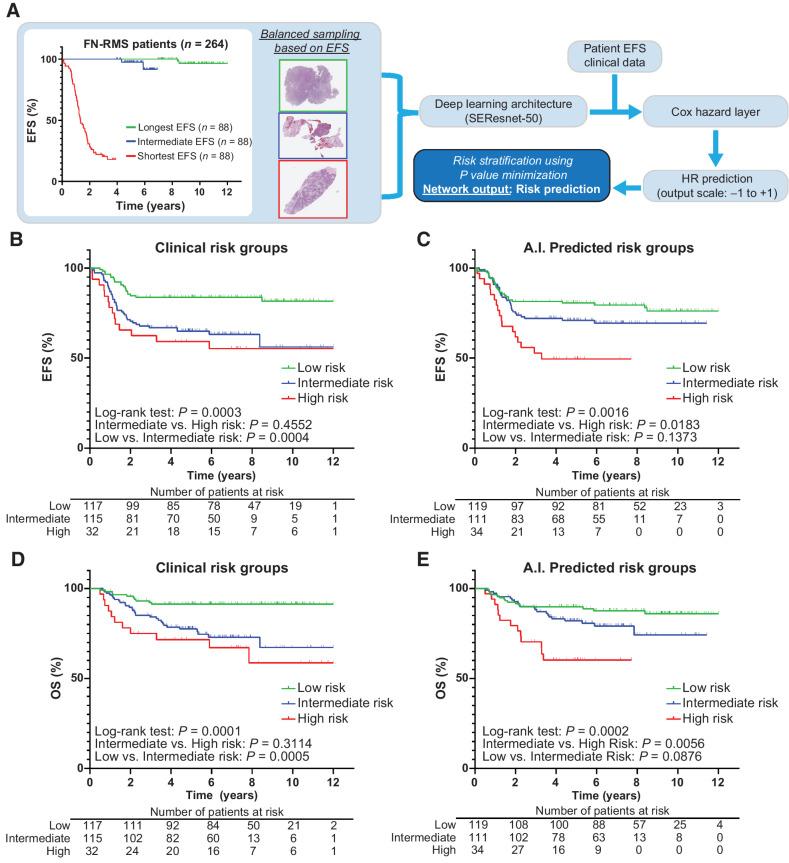
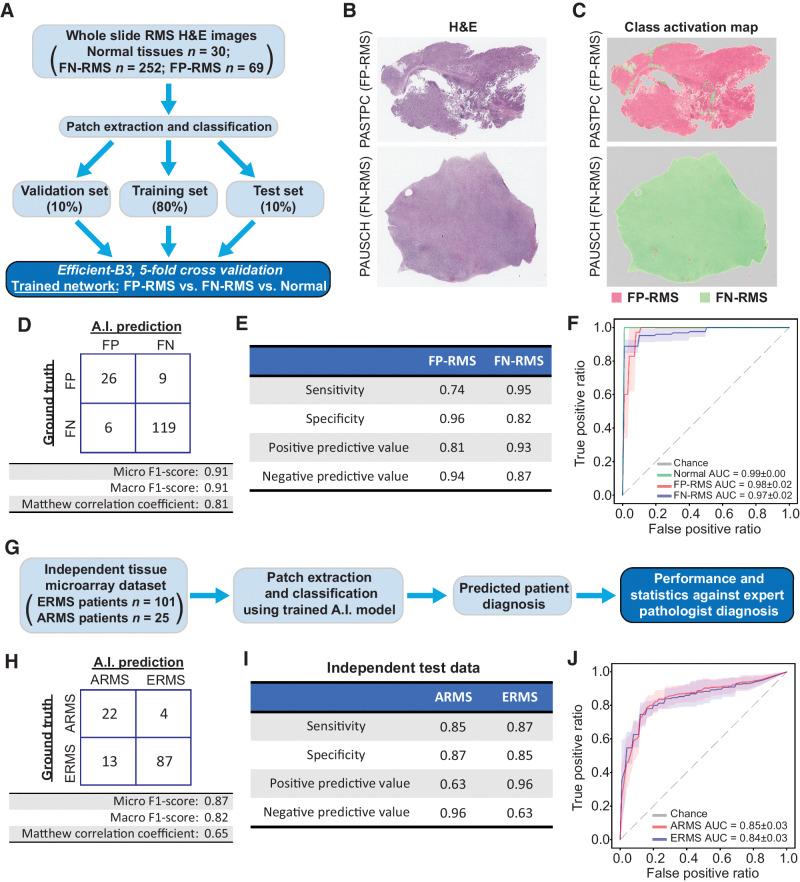
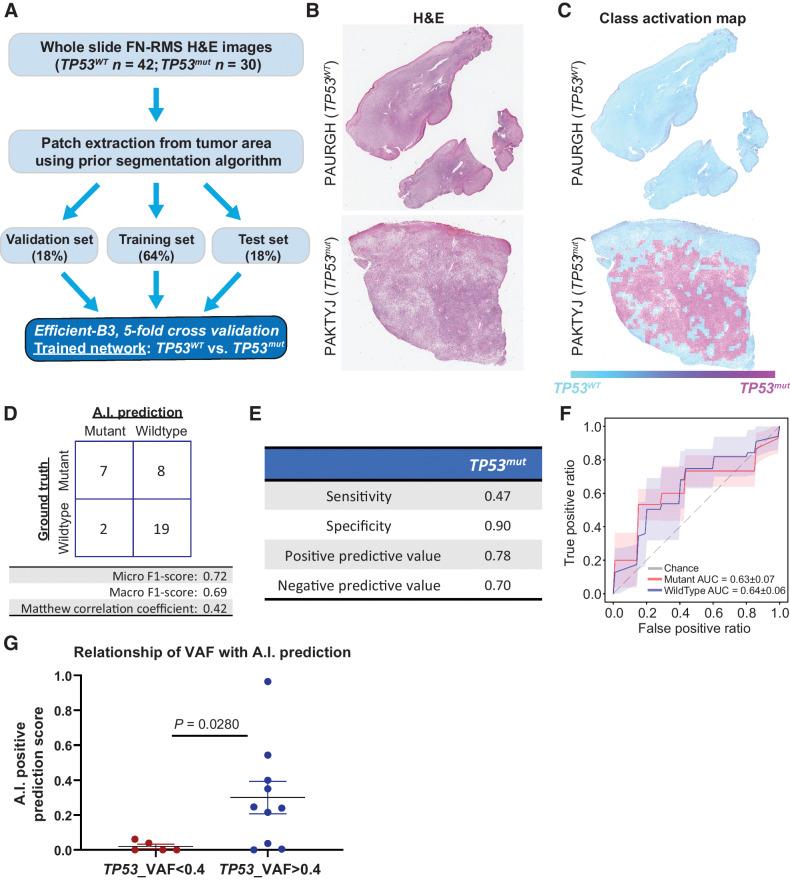
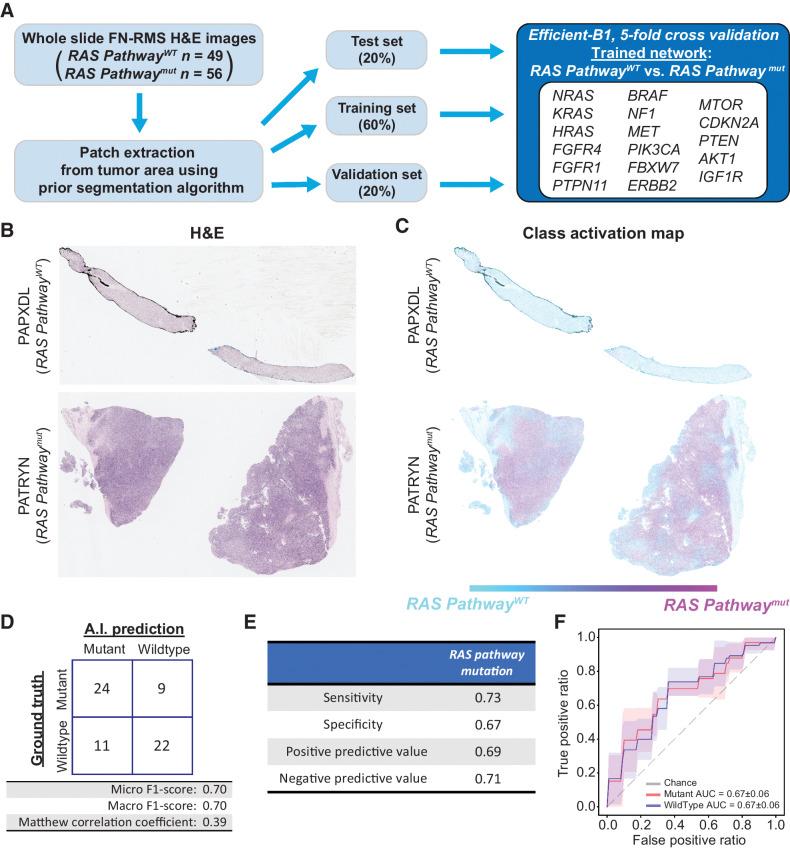
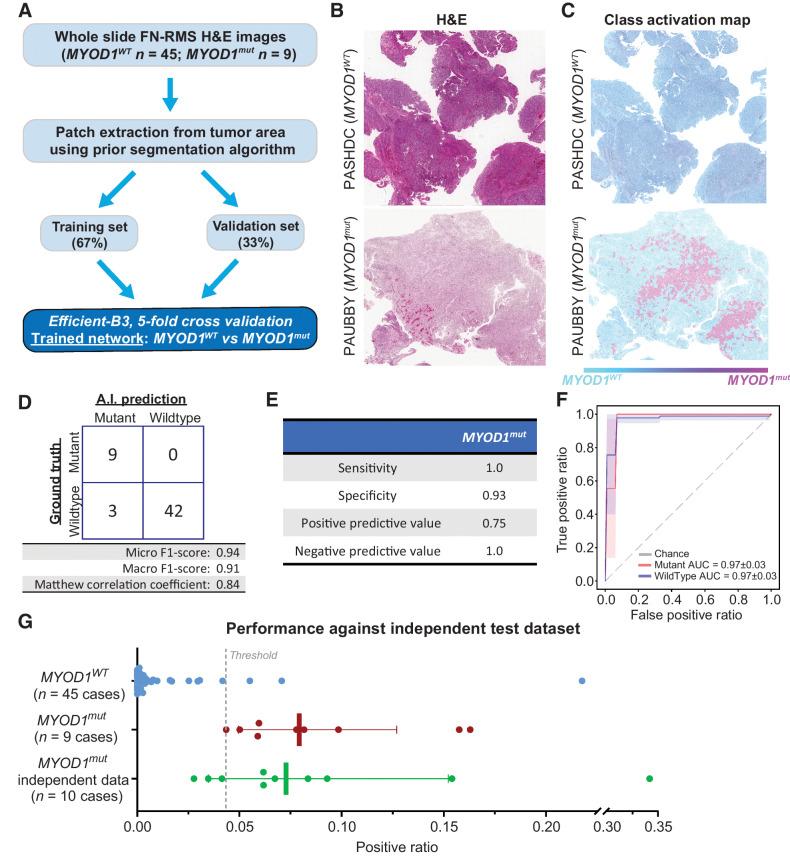
The trained CNN could accurately classify alveolar RMS, a high-risk subtype associated with PAX3/7-FOXO1 fusion genes, with an ROC of 0.85 on an independent test dataset. CNN models trained on mutationally-annotated samples identified tumors with RAS pathway with a ROC of 0.67, and high-risk mutations in MYOD1 or TP53 with a ROC of 0.97 and 0.63, respectively. Remarkably, CNN models were superior in predicting event-free and overall survival compared with current molecular-clinical risk stratification.
CONCLUSIONS
This study demonstrates that high-risk features, including those associated with certain mutations, can be readily identified at diagnosis using deep learning. CNNs are a powerful tool for diagnostic and prognostic prediction of rhabdomyosarcoma, which will be tested in prospective COG clinical trials.
目的
横纹肌肉瘤(RMS)是一种侵袭性软组织肉瘤,主要发生在儿童和年轻成人中。我们之前报道了 RMS 中的特定基因组改变,这些改变与生存密切相关;然而,在诊断时预测这些突变或高危疾病仍然是一个重大挑战。在这项研究中,我们利用卷积神经网络(CNN)利用 RMS 的苏木精和伊红(H&E)图像学习与驱动突变和结果相关的组织学特征。
实验设计
从参加儿童肿瘤学组(COG)试验(1998-2017 年)的 321 名 RMS 患者的临床注释诊断肿瘤样本中收集了数字全幻灯片 H&E 图像。提取斑块并输入深度学习 CNN 以学习与突变和相对无事件生存风险相关的特征。针对独立测试样本数据(n=136)或保留测试数据评估训练模型的性能。
结果
经过训练的 CNN 可以准确地对肺泡 RMS 进行分类,肺泡 RMS 是一种与 PAX3/7-FOXO1 融合基因相关的高危亚型,在独立测试数据集上的 ROC 为 0.85。在突变注释样本上训练的 CNN 模型识别出 RAS 通路中的肿瘤,ROC 为 0.67,MYOD1 或 TP53 中的高危突变的 ROC 分别为 0.97 和 0.63。值得注意的是,与当前的分子临床风险分层相比,CNN 模型在预测无事件和总生存方面表现更优。
结论
这项研究表明,使用深度学习可以在诊断时轻松识别包括某些突变相关的高危特征。CNN 是横纹肌肉瘤诊断和预后预测的有力工具,将在 COG 的前瞻性临床试验中进行测试。
 Zotero 插件